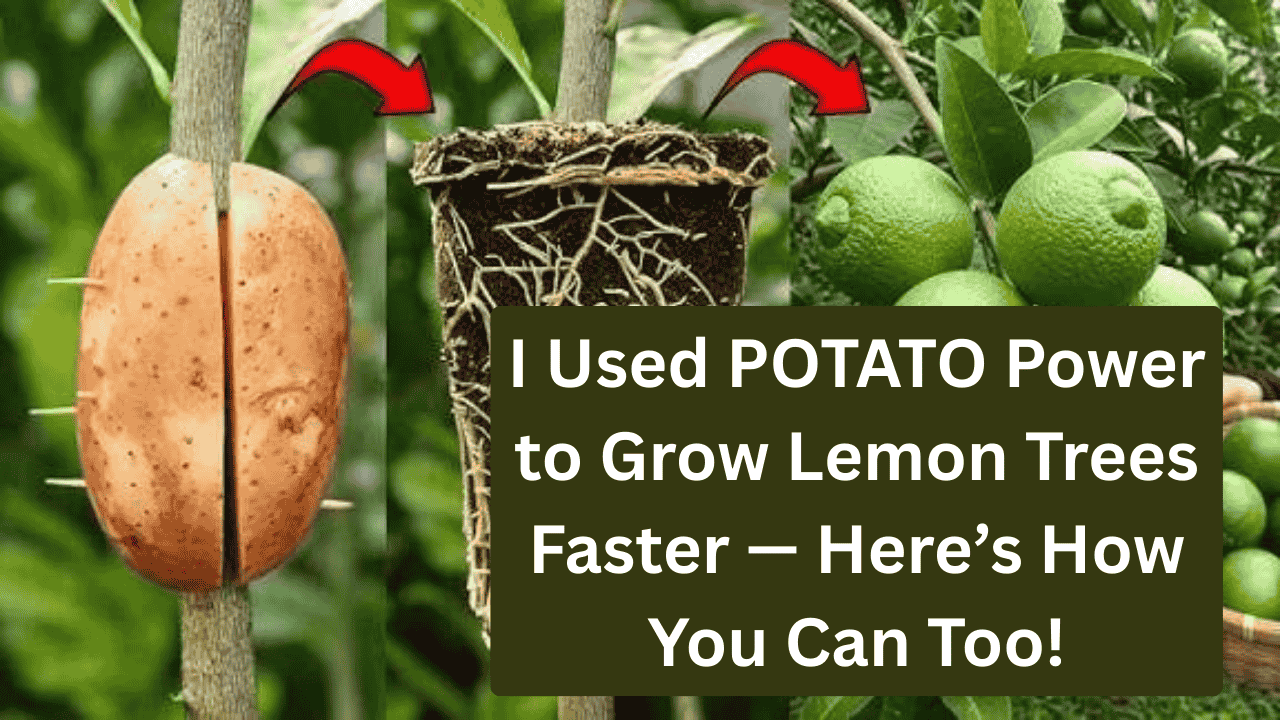
Growing a lemon tree at home often tests patience. Seeds take time to sprout, cuttings may fail, and young plants can sit idle for months with little visible progress. I ran into the same frustration until I tried a surprisingly effective natural method using potatoes. What started as an experiment quickly turned into one of the most reliable ways I have found to speed up lemon tree growth, improve rooting success, and strengthen young plants from the very beginning.
This guide explains exactly how potato power works, why it benefits lemon trees, and how you can use it step by step at home, even if you are a complete beginner.
Why Lemon Trees Grow Slowly in the Beginning
Lemon trees are vigorous once established, but their early stage is delicate. Seeds and cuttings require consistent moisture, mild nutrients, and protection from stress. Many failures happen due to three common reasons.

First is poor root initiation. Lemon cuttings often dry out before they form roots. Second is nutrient shock. Strong fertilizers can burn tender tissues. Third is moisture imbalance. Either the soil dries too fast or remains soggy, leading to rot.
The potato method works because it addresses all three problems naturally without chemicals.
The Science Behind Potato Power
Potatoes are living storage organs. They are packed with carbohydrates, moisture, potassium, phosphorus, vitamin B complex, and trace minerals. When used correctly, a potato acts as a slow release support system for young lemon cuttings or seedlings.

The moisture inside the potato keeps the cutting hydrated during the critical rooting phase. Natural sugars provide energy for cell division. Potassium supports root development and disease resistance. Unlike synthetic fertilizers, potatoes release nutrients gently, reducing stress on the plant.
Another key advantage is protection. The potato physically shields the cut end of a lemon cutting from air exposure and pathogens, increasing survival rates significantly.
Best Time to Use This Method
Timing matters. The potato method works best during warm months when lemon trees are naturally inclined to grow.

The ideal period is late spring to early monsoon in tropical and subtropical regions. In cooler climates, late spring to mid summer is best. Avoid peak winter and extreme cold, as root formation slows dramatically.
What You Will Need
You do not need expensive tools or garden products. Everything required is simple and easily available.
A healthy semi hardwood lemon cutting about six to eight inches long. One medium sized raw potato, fresh and firm. A clean knife. A small pot with drainage holes. Well draining soil mix, preferably garden soil mixed with sand and compost. Clean water.

Avoid using old sprouted or rotten potatoes, as they may introduce fungal problems.
How to Prepare the Lemon Cutting
Choose a healthy branch from a mature lemon tree. The branch should not be too soft or too woody. Remove any flowers or fruits if present, as they divert energy from root formation.
Make a clean slanted cut just below a node. Remove lower leaves and keep two to three leaves at the top. Large leaves can be trimmed halfway to reduce moisture loss.

Keep the cutting shaded and moist while preparing the potato.
How to Prepare the Potato
Wash the potato thoroughly to remove soil. Using a clean knife, make a small hole in the potato slightly smaller than the thickness of the lemon cutting. The hole should be deep enough to hold the cut end securely.
Do not hollow it too much. The cutting should fit snugly, ensuring close contact with the potato flesh.

Planting the Cutting with Potato Power
Insert the cut end of the lemon cutting into the hole in the potato. Push it gently until it sits firm.
Fill the pot with soil mix. Make a small pit and place the potato with the cutting upright. Cover the potato completely with soil while keeping the cutting exposed above the surface.
Press the soil lightly to remove air pockets and water gently until the soil is moist but not soggy.

Aftercare During Rooting Stage
Place the pot in a bright location with indirect sunlight. Avoid harsh direct sun during the first two weeks. Maintain consistent moisture. The soil should remain slightly damp at all times.
Do not add fertilizer during this stage. The potato provides enough nutrition. Overfeeding at this stage can cause rot or stress.
In warm conditions, rooting usually begins within two to three weeks. You may notice new leaf growth, which is a positive sign.

Signs That Roots Have Developed
New leaves emerging at the top indicate successful rooting. Gentle resistance when you lightly tug the cutting also suggests roots are forming.
Avoid disturbing the plant too early. Let it establish fully for at least four to six weeks before any transplanting.
Transplanting to a Bigger Pot or Ground
Once the lemon plant shows steady new growth, it is ready to move. Carefully remove the soil. By this time, the potato will be partially decomposed, enriching the surrounding soil.
Transplant the entire root ball without separating the potato remains. Place it into a larger pot or directly into the ground in a sunny location.
Water thoroughly and protect from intense sunlight for a few days after transplanting.
Using Potato Power for Lemon Seeds
This method also works for lemon seeds, though cuttings remain faster.
Place a lemon seed directly into a small potato slice. Plant the potato slice in soil with the seed facing upward. The potato keeps the seed moist and nourished during germination.
Seed grown lemon trees take longer to fruit, but this technique improves early growth strength.
Common Mistakes to Avoid
Using too much water is the most common mistake. Potatoes hold moisture already, so overwatering can cause rot.
Placing the pot in harsh sunlight too early can dry out the cutting. Skipping drainage holes in the pot leads to waterlogging.
Using diseased or chemically treated potatoes should be avoided, as residues may harm the cutting.
How Fast Will Growth Improve
Compared to traditional soil planting, this method often reduces rooting time by one to two weeks. Plants establish faster and show stronger initial growth.
While potato power does not change the genetic fruiting time of lemon trees, healthier early growth leads to earlier maturity and better fruit production later.
Long Term Care for Faster Lemon Tree Growth
Once established, lemon trees thrive with full sun, regular watering, and balanced nutrition. Organic compost, vermicompost, and diluted cow dung manure work well.
Pruning helps shape the tree and improves air circulation. Avoid excessive nitrogen, as it promotes leaves at the cost of flowers and fruits.
Consistent care combined with a strong start using potato power creates a resilient and productive lemon tree.
Why This Method Is Ideal for Home Gardeners
This approach is low cost, natural, and beginner friendly. It eliminates the need for rooting hormones and reduces failure rates significantly.
For balcony gardeners, terrace growers, and backyard enthusiasts, potato power offers a reliable shortcut to faster lemon tree growth without chemicals.
With patience and proper care, this simple technique can turn a single cutting into a healthy lemon tree that rewards you with lush foliage and juicy harvests for years to come.










Leave a Comment