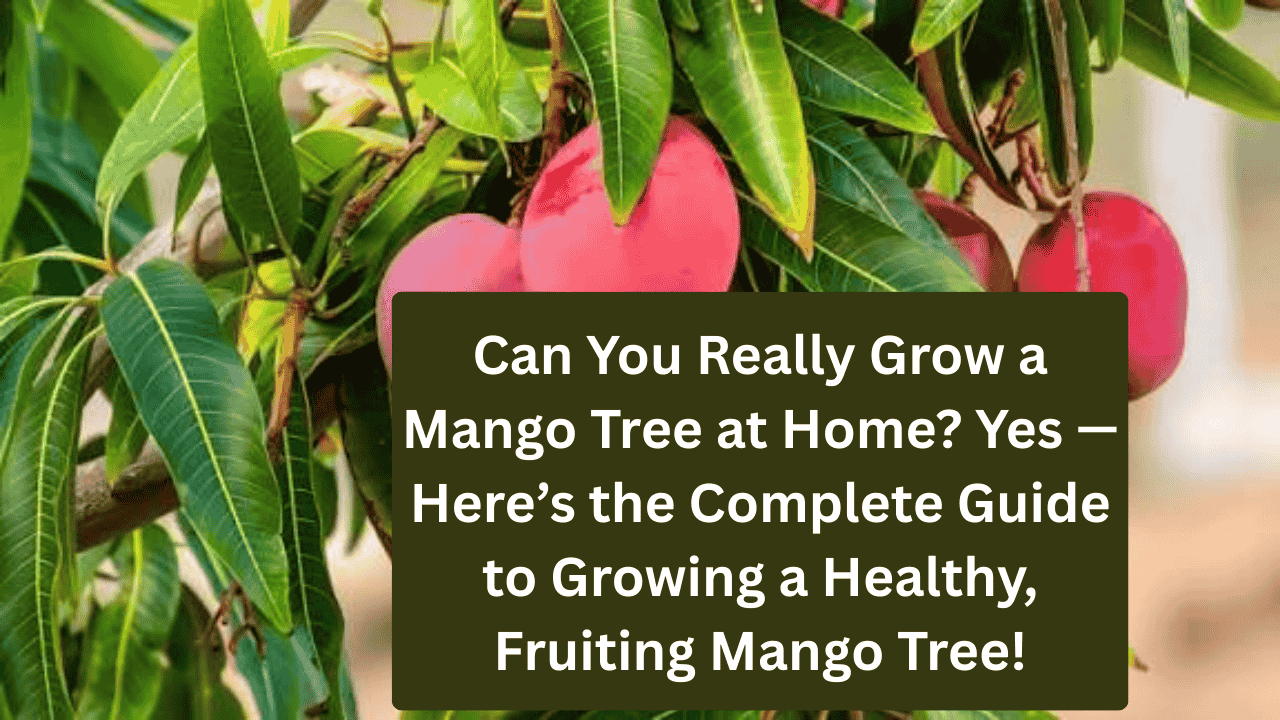
Many people believe mango trees need vast land, tropical farms, and years of waiting before they produce fruit. In reality, mango trees can be grown successfully at home, even in limited spaces, when the right methods are followed. With proper planning, correct planting, and consistent care, a mango tree can grow healthy, stay manageable, and reward you with delicious fruits.
This complete guide explains how home gardeners can grow a mango tree that thrives and fruits reliably.
Understanding Mango Tree Growth at Home
Mango trees are tropical evergreens that grow actively in warm conditions. Their growth depends on sunlight, soil quality, and root space.

In home settings, controlling growth through pruning and pot size is essential. A well-managed mango tree can remain compact while still producing high-quality fruits.Balanced nutrition supports healthy growth and fruiting. Nitrogen encourages leafy growth, while potassium improves flowering and fruit quality.Mango trees are tropical evergreens that grow actively in warm conditions. Their growth depends on sunlight, soil quality, and root space.
Choosing the Right Mango Variety
Selecting the right variety is crucial for home cultivation. Dwarf and semi-dwarf varieties such as Amrapali, Mallika, and Alphonso grafted plants are better suited for limited spaces.
Always choose grafted or air-layered plants. Seed-grown mango trees take longer to fruit and may not produce true-to-type fruits.

Best Time to Plant Mango Trees
Warm weather supports rapid root establishment. Late spring to early monsoon is the ideal planting period in most regions.
Avoid planting during winter or extreme heat. Stress during early growth can delay fruiting and weaken the tree.
Soil Preparation for Healthy Growth
Mango trees prefer loose, well-draining soil rich in organic matter. Heavy soil should be amended with sand and compost.

Good drainage prevents root rot and allows roots to spread freely, supporting faster and healthier growth.
Planting Mango Trees Correctly
Plant the mango tree at the same depth it grew in the nursery. Burying the trunk can cause rot and poor growth.
Firm the soil gently around the roots and water thoroughly. Apply mulch to retain moisture and protect roots from temperature extremes.

Watering for Strong Roots and Steady Growth
Young mango trees need regular watering to establish roots. Once established, they prefer deep watering with drying intervals.Many people believe mango trees need vast land, tropical farms, and years of waiting before they produce fruit. In reality, mango trees can be grown successfully at home, even in limited spaces, when the right methods are followed. With proper planning, correct planting, and consistent care, a mango tree can grow healthy, stay manageable, and reward you with delicious fruits.
Overwatering causes root problems, while drought stress slows growth and reduces flowering.
Feeding Mango Trees for Home Gardens
Balanced nutrition supports healthy growth and fruiting. Nitrogen encourages leafy growth, while potassium improves flowering and fruit quality.Mango trees are tropical evergreens that grow actively in warm conditions. Their growth depends on sunlight, soil quality, and root space.

Organic compost, vermicompost, and occasional liquid feeds provide steady nutrition without stressing the plant.
Pruning to Control Size and Shape
Pruning keeps mango trees compact and productive. Pinch the growing tip once the plant reaches two to three feet to encourage branching.
Remove weak, damaged, or overcrowded branches. Proper structure improves sunlight penetration and airflow.

Growing Mango Trees in Containers
Container growing is ideal for balconies and terraces. Choose a large container with excellent drainage.
Container-grown mango trees need regular feeding and careful watering but can fruit successfully with proper care.
Sunlight Requirements for Fruiting
Mango trees require full sunlight for flowering and fruit development. At least six to eight hours of direct sunlight daily is essential.

Insufficient light leads to poor flowering and weak growth.
Flowering and Fruit Set Management
Stable watering and nutrition during flowering reduce flower drop. Avoid heavy pruning just before the flowering season.
Hand pollination may improve fruit set in enclosed or low-pollinator environments.

Pest and Disease Prevention
Healthy trees resist pests better. Maintain cleanliness around the base and ensure good airflow.
Neem oil and organic sprays help control common pests without harming beneficial insects.
When Will Your Mango Tree Bear Fruits
Grafted mango trees can begin fruiting within three to four years under good care. Seed-grown trees may take much longer.
Consistent care, proper pruning, and adequate sunlight are key to timely fruiting.
Common Mistakes Home Gardeners Make
Overwatering, poor drainage, and excessive fertilizer are common problems. Ignoring pruning leads to tall, unmanageable trees.
Correcting these mistakes early ensures steady growth and better yields.
Why Growing Mango Trees at Home Is Possible
With modern varieties and smart care techniques, mango trees adapt well to home environments. Container growing and pruning make size management easy.
For home gardeners, growing a mango tree is not only possible but highly rewarding.Young mango trees need regular watering to establish roots. Once established, they prefer deep watering with drying intervals.Many people believe mango trees need vast land, tropical farms, and years of waiting before they produce fruit. In reality, mango trees can be grown successfully at home, even in limited spaces, when the right methods are followed. With proper planning, correct planting, and consistent care, a mango tree can grow healthy, stay manageable, and reward you with delicious fruits
In home settings, controlling growth through pruning and pot size is essential. A well-managed mango tree can remain compact while still producing high-quality fruits.Balanced nutrition supports healthy growth and fruiting. Nitrogen encourages leafy growth, while potassium improves flowering and fruit quality.Mango trees are tropical evergreens that grow actively in warm conditions. Their growth depends on sunlight, soil quality, and root space.








Leave a Comment