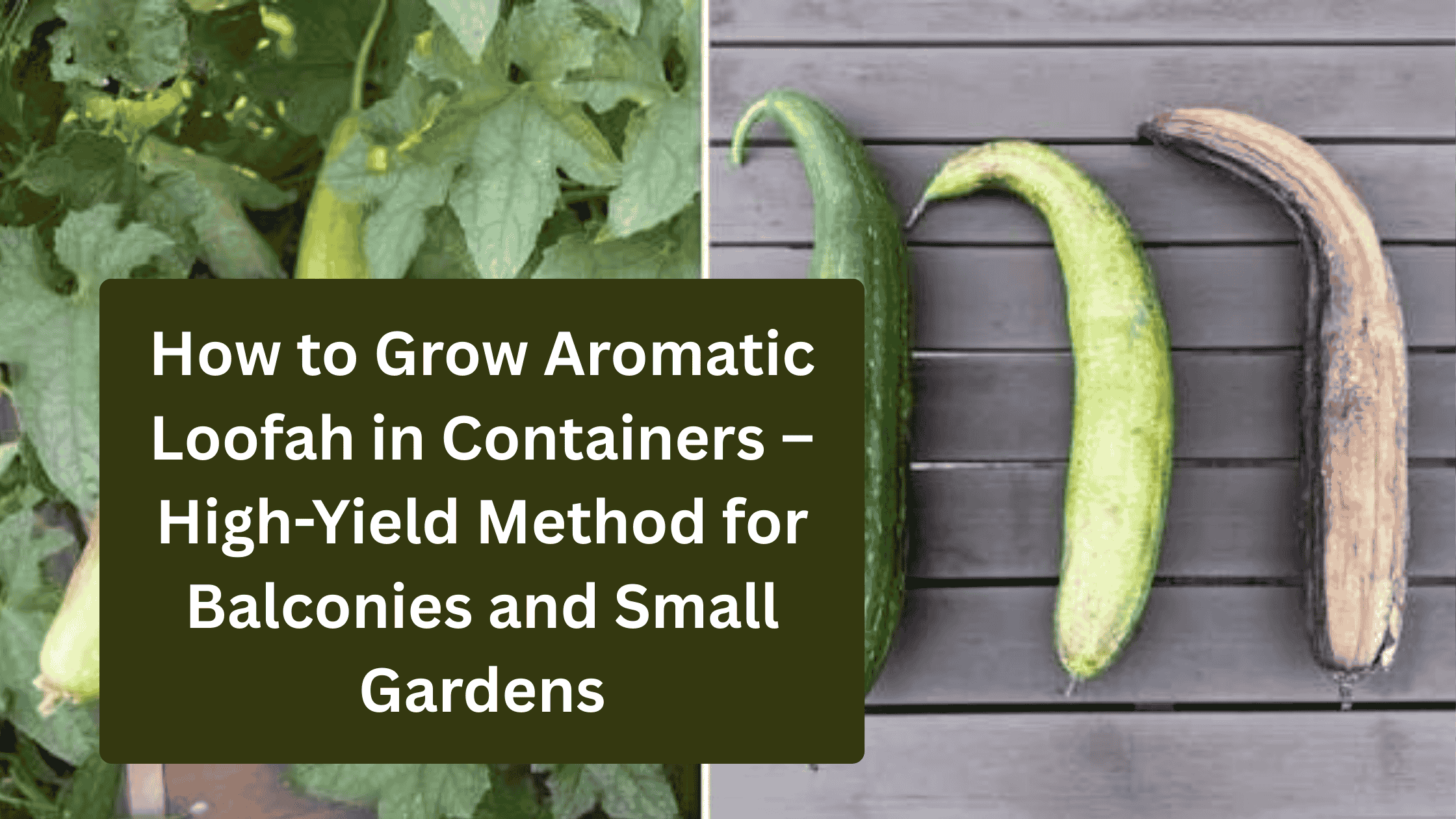
Growing aromatic loofah in containers is an excellent way to enjoy fresh, tender, flavorful gourds even if you live in an apartment or have very limited outdoor space. Loofah plants are vigorous climbers, highly productive, and surprisingly well-suited to container gardening when managed correctly. With proper variety selection, strong support, rich soil, and disciplined watering and feeding, a single loofah plant can produce an abundant harvest over a long season.
This method focuses on maximizing yield, maintaining plant health, and ensuring aromatic, soft-textured loofahs ideal for cooking.
Why Loofah Performs Well in Containers
Loofah plants develop deep but adaptable root systems. When given enough container depth and steady nutrition, they grow vigorously and flower profusely. Container cultivation also offers better control over soil quality, drainage, and pest pressure.

Container-grown loofah benefits include: Improved drainage and root health
Better sunlight positioning
Reduced soil-borne diseases
Easier vine training and pruning
With vertical growth, loofah plants occupy very little ground space while producing extensively.
Choosing the Right Loofah Variety
For container growing, aromatic and tender loofah varieties are preferred. Sponge loofah varieties grown for fibrous use require longer seasons and larger space, making them less ideal for containers.

Choose varieties that: Produce long, tender fruits
Have early to mid-season maturity
Are commonly used as vegetables
Local or regional loofah varieties often perform better in containers due to climate adaptation.
Ideal Container Size and Type
Loofah is a heavy feeder and long-season climber, so container size is critical.

Recommended container specifications: Minimum depth of 18 to 24 inches
Width of at least 20 inches
Strong plastic tubs, cement pots, or thick grow bags
One plant per container is ideal. Smaller containers restrict root growth and drastically reduce flowering and yield.
Drainage Requirements
Loofah roots are sensitive to waterlogging.

Ensure: Multiple drainage holes
A base layer of gravel or broken pot pieces
Free flow of excess water
Poor drainage leads to root rot, leaf yellowing, and reduced fruiting.
Best Soil Mix for High Yield
Loofah thrives in nutrient-rich, loose soil that retains moisture without becoming compacted.

Ideal soil mix: Garden soil or coco peat
Well-rotted compost or vermicompost
Sand or perlite for aeration
The soil should feel light, crumbly, and deep. Nutrient-poor soil leads to excessive vine growth with poor flowering.
Seed Selection and Preparation
Fresh loofah seeds germinate faster and more uniformly.

Before sowing: Soak seeds in water for 6 to 8 hours
Discard floating seeds
Use only healthy, full seeds
Soaking softens the seed coat and speeds up germination.
Direct Sowing in Containers
Loofah plants dislike root disturbance, so direct sowing works best.

Sowing method: Sow seeds 1 inch deep
Plant two seeds per container
Thin to one strong seedling
Water gently and keep soil consistently moist until germination.
Temperature and Germination Conditions
Loofah seeds germinate best in warm conditions.

Optimal range: 25 to 35°C
Seeds typically germinate within 7 to 10 days. Cooler temperatures slow growth significantly.
Sunlight Requirements
Loofah is a sun-loving plant.
For maximum yield: Provide 7 to 9 hours of direct sunlight daily
Insufficient sunlight results in excessive vine length, fewer flowers, and poor fruit set.
Watering Schedule for Healthy Growth
Consistent moisture is essential for tender fruits.
Watering guidelines: Water deeply when topsoil begins to dry
Avoid complete drying of the container
Increase watering during flowering and fruiting
Irregular watering causes bitter fruits and flower drop.
Importance of Strong Vertical Support
Loofah vines grow rapidly and can become heavy when fruiting.
Support options include: Bamboo trellis
Metal grills
Balcony rail frames
Strong netting
Secure the support firmly before vines begin climbing to avoid later disturbance.
Training the Vine for Maximum Production
Training helps direct energy toward fruiting.
Training tips: Guide the main vine upward
Tie gently using soft cloth or garden ties
Remove tangled or inward-growing shoots
Vertical training improves airflow and sunlight exposure.
Pruning Strategy for High Yield
Pruning is essential to prevent excessive vegetative growth.
Effective pruning includes: Removing side shoots below the first 2 feet
Limiting main vines to 2 or 3
Removing weak or overcrowded shoots
Pruning encourages more female flowers and better fruit size.
Understanding Flowering in Loofah
Loofah plants produce separate male and female flowers.
Female flowers: Appear slightly later
Have a small swollen base
Develop into fruits
Excess male flowers are common early in the season and are normal.
Improving Pollination Naturally
Poor pollination is a common reason for fruit drop.
To improve pollination: Encourage bees with flowering plants nearby
Hand-pollinate early morning if needed
Avoid pesticide sprays during flowering
Hand pollination significantly increases fruit set in balconies.
Fertilizing for Continuous Harvest
Loofah is a heavy feeder throughout its life cycle.
Fertilizing schedule: Vermicompost or compost every 15 days
Liquid organic fertilizer every 10 days
Potassium-rich feed during flowering and fruiting
Avoid excessive nitrogen after flowering begins, as it delays fruiting.
Role of Micronutrients
Micronutrients influence flowering and fruit quality.
Deficiency signs include: Poor flower formation
Small or deformed fruits
Yellowing leaves
Occasional use of diluted seaweed extract improves overall plant health.
Mulching for Moisture and Temperature Control
Mulching helps maintain consistent soil conditions.
Use: Dry leaves
Straw
Coco husk
Mulch also reduces nutrient loss and weed growth.
Pest Management in Containers
Common loofah pests include aphids, whiteflies, and spider mites.
Natural control methods: Neem oil spray once a week
Soap water spray for aphids
Manual removal of affected leaves
Healthy plants resist pests more effectively.
Disease Prevention and Control
Fungal diseases may appear in humid conditions.
Prevention steps: Avoid overhead watering
Ensure good airflow
Remove diseased leaves promptly
Early management prevents spread and yield loss.
Managing Excessive Vine Growth
If vines grow aggressively with few flowers: Reduce nitrogen feeding
Increase potassium
Prune excess shoots
Balanced nutrition restores flowering.
Fruit Development and Care
Fruits grow rapidly once pollinated.
During fruiting: Maintain consistent watering
Support fruits if vines are vertical
Avoid sudden nutrient changes
Stress during fruit development affects texture and flavor.
Harvesting at the Right Stage
Aromatic loofah should be harvested young and tender.
Ideal harvesting stage: 10 to 15 inches long
Soft skin
Seeds not hardened
Delayed harvesting causes fibrous texture and reduces future yield.
Harvesting Frequency
Regular harvesting encourages continuous flowering.
Harvest: Every 2 to 3 days
Using a sharp knife or scissors
Leaving overmature fruits slows further production.
Expected Yield in Containers
With proper care: One plant can produce 15 to 30 loofahs
Yield continues for several weeks
Productivity depends on sunlight, nutrition, and pruning.
Seasonal Growing Tips
Loofah grows best from spring to early autumn.
Protect plants from: Cold winds
Extended rain
Sudden temperature drops
In warm climates, the growing season is long and productive.
Common Mistakes to Avoid
Using small containers
Weak or unstable trellis
Overfeeding nitrogen
Inconsistent watering
Skipping pruning
Correcting these mistakes significantly increases yield.
Why Container-Grown Loofah Tastes Better
Controlled watering, fresh soil, and timely harvesting result in: Softer texture
Better aroma
Milder flavor
Home-grown loofah is noticeably superior to market produce.







Leave a Comment