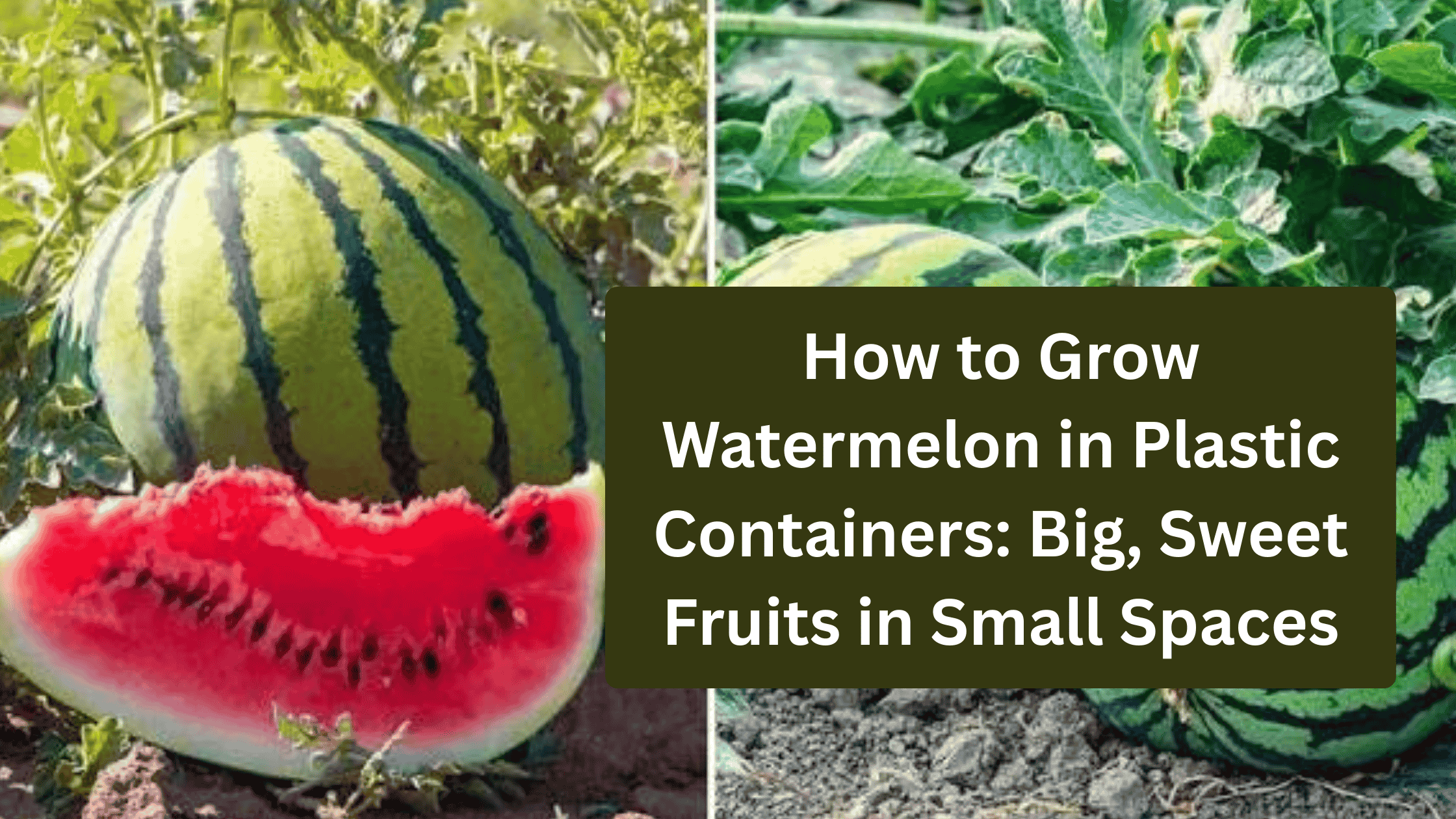
Growing watermelon in plastic containers may sound challenging, but with the right techniques it is entirely possible to harvest large, sweet, juicy fruits even in balconies, terraces, and rooftops. Container growing allows better control over soil quality, watering, and pests, which are the key factors that determine watermelon size and sweetness.
This method is ideal for urban gardeners who want to grow fruit without open ground while still enjoying impressive results.
Why Watermelon Can Grow in Containers
Watermelon plants have extensive vines, but their root systems can adapt well to containers if enough depth and nutrition are provided. Plastic containers also warm up faster than ground soil, which watermelon plants love.

Container growing offers: Better temperature control
Reduced soil-borne disease risk
Improved nutrient management
Easier pest monitoring
With vertical training and proper care, container watermelons can thrive.
Choosing the Right Watermelon Variety
Not all watermelon varieties are suitable for container growing. Compact and small-fruited types perform best.

Ideal varieties include: Sugar Baby
Golden Midget
Crimson Sweet (trained carefully)
Mini and bush watermelon types
Large traditional varieties require more space and are harder to manage in containers.
Best Plastic Container Size
Watermelon plants need generous root space to support fruit development.

Recommended container: Minimum 18 to 24 inches deep
20 to 24 inches wide
Strong plastic tubs, barrels, or grow bags
One plant per container is essential. Crowding leads to weak growth and poor fruiting.
Drainage Is Critical
Plastic containers must have excellent drainage to prevent root rot.

Ensure: Multiple holes at the bottom
A drainage layer of gravel or broken pot pieces
No standing water in trays
Good drainage keeps roots healthy and oxygenated.
Ideal Soil Mix for Container Watermelons
Watermelons are heavy feeders and require rich but well-draining soil.

Best mix: Garden soil or coco peat
Well-rotted compost or vermicompost
Sand or perlite for aeration
The soil should be loose, deep, and nutrient-dense.
Sowing Seeds Directly in Containers
Watermelon roots dislike disturbance, so direct sowing works best.

Sow seeds: 1 inch deep
2 seeds per container, thinning to one later
Water gently after sowing
Seedlings usually emerge within 5 to 8 days in warm conditions.
Temperature and Sunlight Needs
Watermelons need heat and light to develop sweetness.

Requirements: Full sun for at least 7 to 9 hours daily
Warm temperatures between 24 to 35°C
Shaded or cool locations reduce fruit size and sweetness.
Watering for Sweet Fruits
Watering plays a major role in watermelon flavor.

Early growth: Keep soil evenly moist
During flowering and fruiting: Regular deep watering
Near ripening: Reduce watering slightly to concentrate sugars
Avoid water stress, which causes cracked fruits and poor development.
Training Vines in Small Spaces
Vines can be trained horizontally or vertically.
Methods include: Allowing vines to trail on the floor
Training upward on a strong trellis
Using soft ties to guide growth
Vertical growing saves space but requires strong support.
Supporting Developing Fruits
When grown vertically, fruits must be supported to prevent vine breakage.
Use: Cloth slings
Netting
Old T-shirts tied securely
This allows fruits to grow without stress.
Fertilizing Schedule for Maximum Size
Watermelons are nutrient-hungry plants.
Feeding plan: Compost or vermicompost every 15 days
Balanced organic liquid fertilizer every 10 days
Potassium-rich feed during fruit development
Avoid excessive nitrogen after flowering, as it promotes leaf growth instead of fruit.
Flowering and Pollination
Watermelon plants produce male and female flowers.
To improve pollination: Encourage bees with flowering plants nearby
Hand-pollinate using a soft brush if necessary
Avoid insecticides during flowering
Poor pollination leads to misshapen or aborted fruits.
Pruning for Better Fruit Development
Pruning helps focus plant energy.
Pruning tips: Limit vines to 2 or 3 main runners
Remove excess side shoots
Limit fruits to 2 or 3 per plant
Fewer fruits result in larger, sweeter watermelons.
Mulching for Moisture and Heat
Mulching helps maintain warm soil and consistent moisture.
Use: Dry straw
Plastic mulch
Coco husk
Mulch also prevents soil splashing and disease.
Pest Management in Containers
Common pests include aphids, spider mites, and fruit flies.
Natural control: Neem oil spray weekly
Regular leaf inspection
Remove affected leaves early
Healthy plants are less prone to infestations.
Disease Prevention
Fungal diseases can affect container watermelons if humidity is high.
Prevention: Avoid overhead watering
Ensure good airflow
Remove diseased leaves promptly
Early action prevents spread.
Signs of Fruit Maturity
Harvesting at the right time ensures sweetness.
Look for: Yellow spot on the underside
Drying of the nearest tendril
Hollow sound when tapped
Immature fruits lack sweetness.
Harvesting Without Damaging the Plant
Cut the fruit with a sharp knife, leaving a short stem attached.
Avoid pulling, which can damage vines and remaining fruits.
Expected Yield in Containers
With proper care: 1 to 3 watermelons per plant
Average fruit weight of 2 to 4 kg depending on variety
Quality often exceeds store-bought fruit.
Common Mistakes to Avoid
Using small containers
Overwatering near harvest
Too many fruits per plant
Poor sunlight exposure
Correcting these mistakes greatly improves results.
Growing Watermelon Across Seasons
In warm climates, watermelons can be grown from spring to early autumn.
Protect plants from cold winds and low night temperatures during early growth.
Why Container-Grown Watermelons Taste Better
Controlled nutrition, warm soil, and timely watering result in: Higher sugar concentration
Better texture
Fresher flavor
Harvesting at peak ripeness makes a noticeable difference.








Leave a Comment