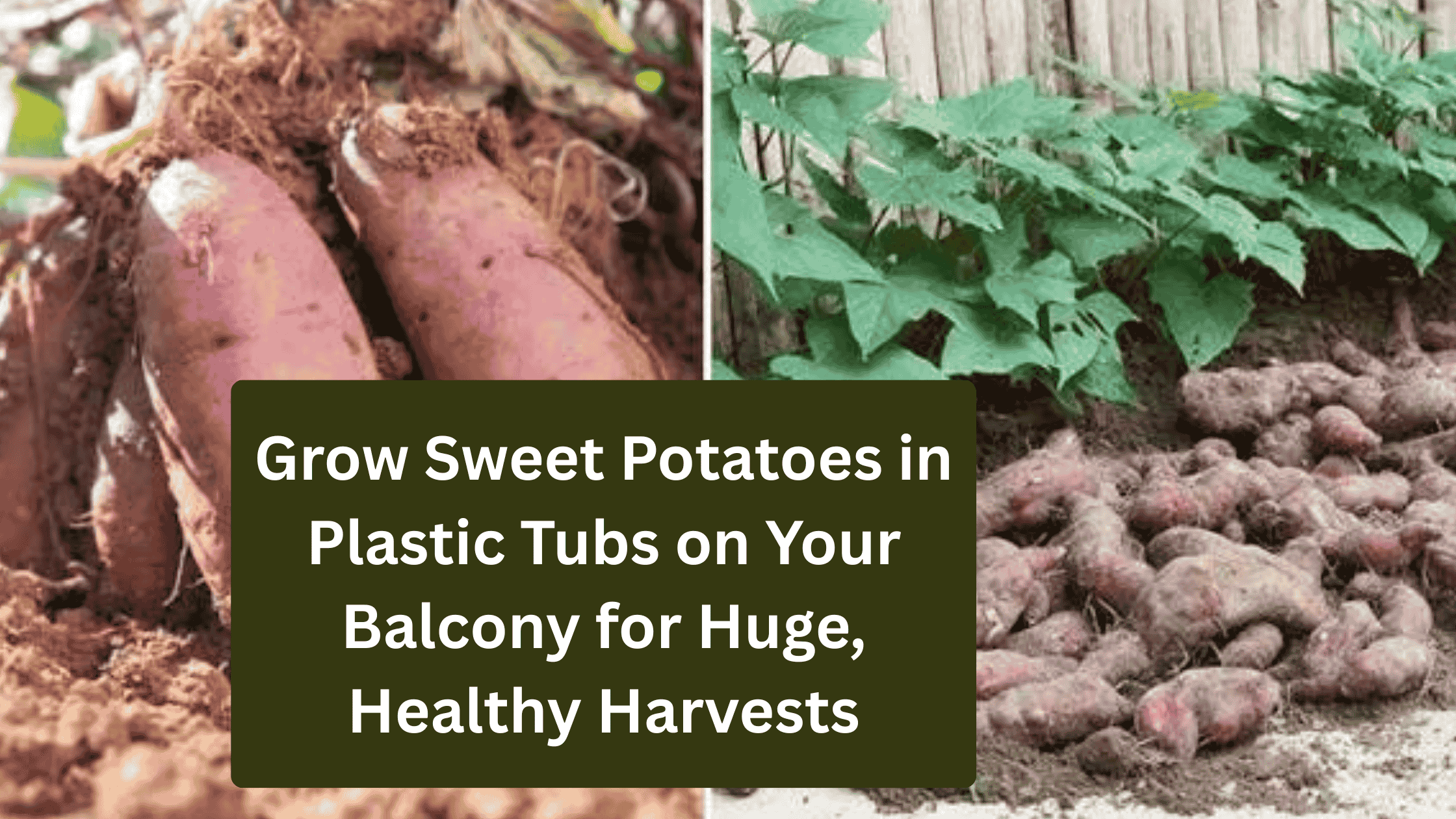
Growing sweet potatoes in plastic tubs is one of the most rewarding balcony gardening projects you can try. Sweet potatoes are resilient, productive, and surprisingly adaptable to containers when given enough space, warmth, and nutrition. With the right setup, a single plant can produce multiple large, nutritious tubers even without access to open ground.
This method is ideal for balconies, terraces, rooftops, and small urban spaces where soil depth and space are limited.
Why Sweet Potatoes Thrive in Containers
Sweet potatoes grow underground storage roots that expand horizontally rather than deeply. This makes wide, deep containers far more important than open garden beds. Plastic tubs retain warmth, which sweet potatoes love, and also help maintain consistent soil moisture.

Container growing provides: Better control over soil quality
Reduced pest pressure from soil insects
Improved drainage and root aeration
Easy mobility for sunlight and protection
When managed correctly, container-grown sweet potatoes can rival or exceed ground-grown yields.
Choosing the Right Sweet Potato Variety
Not all sweet potato varieties perform equally well in containers. Compact, high-yielding varieties with shorter maturity periods are best suited for tubs.

Container-friendly varieties typically: Produce medium to large tubers
Have vigorous but manageable vine growth
Mature within 90 to 120 days
Local varieties adapted to warm climates often perform exceptionally well in balcony conditions.
Selecting the Best Plastic Tub
Container size is the single most important factor for success.

Ideal tub specifications: Minimum depth of 16 to 18 inches
Width of 20 to 24 inches
Strong, food-grade plastic if possible
Shallow containers restrict tuber expansion and lead to thin or misshapen roots. One tub should hold only one plant for maximum yield.
Drainage Requirements
Sweet potatoes dislike waterlogged soil.

Ensure: Multiple drainage holes at the bottom
A thin drainage layer of gravel or broken pot pieces
Free flow of excess water
Standing water leads to root rot and poor tuber formation.
Best Soil Mix for Sweet Potatoes
Sweet potatoes prefer loose, sandy, well-draining soil that allows tubers to expand freely.

Ideal soil mix: Garden soil or coco peat as base
Well-rotted compost or vermicompost
Sand or perlite for aeration
Avoid heavy clay soil. Compact soil leads to forked, stunted, or cracked tubers.
Understanding Slips and Planting Material
Sweet potatoes are not grown from seeds but from slips, which are young shoots grown from mature sweet potatoes.

Slips: Develop roots quickly
Adapt well to containers
Produce uniform tubers
Healthy slips are the foundation of a good harvest.
How to Prepare Sweet Potato Slips at Home
You can easily prepare slips at home using a mature sweet potato.

Method: Place a healthy sweet potato halfway submerged in water
Keep in a warm, bright location
Allow shoots to grow 4 to 6 inches long
Twist off slips and place in water to root
Rooted slips are ready for planting once they develop strong white roots.
Planting Slips in Plastic Tubs
Planting technique directly affects yield.

Steps: Fill the tub with soil mix, leaving 2 inches at the top
Plant slips at a slight angle
Bury roots completely, leaving leaves above soil
Water thoroughly after planting
Space slips evenly if planting more than one, but one slip per tub is ideal.
Best Time to Plant Sweet Potatoes
Sweet potatoes require warmth to grow well.
Ideal conditions: Soil temperature above 18°C
Warm days and nights
No risk of frost
Planting too early in cool conditions slows growth and reduces yield.
Sunlight Requirements
Sweet potatoes thrive in full sun.
For best results: Provide 6 to 8 hours of direct sunlight daily
Insufficient sunlight results in lush vines but poor tuber formation.
Watering Schedule for Strong Tuber Development
Sweet potatoes require consistent but moderate watering.
Watering guidelines: Water deeply after planting
Keep soil slightly moist during early growth
Reduce watering once tubers begin forming
Overwatering during tuber development causes cracking and poor storage quality.
Role of Vine Growth
Sweet potato vines grow rapidly and spread widely.
Vine management: Allow vines to trail over the tub edges
Guide vines to avoid shading the soil surface
Avoid excessive trimming
Healthy vines support strong tuber development by producing energy through photosynthesis.
Should Vines Be Pruned
Unlike some vegetables, heavy pruning reduces sweet potato yield.
Pruning tips: Remove only damaged or diseased vines
Avoid cutting healthy vines excessively
Each vine contributes to tuber formation.
Mulching for Better Results
Mulching helps maintain soil temperature and moisture.
Recommended mulch: Dry leaves
Straw
Coco husk
Mulch also prevents soil erosion and reduces nutrient loss.
Fertilizing Sweet Potatoes in Containers
Sweet potatoes need balanced nutrition but dislike excess nitrogen.
Fertilizing schedule: Compost or vermicompost every 20 days
Low-nitrogen, potassium-rich fertilizer during tuber formation
Excess nitrogen promotes vine growth at the expense of tubers.
Importance of Potassium
Potassium plays a key role in tuber size and sweetness.
Potassium-rich sources: Wood ash in small quantities
Banana peel compost
Balanced organic fertilizers
Adequate potassium improves texture and flavor.
Managing Pests in Balcony Containers
Container-grown sweet potatoes face fewer pests but are not pest-free.
Common pests: Aphids
Spider mites
Leaf-eating caterpillars
Control methods: Neem oil spray once a week
Manual removal of affected leaves
Maintaining plant health
Healthy plants resist infestations better.
Disease Prevention
Diseases are uncommon in containers but can occur in poor conditions.
Preventive measures: Avoid overwatering
Ensure good airflow
Use clean planting material
Early detection prevents spread.
How Long Sweet Potatoes Take to Grow
Sweet potatoes typically mature within: 90 to 120 days depending on variety and conditions
Cool temperatures may extend the growing period.
Signs That Tubers Are Developing
You cannot see tubers directly, but healthy signs include: Steady vine growth
Thickening stems near soil surface
No yellowing of leaves
These indicate energy is being stored underground.
When to Reduce Watering
As plants approach maturity: Gradually reduce watering
Allow soil to dry slightly between watering
This improves tuber skin quality and sweetness.
Harvesting Sweet Potatoes from Plastic Tubs
Harvest carefully to avoid damaging tubers.
Steps: Stop watering 7 to 10 days before harvest
Gently tip the tub on its side
Remove soil carefully by hand
Avoid pulling vines forcefully.
Identifying Mature Tubers
Sweet potatoes are ready when: Leaves begin to yellow
Growth slows noticeably
Tubers feel firm and well-formed
Harvest before temperatures drop significantly.
Handling Tubers After Harvest
Freshly harvested sweet potatoes have delicate skins.
Handling tips: Avoid washing immediately
Allow tubers to dry in shade
Handle gently to prevent bruising
Proper handling improves storage life.
Curing Sweet Potatoes at Home
Curing improves sweetness and shelf life.
Curing process: Keep tubers in a warm, humid place
Temperature around 27 to 30°C
Duration of 7 to 10 days
After curing, store in a cool, dry place.
Expected Yield From One Plastic Tub
With proper care: One plant can produce 2 to 5 kg of sweet potatoes
Tuber size varies by variety and container size
Yield depends heavily on sunlight, soil quality, and watering.
Common Mistakes to Avoid
Using shallow containers
Overwatering during tuber formation
Excess nitrogen fertilization
Planting in cool conditions
Avoiding these mistakes dramatically improves results.
Growing Sweet Potatoes in Different Seasons
In warm climates, sweet potatoes can be grown from spring to early autumn.
Protect plants from: Cold nights
Heavy rain
Strong winds
Seasonal care ensures steady growth.
Why Balcony-Grown Sweet Potatoes Taste Better
Controlled nutrition, warm soil, and stress-free growth result in: Sweeter flavor
Better texture
Higher nutritional value
Freshly harvested sweet potatoes are noticeably superior to store-bought ones.









Leave a Comment