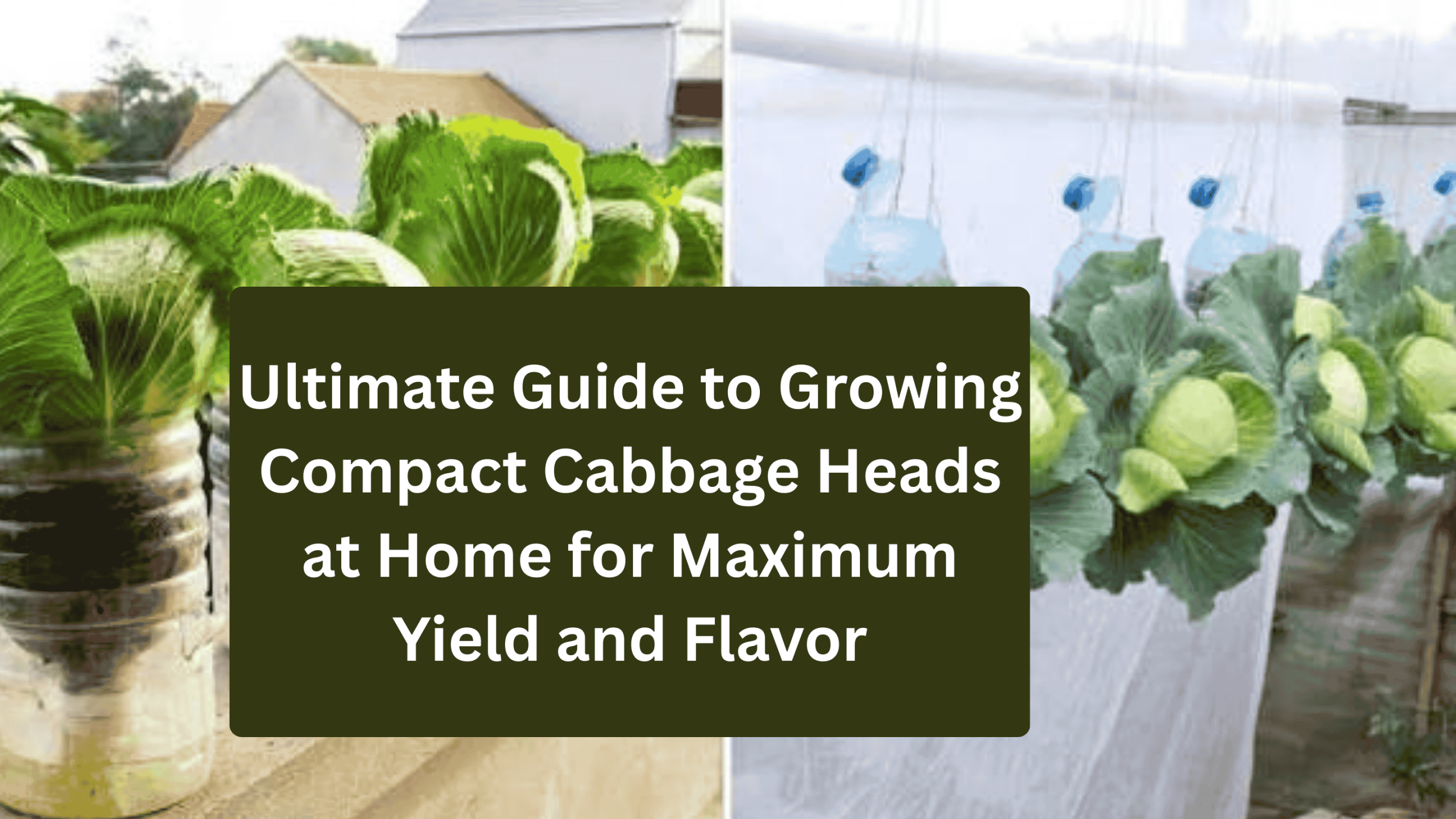
Cabbage is one of the most productive and versatile vegetables you can grow at home, but many gardeners struggle with loose heads, pest damage, or bitter taste. Growing compact, dense cabbage heads requires understanding the plant’s growth cycle, precise timing, and consistent care. When done right, homegrown cabbage delivers superior flavor, higher nutritional value, and impressive yields even in small gardens or containers.

Understanding Cabbage Growth and Head Formation
Cabbage is a cool-season leafy vegetable that forms a tight head when conditions are balanced. The plant first produces a rosette of outer leaves that act as energy collectors. Once enough energy is stored, the inner leaves begin folding tightly to form the head. Any stress during this stage, including heat, irregular watering, or nutrient imbalance, results in loose or misshapen heads.
Why Compact Cabbage Heads Matter
Compact heads are heavier, crisper, and store better. They also indicate proper nutrient uptake and steady growth. Loose heads usually mean the plant experienced stress or was harvested too late. Compact cabbage has better texture for cooking, fermenting, and salads, making it more valuable for home use.

Best Cabbage Varieties for Compact Heads
Choosing the right variety is the foundation of success. Hybrid varieties are often bred for uniform, dense heads. Green cabbage varieties like Golden Acre, Copenhagen Market, and Early Jersey Wakefield are well known for compact growth. Red cabbage varieties such as Red Acre and Ruby Ball also form tight heads. Savoy cabbage forms looser heads naturally but can still be dense with proper care.
Timing the Planting Season Correctly
Cabbage thrives in cool temperatures between 10°C and 20°C. Heat is the biggest enemy of compact head formation. In cooler regions, plant in early spring or late summer for fall harvest. In warmer climates, winter planting gives the best results. Incorrect timing almost always leads to loose heads or premature bolting.
Starting Seeds the Right Way
Healthy seedlings produce better heads. Start seeds in trays or seedbeds with fine, well-draining soil. Sow seeds shallowly and keep the soil evenly moist. Seedlings should be transplanted when they have four to six true leaves. Overgrown or root-bound seedlings often fail to form tight heads.

Choosing the Ideal Growing Location
Cabbage needs full sun for at least six hours daily. Insufficient light leads to weak leaf structure and loose heads. Select an open location with good airflow to reduce disease pressure. Avoid planting cabbage in the same spot repeatedly, as this increases pest and disease problems.
Soil Preparation for Dense Head Formation
Rich, well-draining soil is essential. Cabbage is a heavy feeder and requires fertile soil from the beginning. Prepare beds by adding plenty of compost or well-rotted manure. The soil should be loose to allow steady root expansion. Soil pH between 6.0 and 6.8 is ideal for nutrient absorption.
Spacing Plants for Maximum Compactness
Proper spacing plays a crucial role in head density. Crowded plants compete for nutrients and light, resulting in small or loose heads. Space cabbage plants 12 to 18 inches apart depending on variety. Wider spacing allows better air circulation and uniform head development.

Transplanting Without Stress
Transplanting shock can delay growth and affect head formation. Water seedlings thoroughly before transplanting. Plant them at the same depth they grew in the nursery. Firm the soil gently around roots and water immediately. Transplant during cool parts of the day to minimize stress.
Watering Strategy for Firm Heads
Consistent moisture is critical for cabbage. Irregular watering causes splitting or loose heads. Water deeply and regularly, ensuring the soil remains evenly moist. Avoid shallow, frequent watering, as it encourages weak root systems. Mulching helps retain moisture and stabilize soil temperature.
Importance of Mulching
Mulch conserves moisture, suppresses weeds, and prevents soil temperature fluctuations. Organic mulches such as straw, dried leaves, or compost are ideal. Mulching also reduces stress, which directly contributes to tighter head formation.

Fertilization for Maximum Yield
Cabbage requires steady nutrition throughout its growth cycle. Nitrogen is essential for leaf development early on, but excessive nitrogen later can delay head tightening. Apply balanced fertilizer or compost every two to three weeks. As heads begin forming, reduce nitrogen and ensure adequate potassium for firmness.
Micronutrients That Improve Head Quality
Calcium and boron are often overlooked but play a major role in head formation. Calcium strengthens cell walls, while boron supports leaf development. Deficiencies lead to internal browning or hollow stems. Adding compost and maintaining proper soil pH usually prevents these issues.
Managing Temperature Stress
High temperatures cause cabbage to grow too fast, preventing proper head tightening. Shade nets can reduce heat stress in warmer regions. Growing during the correct season remains the most effective solution. Sudden temperature fluctuations also disrupt head formation.

Pest Control Without Yield Loss
Cabbage pests such as cabbage worms, aphids, and flea beetles weaken plants and reduce head quality. Regular inspection is essential. Handpicking caterpillars, using neem oil, and covering plants with insect netting are effective organic solutions. Healthy plants recover faster from pest damage.
Disease Prevention for Healthy Growth
Fungal and bacterial diseases weaken plants and prevent compact heads. Crop rotation, good spacing, and proper watering reduce disease risk. Avoid wetting leaves late in the day. Remove infected plants promptly to protect the rest of the crop.

Tying Outer Leaves for Firmer Heads
A traditional technique for some varieties involves gently tying outer leaves over the developing head. This concentrates energy inward and improves compactness. Use soft twine and avoid restricting airflow completely. This method works best in dry conditions.

Monitoring Head Development
As heads form, gently press them to assess firmness. A compact head feels solid and heavy. Loose heads feel spongy. Continue proper care even when heads appear nearly mature, as final tightening happens in the last growth phase.
Harvesting at the Perfect Time
Harvest timing directly affects head quality. Harvest when heads are firm and reach full size for the variety. Delaying harvest leads to splitting or loose leaves. Use a sharp knife to cut the head at the base, leaving outer leaves behind.
Post-Harvest Handling for Best Flavor
Handle cabbage gently to avoid bruising. Remove damaged outer leaves and store in a cool, humid place. Properly grown compact cabbage stores longer and maintains better flavor and texture.

Growing Compact Cabbage in Containers
Cabbage grows well in containers if given enough space and nutrients. Use containers at least 12 inches deep and wide. Container-grown cabbage needs more frequent watering and feeding but can produce excellent compact heads with proper care.
Common Mistakes That Prevent Compact Heads
Planting at the wrong time, inconsistent watering, overcrowding, and excessive nitrogen are the most common causes of failure. Ignoring pests early also reduces head quality. Correcting these mistakes dramatically improves results.
Benefits of Growing Your Own Cabbage
Homegrown cabbage is fresher, more flavorful, and free from chemical residues. Growing it yourself ensures better nutrition and consistent supply. Compact heads also reduce waste and improve kitchen efficiency.

Long-Term Success Tips
Keep records of planting dates, varieties, and results. Adjust timing and spacing based on your climate. Over time, experience combined with consistent care produces reliably compact, high-yield cabbage crops.









Leave a Comment