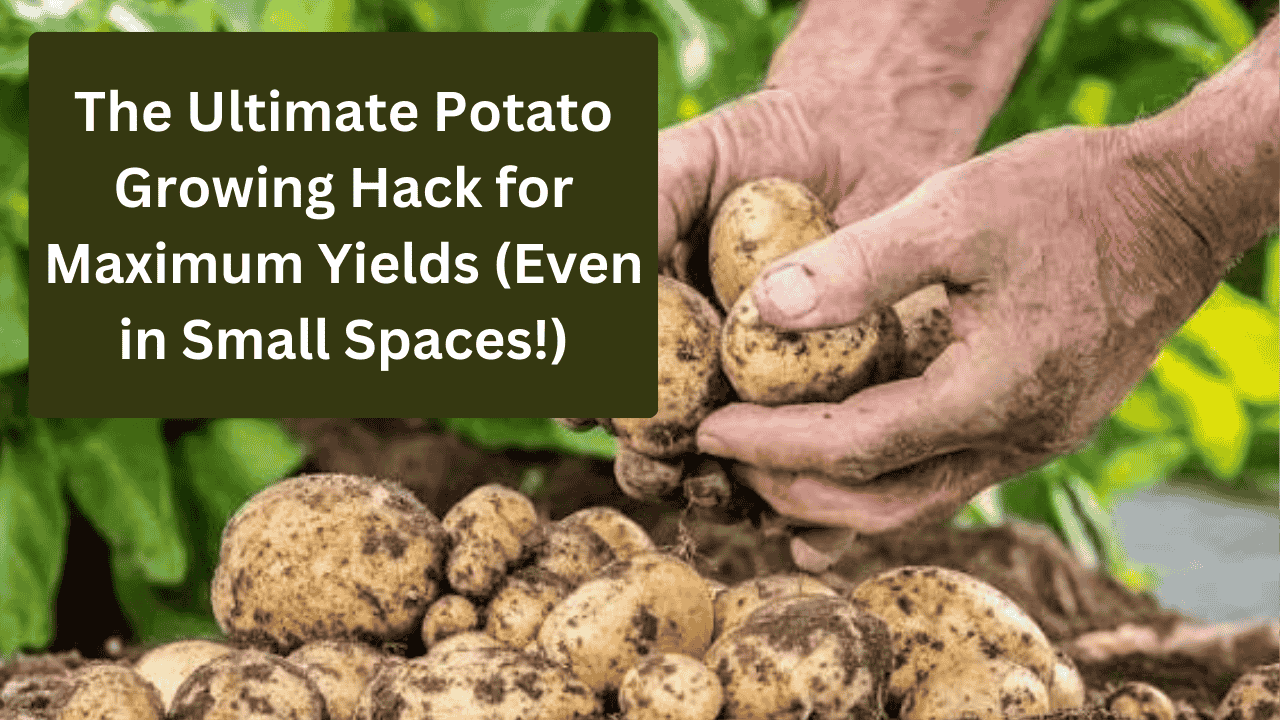
Growing potatoes is often associated with large garden beds and lots of digging, but that belief is outdated. With the right method, potatoes can produce extremely high yields even in very small spaces such as balconies, patios, rooftops, and compact backyards. This guide explains a proven potato growing hack that focuses on vertical growth, soil layering, and strategic care to dramatically increase harvest size while using minimal space.
This method is widely used by urban gardeners because it allows full control over soil quality, moisture, and nutrients. It also reduces disease risk and makes harvesting easier compared to traditional in-ground planting.

Why Traditional Potato Growing Limits Yield
Most gardeners plant potatoes in shallow rows and hill soil around the plants as they grow. While effective, this approach limits how many tubers can form because the underground stem space is restricted. Poor soil structure, inconsistent watering, and pests further reduce yield.

In small spaces, traditional methods simply do not allow enough room for potatoes to develop fully. This is where container-based vertical layering changes everything.
The High-Yield Potato Growing Hack Explained
The key hack is vertical soil layering in deep containers. Potatoes form tubers along buried stems, not just at the base. By gradually covering the stems with fresh soil as the plant grows, you force the plant to create more tubers at multiple levels.
Instead of planting once and waiting, you build the growing environment upward. This mimics ideal underground conditions and maximises production per plant.

Choosing the Best Container for Potatoes
Container choice determines success. A container should be deep, wide, and well-draining. Ideal options include grow bags, plastic drums with holes, fabric pots, or tall wooden boxes.
The minimum depth should be forty to fifty centimetres, but deeper containers produce better results. Containers must have multiple drainage holes to prevent waterlogging, which causes rot.
Light coloured containers help prevent overheating in hot climates.Growing potatoes is often associated with large garden beds and lots of digging, but that belief is outdated. With the right method, potatoes can produce extremely high yields even in very small spaces such as balconies, patios, rooftops, and compact backyards. This guide explains a proven potato growing hack that focuses on vertical growth, soil layering, and strategic care to dramatically increase harvest size while using minimal space.

Soil Mix That Boosts Potato Production
Potatoes need loose, airy soil that allows tubers to expand freely. Heavy or compacted soil reduces size and number of potatoes.
A high-yield soil mix includes garden soil, compost, and coco peat or coarse sand. Adding well-rotted manure improves fertility and moisture retention. Avoid fresh manure, which can burn roots and encourage disease.
The soil should feel crumbly and drain easily while staying slightly moist.

Selecting the Right Potato Variety
Not all potatoes perform equally in containers. Early and mid-season varieties tend to work best. Seed potatoes are recommended over grocery store potatoes because they are disease-free and bred for productivity.
Cut large seed potatoes into pieces with at least two visible eyes each. Allow cut pieces to dry for one to two days before planting to reduce rot risk.
Planting Potatoes Using the Layering Method
Start by filling the container with ten to fifteen centimetres of soil. Place seed potatoes with eyes facing upward and cover lightly with soil.

Once shoots reach fifteen to twenty centimetres tall, add more soil, burying most of the stem while leaving the top leaves exposed. Repeat this process every time the plant grows taller until the container is almost full.
Each new soil layer encourages additional tuber formation.
Sunlight Requirements for High Yields
Potatoes need six to eight hours of direct sunlight daily. Insufficient light results in weak plants and poor tuber development.

Balconies with partial shade can still work, but yield will be lower. Reflective surfaces and light coloured walls help increase light exposure.
Watering Strategy That Prevents Rot
Consistent moisture is critical, but overwatering is a common mistake. Water deeply when the top layer of soil feels dry. During flowering, water demand increases.
Avoid letting the soil dry out completely or remain soggy. Irregular watering leads to cracked or misshapen potatoes.

Early morning watering is ideal.
Feeding Potatoes for Maximum Output
Potatoes are moderate feeders. Too much nitrogen causes excessive leaf growth and fewer tubers. Balanced feeding is essential.
Apply organic liquid fertiliser every two to three weeks. Once flowering begins, switch to potassium-rich feeds to support tuber formation.

Wood ash in small amounts can also help, but avoid overuse.
Managing Flowers and Plant Energy
Potato plants often produce flowers, but flowering is not required for tuber development. Removing flowers redirects energy into potato growth, especially in containers.
This step alone can increase yield noticeably.
Pest and Disease Prevention in Containers
Containers reduce many soil-borne diseases, but pests like aphids and beetles may still appear. Regular inspection is important.
Neem oil spray helps control pests naturally. Good airflow and spacing reduce fungal issues.
Avoid reusing soil from previous potato crops to prevent disease buildup.

When and How to Harvest Potatoes
Small potatoes can be harvested early once the plant flowers. For full harvest, wait until foliage turns yellow and begins to die back.
Stop watering one week before harvest. Gently empty the container and collect potatoes by hand. This method avoids damage and makes harvesting easy.
Expected Yield Using This Method
Using the vertical layering hack, one seed potato can produce two to four kilograms of potatoes under good conditions. Grow bags with multiple seed potatoes can yield enough for several weeks of household consumption.
Results depend on variety, care, and climate, but yields consistently outperform traditional methods in small spaces.
Storage Tips After Harvest
Allow potatoes to dry in a shaded, ventilated area for a few hours. Store in a cool, dark place with good airflow.
Do not wash potatoes before storage. Remove damaged ones to prevent spoilage.
Why This Method Works So Well in Small Spaces
The layering method maximises underground growth while using vertical space. It allows precise control over soil, nutrients, and moisture, which are the three most important factors for potato yield.
Urban gardeners benefit most because this method eliminates digging, reduces mess







Leave a Comment