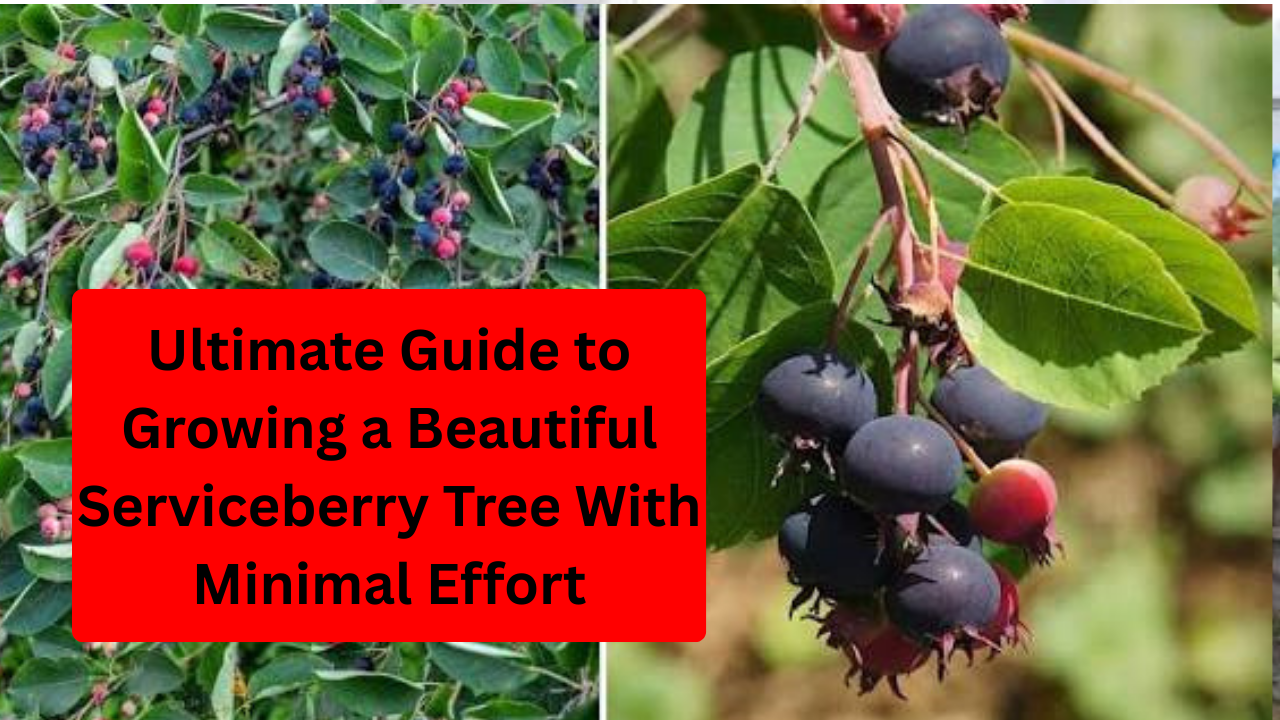
Serviceberry trees are becoming a favourite among home gardeners who want year round beauty without constant maintenance. Known for delicate spring blossoms, edible summer berries, fiery autumn colour, and elegant winter structure, serviceberries offer four seasons of interest in one compact tree. They adapt well to small gardens, urban yards, and even large containers, making them an ideal choice for gardeners who want maximum reward with minimal effort.
Unlike many ornamental trees, serviceberries combine visual appeal with practical benefits. They attract birds and pollinators, tolerate a range of climates, and do not demand intensive pruning or specialised care. With the right start, a serviceberry tree can thrive for decades with little intervention.

Understanding the Serviceberry Tree
Serviceberry belongs to the Amelanchier family and is native to North America. Several varieties exist, including tree forms and multi stem shrubs. Most grow between 10 and 25 feet tall, making them suitable for residential spaces.

In early spring, serviceberries are among the first trees to flower. White blossoms appear before leaves fully emerge, creating a striking display. In early summer, small purple to red berries follow, which are edible and often described as tasting like a mix of blueberry and almond.
Choosing the Right Serviceberry Variety
Selecting the right variety is the foundation of easy growth. Popular low maintenance choices include Amelanchier canadensis, Amelanchier lamarckii, and Amelanchier alnifolia. These varieties are known for strong disease resistance and reliable fruiting.
Gardeners with limited space should consider dwarf or multi stem forms. These adapt well to pruning and fit easily into mixed borders or near patios.

Best Location for Planting
Serviceberry trees prefer a location with full sun to partial shade. Full sun encourages better flowering and fruiting, while partial shade is acceptable in warmer climates. Choose a spot protected from strong winds to preserve blossoms and prevent branch stress.
Avoid planting in areas prone to standing water. Although serviceberries tolerate moisture better than many trees, consistently wet soil can lead to root problems over time.
Soil Requirements for Healthy Growth
One reason serviceberries are so easy to grow is their flexibility with soil. They prefer slightly acidic to neutral soil that drains well. Rich organic soil supports faster establishment but is not strictly necessary.

Before planting, loosen the soil and mix in compost to improve structure. This helps roots spread easily and reduces watering needs later.

How to Plant a Serviceberry Tree
Planting is best done in early spring or autumn. Dig a hole twice as wide as the root ball but no deeper. Place the tree so the root flare sits level with the soil surface.
Backfill gently and water deeply to settle the soil. Apply a layer of mulch around the base, keeping it a few inches away from the trunk. Mulch helps retain moisture and suppress weeds.

Watering Needs After Establishment
During the first year, water regularly to help roots establish. Once mature, serviceberry trees are surprisingly drought tolerant. Deep watering during long dry spells is usually sufficient.
Overwatering is a common mistake. Allow the top layer of soil to dry slightly between watering sessions.
Fertilising with Minimal Effort
Serviceberries do not require heavy feeding. In most gardens, an annual application of compost or a balanced slow release fertiliser in spring is enough.

Excess fertiliser can lead to excessive leaf growth at the expense of flowers and berries. Keeping feeding light supports natural balance.
Pruning Made Simple
Minimal pruning is one of the biggest advantages of serviceberries. Remove dead, damaged, or crossing branches in late winter or early spring. For multi stem varieties, thin out older stems every few years to encourage new growth.
Avoid heavy pruning. Serviceberries naturally form an attractive shape without much intervention.

Pest and Disease Resistance
Serviceberry trees are relatively resistant to pests and diseases. Occasional issues may include aphids or leaf spot, but these rarely threaten overall health.
Good airflow, proper spacing, and avoiding overhead watering help prevent problems. In most cases, no treatment is necessary.
Encouraging Flowering and Fruit Production
Consistent sunlight and moderate watering are the main drivers of flowering. Trees grown in full sun typically produce more blossoms and berries.

Birds love serviceberry fruit, so gardeners who want to harvest berries may need to use netting. Otherwise, the berries provide valuable wildlife food and reduce cleanup since birds consume them quickly.
Growing Serviceberry in Containers
Serviceberries can be grown successfully in large containers. Choose a pot with excellent drainage and use high quality potting mix. Container grown trees need more frequent watering than those planted in the ground.
Dwarf varieties perform best in containers and are perfect for patios and balconies.

Seasonal Care Overview
In spring, enjoy flowering and apply light compost. Summer requires occasional watering and optional bird protection for berries. Autumn brings vibrant foliage with little effort. Winter care is minimal, limited to checking mulch and removing damaged branches if needed.
This predictable cycle is what makes serviceberries so appealing to busy gardeners.
Why Serviceberries Are Ideal for Low Maintenance Gardens
Serviceberries combine beauty, resilience, and practicality. They tolerate cold winters, adapt to urban conditions, and rarely demand attention once established.
For gardeners who want a tree that gives back without constant work, serviceberry is one of the best choices available.
Questions and Answers
- How fast does a serviceberry tree grow
Moderate growth averaging one to two feet per year. - Can serviceberry grow in small gardens
Yes its compact size makes it ideal for limited spaces. - Does serviceberry need full sun
Full sun is best but partial shade works. - Are the berries safe to eat
Yes they are edible and nutritious. - Do serviceberries attract birds
Yes birds are strongly attracted to the fruit. - Is pruning necessary every year
No only light pruning is needed occasionally. - Can serviceberry handle cold climates
Yes it is very cold hardy. - Does it have invasive roots
No roots are well behaved and non invasive. - Can it grow near buildings
Yes when planted with proper spacing. - How long does a serviceberry tree live
Many live for several decades with minimal care










Leave a Comment