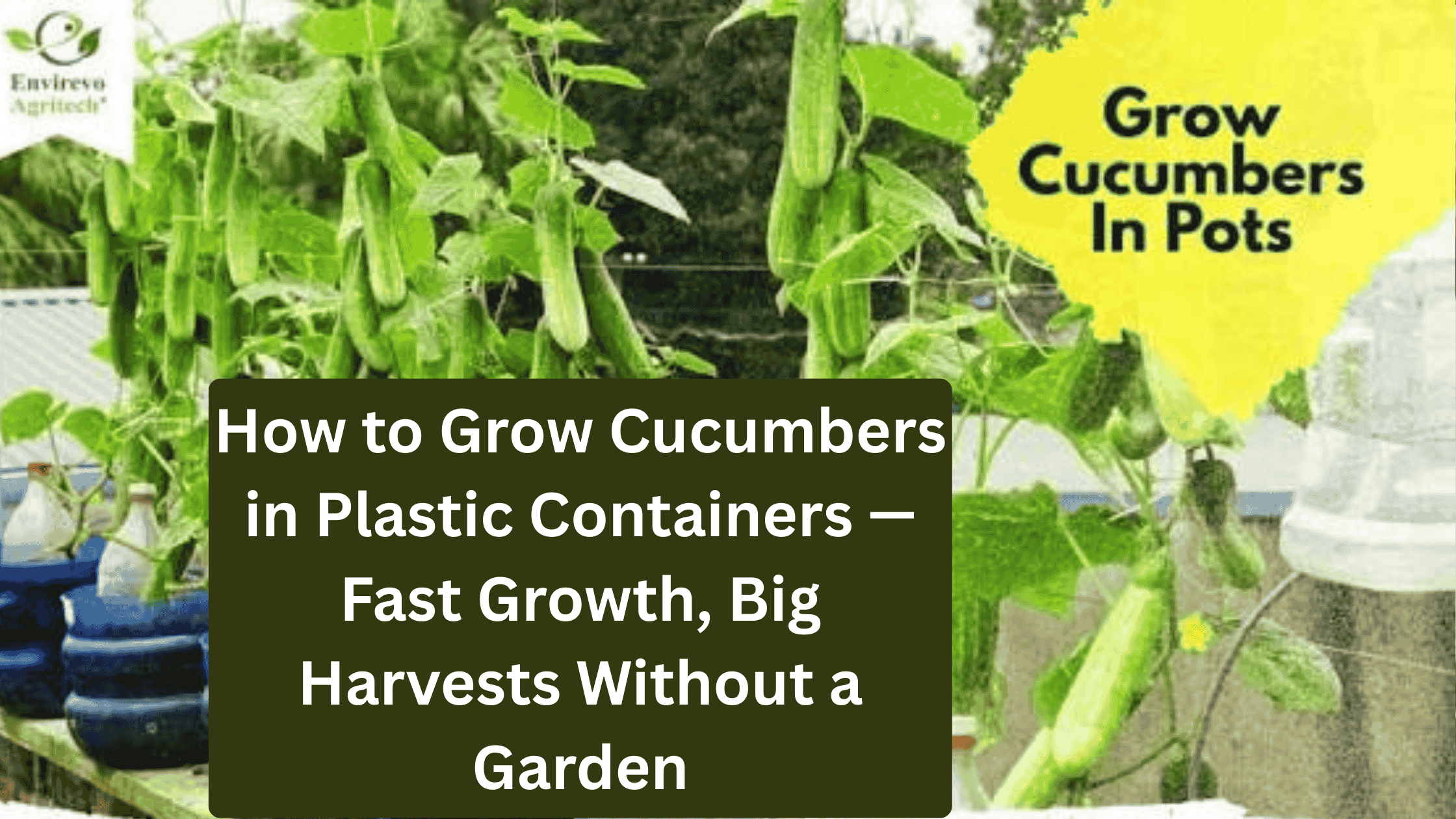
Cucumbers are one of the most rewarding vegetables for container gardening, offering rapid growth, high productivity, and crisp, refreshing fruits even when space is limited. Growing cucumbers in plastic containers is an ideal solution for balconies, rooftops, patios, and small courtyards. With the right container size, soil mix, and vine management, you can achieve garden-level harvests without needing a traditional plot of land.

Why Plastic Containers Work So Well for Cucumbers
Plastic containers are lightweight, affordable, and easy to move, making them perfect for urban gardeners. They retain moisture better than clay pots, which benefits cucumbers that prefer consistently moist soil. Plastic containers also warm up faster, encouraging quicker root activity and faster early growth, especially in cooler climates.
Understanding Cucumber Growth Habits
Cucumbers are warm-season plants with either vining or bush growth habits. Vining varieties produce longer stems and benefit from vertical support, while bush varieties remain compact and are better suited for small containers. Both types grow well in plastic containers when provided adequate nutrients, water, and sunlight.

Choosing the Best Cucumber Varieties for Containers
Selecting the right variety determines success. Bush varieties such as Spacemaster, Patio Snacker, and Bush Champion are ideal for small spaces. Vining varieties like Poinsett, Marketmore, and Armenian cucumber perform excellently in larger containers with trellises. Hybrid varieties often produce higher yields and show better disease resistance.
Selecting the Right Plastic Container Size
Container size directly affects yield. For bush cucumbers, use containers at least 12 to 14 inches deep and wide. Vining cucumbers require larger containers, ideally 18 to 24 inches deep with sufficient width. Ensure each container has multiple drainage holes to prevent waterlogging.
Preparing Containers for Planting
Before planting, clean reused plastic containers thoroughly to remove residues. Drill or punch adequate drainage holes at the base. Elevating containers slightly using bricks improves drainage and airflow. Proper preparation reduces root diseases and promotes healthier growth.

Best Soil Mix for Container-Grown Cucumbers
Cucumbers thrive in loose, fertile, and well-draining soil. A good container mix includes garden soil, compost or vermicompost, and cocopeat or sand in equal proportions. This blend provides nutrients, moisture retention, and proper aeration. Avoid heavy soil that compacts easily.
Sowing Seeds or Transplanting Seedlings
Cucumbers grow best when sown directly in containers, as they dislike root disturbance. Sow two to three seeds per container at a depth of half an inch. Once seedlings emerge, thin to the strongest plant. If transplanting seedlings, handle roots gently and transplant at an early stage.
Sunlight Requirements for Fast Growth
Cucumbers require at least six to eight hours of direct sunlight daily. Insufficient light results in weak vines and poor fruiting. Place containers in south- or west-facing locations. Rotate containers occasionally to ensure even light exposure on all sides.

Watering Strategy for High Yield
Consistent watering is critical for cucumbers. Water deeply whenever the top inch of soil feels dry. Irregular watering causes bitter fruits and misshapen cucumbers. Plastic containers help retain moisture, but drainage must remain excellent to avoid root rot.
Mulching to Retain Moisture
Applying mulch on top of the soil reduces evaporation and keeps roots cool. Organic mulches such as straw, dried leaves, or coco husk work well. Mulching also prevents soil splash, reducing disease risk and keeping fruits clean.
Feeding Cucumbers for Maximum Productivity
Cucumbers are heavy feeders and require regular nutrition. Feed every 10 to 14 days with organic compost tea, vermicompost, or balanced liquid fertilizer. Once flowering begins, increase potassium-rich feeding to improve fruit size and quality.

Importance of Nitrogen Balance
Nitrogen supports leaf and vine growth but excess nitrogen delays flowering. Balanced feeding ensures vigorous growth without sacrificing fruit production. Yellowing leaves may indicate nutrient deficiency and should be corrected promptly.
Supporting Vines With Trellises
Vining cucumbers benefit greatly from vertical support. Use bamboo stakes, wire grids, or nylon nets placed securely in the container. Vertical growth improves airflow, reduces pest attacks, and produces straighter, cleaner fruits.
Training Cucumbers Vertically
Gently guide vines onto supports as they grow. Avoid forcing stems, as they break easily. Vertical training also saves space and increases sunlight exposure, leading to faster growth and higher yields.

Pollination in Container Gardens
Cucumbers produce male and female flowers. Pollination is usually done by bees outdoors, but in balconies or enclosed spaces, hand pollination improves fruit set. Use a soft brush to transfer pollen from male to female flowers early in the morning.

Managing Flower Drop and Poor Fruit Set
Flower drop often results from heat stress, water imbalance, or nutrient deficiency. Maintaining consistent moisture and feeding reduces this issue. Hand pollination significantly improves results in urban environments.
Pest Control for Container Cucumbers
Common pests include aphids, whiteflies, spider mites, and cucumber beetles. Regular inspection helps early detection. Neem oil spray every 10 days effectively controls most pests. Healthy plants are naturally more pest resistant.

Disease Prevention in Containers
Fungal diseases such as powdery mildew can appear in humid conditions. Good airflow, proper spacing, and avoiding overhead watering reduce disease risk. Remove infected leaves immediately and apply organic fungicides if needed.
Pruning for Better Yield
Pruning excess side shoots focuses energy on fruit production. Remove weak lateral branches and damaged leaves regularly. Pruning also improves airflow and reduces disease pressure in dense growth.
Harvesting Cucumbers at the Right Time
Harvest cucumbers while they are young, tender, and green. Overripe fruits become bitter and reduce further production. Frequent harvesting every two to three days encourages continuous fruiting.

Expected Yield From Plastic Containers
With proper care, a single healthy plant can produce dozens of cucumbers over its growing season. Vertical growth and regular feeding significantly increase productivity even in limited space.
Growing Cucumbers Year Round
In warm climates, cucumbers can be grown almost year round. In cooler regions, grow during late spring and summer. Indoor or greenhouse growing extends the season further when light and warmth are adequate.
Common Mistakes to Avoid
Using small containers, inconsistent watering, lack of sunlight, and skipping feeding are the most common causes of failure. Neglecting pest control early also reduces yield. Correcting these issues leads to dramatic improvement.

Benefits of Container-Grown Cucumbers
Container-grown cucumbers are cleaner, easier to manage, and often healthier than ground-grown plants. They allow gardening in urban spaces and reduce exposure to soil-borne diseases. Freshly harvested cucumbers taste superior to store-bought produce.
Maximizing Space in Small Areas
Use vertical racks, railing-mounted containers, or hanging supports to grow multiple plants efficiently. Stagger planting dates to ensure continuous harvests throughout the season.
Long-Term Success Tips
Observe plant behavior and adjust watering and feeding accordingly. Rotate crops each season to prevent disease buildup. With consistent care, container cucumbers become one of the most productive vegetables you can grow at home.









Leave a Comment