Mango trees have a reputation for being slow, difficult, and suited only for large orchards. In reality, mango propagation is much simpler than most gardeners expect. With the right approach, you can raise a strong, healthy mango tree that grows faster, develops a solid structure, and produces quality fruits earlier than seed-grown plants. This complete guide breaks down mango propagation in a clear, practical way so even home gardeners can succeed confidently.
Why Propagation Is the Smart Way to Grow Mango Trees
Growing mango trees from seed is common, but it comes with major drawbacks. Seed-grown plants take many years to mature and may not retain the characteristics of the parent fruit. Flavor, size, and yield often vary.Mango trees have a reputation for being slow, difficult, and suited only for large orchards. In reality, mango propagation is much simpler than most gardeners expect. With the right approach, you can raise a strong, healthy mango tree that grows faster, develops a solid structure, and produces quality fruits earlier than seed-grown plants. This complete guide breaks down mango propagation in a clear, practical way so even home gardeners can succeed confidently.
Propagation ensures genetic consistency. Trees grown through vegetative methods produce fruits identical to the parent tree. They also establish faster, grow more uniformly, and begin fruiting much earlier, making propagation the preferred method for serious home gardeners.

Understanding Mango Tree Growth Behavior
Mango trees are tropical evergreens that respond strongly to warmth, sunlight, and proper moisture. During active growth seasons, they channel energy efficiently into root and shoot development. Propagation works best when this natural growth cycle is supported rather than forced.
Young mango plants require a balance between vegetative growth and structural strength. Proper propagation sets this balance early, reducing problems later in the tree’s life.
Best Season for Mango Propagation
Climate plays a critical role in success. Warm temperatures and moderate humidity encourage root formation and reduce stress.

Late spring to early monsoon is the ideal time in most tropical and subtropical regions. Avoid cold winters and extremely dry periods, as rooting becomes slow and failure rates increase significantly.
Selecting the Ideal Mother Tree
Always start with a healthy, productive mango tree. The mother tree should be disease-free, actively growing, and known for good fruit quality.
Branches selected for propagation should be semi-mature. Very soft shoots dry out easily, while overly woody branches are slow to root. A healthy branch improves survival and long-term performance of the new plant.

Most Effective Mango Propagation Methods
Several methods exist, but not all are equally suitable for home gardeners.
Air layering is the most reliable and beginner-friendly technique. Grafting is widely used commercially but requires precision and experience. Cuttings are generally unreliable for mango and are best avoided.
For fast, healthy growth with minimal failure, air layering remains the top choice.

Air Layering Step-by-Step Process
Choose a healthy branch about the thickness of a pencil. Remove a ring of bark around one inch wide. Scrape gently to remove the cambium layer to prevent natural healing.
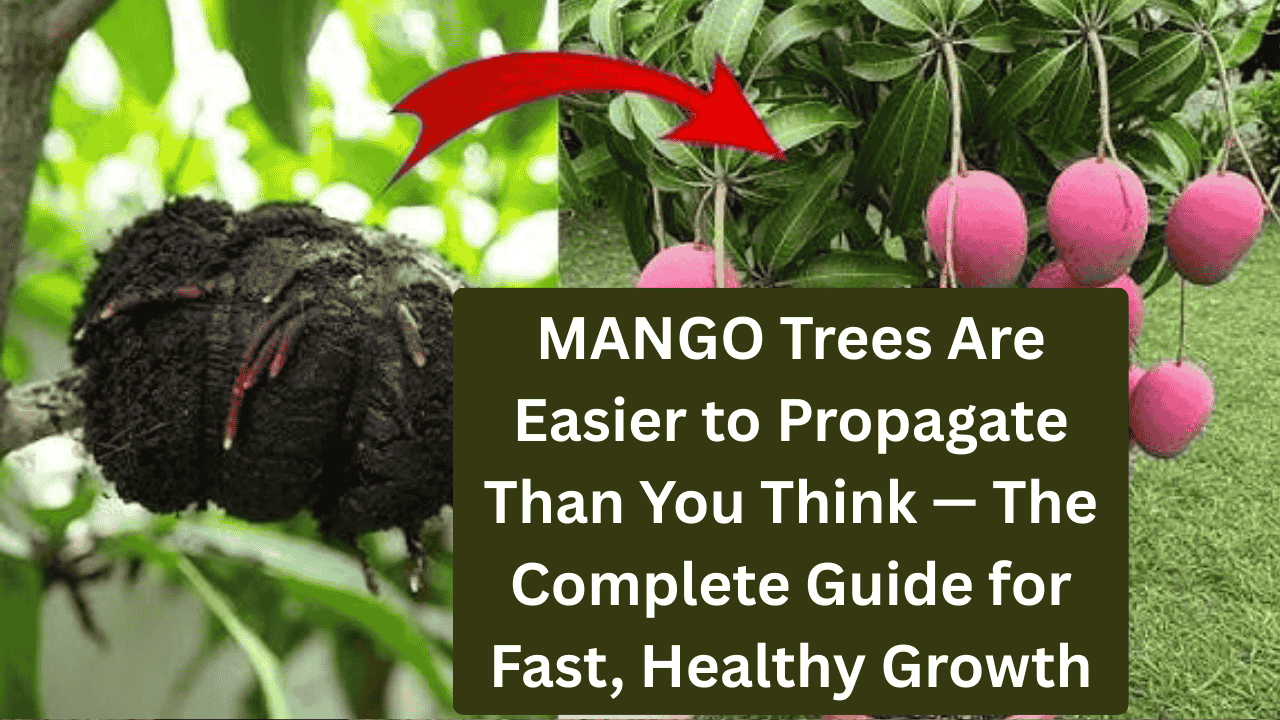
Wrap the exposed area with moist coco peat, moss, or fine soil. Cover it tightly with plastic and secure both ends to hold moisture inside. This environment encourages root formation while the branch remains attached to the tree.
Monitoring Root Formation
Check the layered section every one to two weeks. The medium should remain moist but not dripping wet.

Roots typically appear within four to eight weeks, depending on temperature and humidity. Once a dense cluster of roots is visible through the plastic, the layer is ready to be separated.
Separating and Potting the New Plant
Cut the branch just below the rooted section using a sharp, clean tool. Handle gently to avoid damaging young roots.
Plant it in a pot with good drainage using a loose, well-draining soil mix. Water lightly and place the pot in bright, indirect sunlight for the first two weeks.

Early Care After Potting
The newly potted mango plant is sensitive and needs protection. Avoid direct midday sun initially. Keep the soil evenly moist without overwatering.
Do not apply strong fertilizers during the first month. Once new leaves emerge, light organic feeding can begin.
Encouraging Rapid and Healthy Growth
Gradually introduce the plant to full sunlight after establishment. Mango trees thrive in bright conditions and need at least six to eight hours of sun daily.

Regular watering during dry spells, combined with mulching, supports steady growth. Balanced nutrition helps develop both foliage and root strength.
Shaping the Young Mango Tree
Early pruning helps form a strong framework. When the plant reaches about two feet in height, pinch the top to encourage branching.
Remove weak, damaged, or inward-growing branches. Proper airflow reduces disease risk and promotes healthier growth.

When to Expect Flowers and Fruits
Propagated mango trees usually begin flowering within three to four years under good care. This is much earlier than seed-grown trees, which may take double the time.
Consistent sunlight, proper nutrition, and stress-free growth are key factors in timely fruiting.
Common Errors That Slow Growth
Overwatering is the most frequent mistake and often leads to root rot. Using unhealthy parent branches results in weak plants.
Rushing the process by disturbing roots too early can permanently stunt growth. Patience during the early stages pays off later.
Why Mango Propagation Is Easier Than It Seems
Air layering uses the tree’s natural ability to form roots while still receiving nutrients. This dramatically increases success rates compared to cuttings or seeds.
For home gardeners, this method offers predictability, faster results, and better fruit quality without the need for special chemicals or advanced tools.
Growing mango trees from seed is common, but it comes with major drawbacks. Seed-grown plants take many years to mature and may not retain the characteristics of the parent fruit. Flavor, size, and yield often vary.Mango trees have a reputation for being slow, difficult, and suited only for large orchards. In reality, mango propagation is much simpler than most gardeners expect. With the right approach, you can raise a strong, healthy mango tree that grows faster, develops a solid structure, and produces quality fruits earlier than seed-grown plants. This complete guide breaks down mango propagation in a clear, practical way so even home gardeners can succeed confidently.






Leave a Comment