
Growing a mango tree at home may sound complicated, but propagation is far easier than most people think. With the right technique and a little patience, you can raise a healthy mango plant that grows faster, establishes stronger roots, and fruits earlier than seed-grown trees. This guide is written for beginners and focuses on practical, proven methods that work well in home gardens, balconies, and backyards.
Why Propagating Mango Trees Is Better Than Growing from Seed
Many people start mango trees from seeds, but this approach has limitations. Seed-grown mango trees take longer to mature and often do not produce fruits true to the parent variety. In some cases, fruit quality may be inferior or inconsistent.
Propagation using vegetative methods preserves the genetic traits of the parent tree. This means better fruit quality, predictable taste, and earlier fruiting. Propagated mango trees also tend to be more uniform in growth and structure, making them easier to manage.Growing a mango tree at home may sound complicated, but propagation is far easier than most people think. With the right technique and a little patience, you can raise a healthy mango plant that grows faster, establishes stronger roots, and fruits earlier than seed-grown trees. This guide is written for beginners and focuses on practical, proven methods that work well in home gardens, balconies, and backyards.

Best Time to Propagate a Mango Tree
Timing plays a major role in success. Mango propagation works best during warm and humid conditions.
Late spring to early monsoon is the ideal period in tropical and subtropical regions. During this time, sap flow is active, temperatures are favorable, and rooting success is higher. Avoid winter months, as growth slows and failure rates increase.
Choosing the Right Parent Mango Tree
Always select a healthy, disease-free mango tree with good fruit quality. The parent tree should be mature and actively growing. Avoid trees that show signs of fungal infection, pest damage, or nutrient deficiency.

Branches chosen for propagation should be strong, greenish brown, and neither too soft nor too woody. Healthy source material directly affects the success and future performance of the new plant.
Propagation Methods Suitable for Beginners
There are several ways to propagate mango trees, but beginners should focus on methods that balance simplicity and success rate.
Air layering is the most beginner-friendly and reliable method. Grafting is also effective but requires more skill and precision. Cuttings are generally less successful for mango and are not recommended for beginners.

Air Layering Method Explained
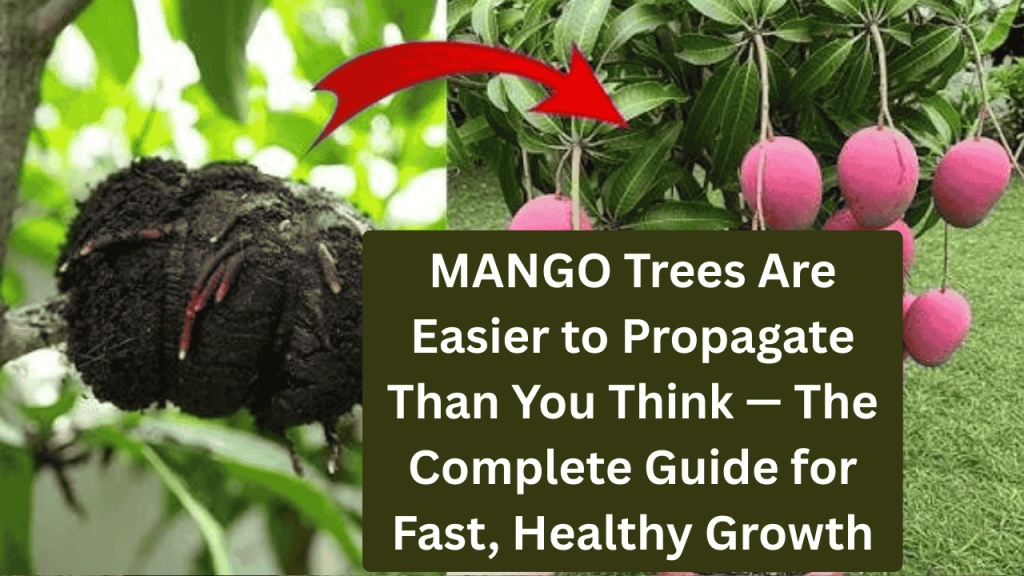
Air layering involves encouraging roots to form on a branch while it is still attached to the parent tree. This allows the branch to receive nutrients during root formation, greatly improving success.
Select a pencil-thick healthy branch. Remove a ring of bark about one inch wide. Scrape gently to remove the cambium layer to prevent healing. Wrap the exposed area with moist soil, coco peat, or sphagnum moss.
Cover the wrapped area with plastic and tie both ends securely. Keep the medium moist by checking periodically.

Root Development and Separation
Roots usually develop within four to eight weeks, depending on climate and tree vigor. Once you see a healthy network of roots through the plastic, the branch is ready to be separated.
Cut below the rooted section using a sharp, clean tool. Remove the plastic carefully without damaging the roots. The new plant is now ready for potting.
Potting the New Mango Plant
Choose a medium-sized pot with good drainage holes. Use a well-draining soil mix consisting of garden soil, sand, and compost.

Plant the rooted section gently and firm the soil around it. Water thoroughly but avoid waterlogging. Place the pot in a bright area with indirect sunlight for the first two weeks.
Aftercare During Early Growth
The early stage is critical. Protect the young plant from harsh sunlight, heavy rain, and strong winds. Keep the soil consistently moist but not soggy.
Avoid applying strong fertilizers during the first month. Once new leaves appear, you can begin light feeding with organic compost or diluted liquid manure.

Encouraging Faster Growth
Mango trees respond well to warmth, sunlight, and balanced nutrition. After establishment, gradually expose the plant to full sunlight. At least six to eight hours of sun daily is ideal.
Mulching helps retain moisture and regulate soil temperature. Regular watering during dry periods promotes steady growth, but overwatering should be avoided.
Pruning for Strong Structure
Early pruning encourages a strong framework. Pinch the growing tip once the plant reaches about two feet in height. This promotes branching and prevents the tree from becoming tall and weak.

Remove weak or crossing branches to improve airflow and reduce disease risk.
When Will the Tree Start Fruiting
Propagated mango trees generally begin fruiting within three to four years under good care. This is significantly earlier than seed-grown trees, which may take six to eight years or more.
Flowering depends on climate, variety, and management. Proper nutrition and sunlight play a major role in timely fruiting.

Common Mistakes to Avoid
Using unhealthy parent branches is a common mistake. Poor sanitation during cutting can introduce infections. Overwatering newly potted plants often leads to root rot.
Impatience is another issue. Disturbing the plant too early can damage developing roots and slow growth.
Why This Method Works Well for Home Gardeners
Air layering requires minimal tools and no special chemicals. It offers high success rates and predictable results, making it ideal for beginners.
This method allows gardeners to grow high-quality mango trees even in limited spaces, including terraces and large containers.
Propagation using vegetative methods preserves the genetic traits of the parent tree. This means better fruit quality, predictable taste, and earlier fruiting. Propagated mango trees also tend to be more uniform in growth and structure, making them easier to manage.Growing a mango tree at home may sound complicated, but propagation is far easier than most people think. With the right technique and a little patience, you can raise a healthy mango plant that grows faster, establishes stronger roots, and fruits earlier than seed-grown trees. This guide is written for beginners and focuses on practical, proven methods that work well in home gardens, balconies, and backyards.





Leave a Comment