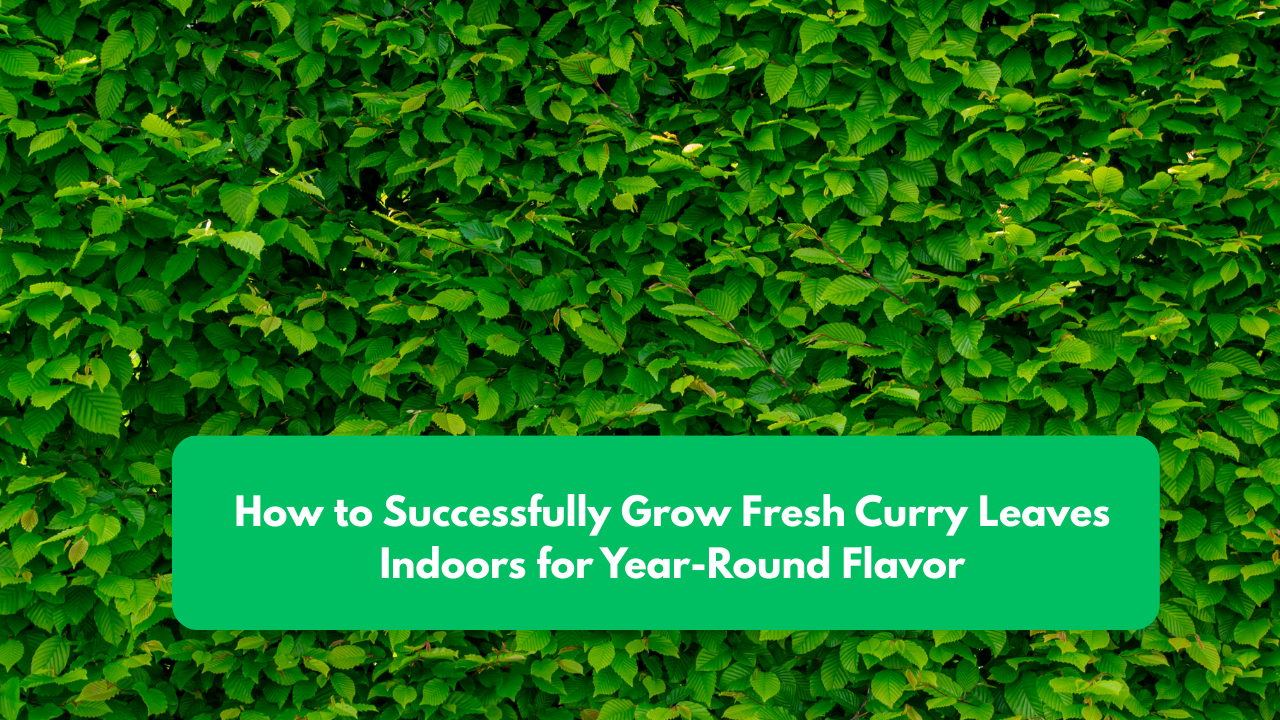
The aroma of fresh curry leaves crackling in hot oil is deeply tied to home cooking for many families. Yet in many cities and colder regions, finding fresh curry leaves can feel like a luxury. Grocery stores often stock them irregularly, and dried versions simply do not offer the same fragrance or taste. This is why more people are turning to indoor gardening to grow their own curry leaf plants at home.
Growing curry leaves indoors is not difficult, but it does require patience and an understanding of the plant’s natural habits. When cared for properly, a single indoor plant can provide fresh leaves for years, adding both flavor and greenery to your living space.
Here’s a complete, step-by-step guide to successfully growing fresh curry leaves indoors and enjoying their flavor all year long.

Understanding the Curry Leaf Plant and Its Natural Growth Habit
Curry leaf plants are tropical by nature and thrive in warm, stable environments. In their native climate, they grow outdoors as shrubs or small trees. Indoors, they adapt well when their basic needs are met.
The plant grows slowly, especially in its early stages. Many new growers become discouraged when they don’t see fast results, but slow growth is normal. Once established, the plant becomes more resilient and produces leaves more consistently.
Curry leaf plants also prefer routine. Sudden changes in temperature, light, or watering schedules can stress the plant and cause leaf drop. Consistency is one of the most important factors for long-term indoor success.

Choosing the Best Way to Start Your Indoor Plant
Starting with a healthy young plant from a nursery is the most reliable option for indoor growers. These plants are already established and adjust more easily to indoor conditions.
Growing from seeds is possible, but it requires more time and patience. Seeds can take several weeks to germinate, and not all seeds will sprout. If you choose seeds, make sure they are fresh, as older seeds have a much lower success rate.
Whichever method you choose, inspect the plant carefully. Healthy curry leaf plants have firm stems, glossy green leaves, and no visible signs of pests or disease.

Selecting the Right Pot for Indoor Growth
The pot plays a major role in the plant’s health. Curry leaf plants dislike waterlogged soil, so drainage is essential.
Choose a pot with multiple drainage holes at the bottom. A medium-sized pot is ideal for young plants, as oversized pots can hold excess moisture and slow root development.
As the plant grows, you can move it to a larger container. Repotting every two to three years is usually enough for indoor plants.

Preparing the Ideal Soil Mix
Soil quality can make or break your indoor curry leaf plant. The roots need both moisture and oxygen, which means the soil must drain well while still retaining some moisture.
A loose, well-draining mix works best. Many home gardeners use a blend of regular potting soil, sand or perlite, and a small amount of compost. This combination keeps the soil airy and prevents root rot.
Avoid heavy garden soil, which tends to compact and retain too much water indoors.

Providing the Right Light Indoors
Light is one of the biggest challenges for indoor curry leaf plants. Without enough light, the plant may survive but will not produce many leaves.
Place the plant near a bright window where it can receive at least six hours of sunlight each day. South- or west-facing windows are usually the best choices.
If natural sunlight is limited, especially during winter, a grow light can help. Position the light above the plant and keep it on for 10–12 hours a day. This mimics natural daylight and encourages steady growth.

Establishing a Proper Watering Routine
Overwatering is the most common reason indoor curry leaf plants fail. The plant prefers slightly dry conditions over constantly wet soil.
Water the plant only when the top inch of soil feels dry to the touch. When you water, do so thoroughly until excess water drains out of the bottom of the pot.
During colder months, reduce watering significantly. Growth slows in winter, and the plant uses less water during this time.

Maintaining Warmth and Protecting From Cold Stress
Curry leaf plants thrive in warm temperatures and do not tolerate cold well. Indoor temperatures between 18°C and 30°C are ideal.
Keep the plant away from cold drafts, open windows in winter, and air-conditioning vents. Sudden temperature drops can cause leaves to turn yellow or fall off.
If you live in a particularly cold region, placing the plant in the warmest room of the house during winter can make a noticeable difference.

Managing Humidity Indoors
Indoor air can become very dry, especially during winter when heating systems are running. While curry leaf plants are not extremely sensitive to humidity, they do appreciate a slightly humid environment.
Light misting once or twice a week can help, especially if the air feels dry. Alternatively, placing a small tray of water near the plant can increase local humidity.
Avoid excessive misting, as constantly wet leaves can encourage fungal issues.
Feeding the Plant for Healthy Leaf Production
Indoor plants rely entirely on you for nutrients. Over time, soil nutrients become depleted, so regular feeding is important.
Use a balanced liquid fertilizer once every four weeks during spring and summer. This supports leaf growth and overall plant health.
Avoid fertilizing during winter, when the plant’s growth naturally slows. Feeding during dormancy can stress the roots and cause damage.
Pruning Techniques for Bushier Growth
Pruning is essential if you want a full, leafy curry leaf plant. Without pruning, the plant may grow tall and thin with fewer leaves.
Once the plant is well-established, trim the top stems every few weeks. This encourages side branches and increases leaf production.
Always use clean, sharp scissors or pruning shears. Remove weak or leggy growth to help the plant focus its energy on healthy stems.
Repotting and Root Care Over Time
As the plant grows, its roots will eventually outgrow the pot. Signs that repotting is needed include roots growing out of drainage holes or water running straight through the pot.
Repot the plant in spring, when it is entering its active growth phase. Move it to a slightly larger pot and refresh the soil mix.
Handle the roots gently and avoid breaking them, as curry leaf plants can be sensitive to root disturbance.
Real-Life Experiences From Indoor Growers
Rina, who lives in a high-rise apartment, started growing curry leaves near her kitchen window. At first, growth was slow, but after adjusting her watering routine, the plant began producing new leaves. “Now I pick a few leaves every week, and the plant just keeps growing,” she shared.
Another home gardener mentioned that switching from irregular watering to a fixed schedule completely changed the plant’s health within two months.
What Gardeners Observe About Indoor Success
Many experienced gardeners point out that indoor curry leaf plants fail more often due to overcare than neglect. Too much water, fertilizer, or movement can do more harm than good.
A consistent routine, proper drainage, and enough light are repeatedly mentioned as the main factors behind long-term success.
Common Problems and Practical Solutions
Yellowing leaves are usually a sign of overwatering or poor drainage. Allow the soil to dry out and check that excess water can escape freely.
Leaf drop often happens when the plant is exposed to cold air or sudden changes in location. Keep the plant in a stable environment.
Slow growth is normal, especially during winter. Focus on maintaining healthy conditions rather than forcing faster growth.
Harvesting Leaves Without Stressing the Plant
Harvesting should be done carefully to keep the plant productive. Always pick mature leaves and avoid removing too many at once.
A good rule is to never harvest more than one-third of the plant at a time. Regular, light harvesting encourages fresh growth and keeps the plant healthy.
What You Should Know Before Growing Curry Leaves Indoors
Indoor curry leaf plants are a long-term commitment. They will not provide instant results, but with time, they become reliable and rewarding.
Patience, consistency, and observation are your best tools. Over time, you’ll learn to recognize what your plant needs simply by watching how it responds.
Questions and Answers About Growing Curry Leaves Indoors
Can curry leaf plants grow completely indoors?
Yes, as long as they receive enough light and proper care.
How long does it take to harvest leaves from a young plant?
Typically between six and nine months.
Do curry leaf plants need direct sunlight indoors?
Bright indirect or partial direct sunlight works best.
Is it possible to grow curry leaves from seeds indoors?
Yes, but it requires patience and fresh seeds.
How often should the plant be watered?
Only when the top inch of soil is dry.
Why are my curry leaves turning yellow?
Overwatering is the most common cause.
Can I keep the plant in the kitchen?
Yes, if there is enough natural light.
Does the plant need humidity?
Moderate humidity helps but is not critical.
How tall can an indoor curry leaf plant grow?
Usually between 2 and 4 feet with regular pruning.
Will the plant stop growing in winter?
Growth slows but usually resumes in warmer months.
Can I move the plant outdoors in summer?
Yes, but introduce it gradually to avoid shock.
How often should I fertilize the plant?
Once a month during spring and summer.
Is pruning necessary?
Yes, pruning encourages bushier growth and more leaves.
Can leaf drop be reversed?
Yes, once conditions improve, new growth often appears.










Leave a Comment