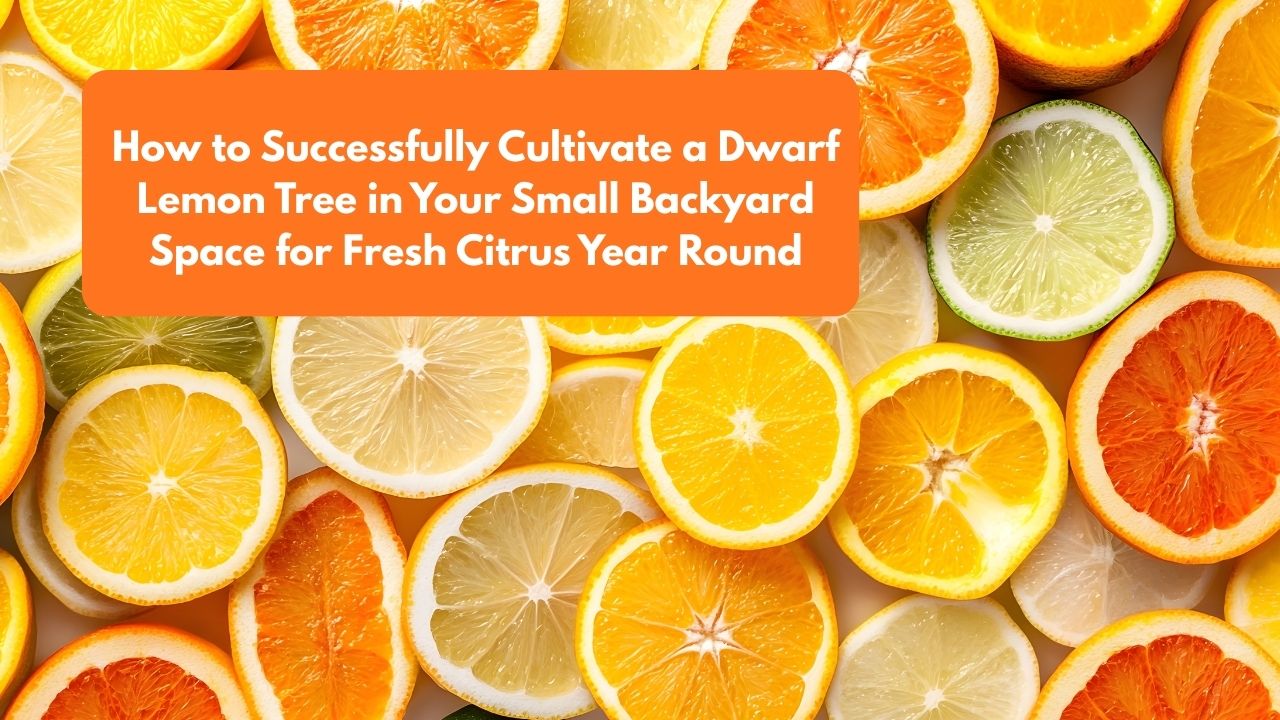
There is something deeply satisfying about stepping outside and picking a fresh lemon straight from your own tree. For many home gardeners, lemons are associated with large orchards or sprawling gardens, but that picture is no longer accurate. Dwarf lemon trees have made it possible for people with small backyards, patios, and even courtyards to enjoy fresh citrus throughout the year.
A dwarf lemon tree does not just provide fruit. It adds fragrance, greenery, and a sense of permanence to your outdoor space. With the right care, even a compact tree can produce a generous harvest year after year. The key lies in understanding how dwarf citrus trees grow and how to adapt their care to limited space.
This guide explains, in detail, how to successfully cultivate a dwarf lemon tree in a small backyard and enjoy fresh lemons across the seasons.

Understanding Dwarf Lemon Trees and Their Growth Habit
Dwarf lemon trees are not genetically small lemons by chance. They are created by grafting lemon varieties onto dwarf rootstocks that control their size.
Most dwarf lemon trees grow between 6 and 10 feet tall when planted in the ground and even smaller when grown in containers. Despite their size, they produce full-sized lemons with the same flavor and aroma as standard trees.
Their compact growth habit makes them ideal for small yards, patios, and even raised garden beds, provided they receive enough sunlight and care.

Choosing the Right Dwarf Lemon Variety
Not all lemon trees are equally suited for small spaces. Some dwarf varieties are better adapted to container growing, while others perform best when planted directly in the ground.
When selecting a tree, look for varieties known for consistent fruiting and manageable size. A healthy nursery tree should have glossy green leaves, a strong central stem, and no signs of pests or disease.
Starting with a young tree helps it adapt more easily to your backyard environment and establishes a strong root system over time.

Deciding Between Ground Planting and Containers
One of the biggest decisions is whether to plant your dwarf lemon tree in the ground or grow it in a container.
Planting in the ground allows the tree to access more nutrients and moisture, often resulting in stronger growth and higher yields. Containers offer flexibility, especially in regions with colder winters, as the tree can be moved to a sheltered location.
Both methods work well for small backyards. The choice depends on climate, available space, and your long-term plans.

Selecting the Best Location in a Small Backyard
Sunlight is the most critical factor for lemon trees. They require at least six to eight hours of direct sunlight each day to produce healthy foliage and fruit.
Choose the sunniest spot in your backyard, preferably one that receives morning and midday sun. Avoid shaded areas near walls or large trees.
Good air circulation is also important. It reduces the risk of fungal diseases and helps the tree stay healthy year-round.

Preparing the Soil for Strong Root Development
Dwarf lemon trees thrive in well-draining soil. Poor drainage leads to root rot, one of the most common problems in citrus growing.
If planting in the ground, loosen the soil deeply and mix in organic matter such as compost. This improves drainage while providing nutrients.
For containers, use a high-quality citrus or well-draining potting mix. Avoid heavy garden soil, which becomes compacted in pots.

Planting Your Dwarf Lemon Tree Correctly
Proper planting sets the foundation for years of healthy growth.
Dig a hole that is slightly wider than the root ball but no deeper. The top of the root ball should sit level with or slightly above the soil surface.
Backfill gently, firming the soil without compacting it. Water thoroughly after planting to remove air pockets and help roots settle.

Watering Practices for Consistent Growth
Lemon trees need regular watering, especially during their early years. However, they do not tolerate waterlogged conditions.
Water deeply, allowing the soil to dry slightly between watering sessions. Shallow, frequent watering encourages weak roots.
In hot weather, watering may be needed more often. During cooler months, reduce watering to prevent excess moisture.

Feeding a Dwarf Lemon Tree for Year-Round Fruit
Citrus trees are heavy feeders, even dwarf ones. Regular feeding is essential for flowering and fruit development.
Use a fertilizer formulated for citrus trees. Apply it during the active growing season, usually from spring through early autumn.
Avoid over-fertilizing, as this can lead to excessive leaf growth at the expense of fruit production.
Managing Flowering and Fruit Set
Dwarf lemon trees often flower multiple times a year, especially in warm climates.
While it can be tempting to let every flower turn into fruit, young trees benefit from thinning. Removing some early fruit allows the tree to focus on establishing strong branches and roots.
As the tree matures, it can support heavier fruit loads without stress.
Pruning to Maintain Size and Shape
Pruning is essential for keeping a dwarf lemon tree productive and manageable in a small backyard.
Remove dead, damaged, or crossing branches to improve airflow and light penetration. Light shaping helps maintain a compact form.
Avoid heavy pruning, as lemons produce fruit on new growth. Pruning is best done after harvesting or during periods of slower growth.
Protecting the Tree From Cold and Heat Stress
Dwarf lemon trees are sensitive to extreme temperatures.
In colder regions, frost protection is essential. Cover the tree during cold nights or move container-grown trees to sheltered areas.
During heatwaves, provide deep watering and consider light shade during the hottest part of the day to prevent leaf scorch.
Pollination and Fruit Production in Small Spaces
Lemon trees are self-pollinating, meaning one tree is enough to produce fruit.
In small backyards, natural pollinators usually handle the job. In very sheltered areas, gently shaking branches during flowering can help pollen spread.
Good sunlight and nutrition play a bigger role in fruit set than pollination itself.
Common Problems and Practical Solutions
Yellowing leaves often indicate nutrient deficiencies or improper watering. Adjust feeding and watering schedules as needed.
Dropping flowers or young fruit can result from stress, temperature fluctuations, or inconsistent watering.
Pests such as aphids may appear occasionally. Early detection and gentle treatment usually prevent serious damage.
Real Stories From Home Gardeners
A homeowner with a narrow backyard shared that their dwarf lemon tree became the most productive plant in the space. “I never thought I could grow citrus here, but now I harvest lemons almost every month,” they said.
Another grower mentioned that container growing allowed them to protect the tree during winter, resulting in better yields the following year.
Observations From Backyard Gardeners
Many backyard gardeners note that dwarf lemon trees respond well to routine care.
They emphasize that consistency in watering, feeding, and sunlight matters more than complex techniques.
Most problems, they observe, arise from irregular care rather than environmental limitations.
Harvesting Lemons at the Right Time
Lemons do not ripen further once picked, so timing is important.
Harvest when the fruit reaches full size and develops a bright yellow color. Ripe lemons feel firm but slightly soft when gently squeezed.
Regular harvesting encourages the tree to produce more flowers and fruit.
Long-Term Care and Tree Longevity
With proper care, a dwarf lemon tree can remain productive for decades.
Annual feeding, light pruning, and attention to seasonal changes keep the tree healthy.
Over time, the tree becomes more resilient and produces larger, more reliable harvests.
What You Should Know Before Growing a Dwarf Lemon Tree
Dwarf lemon trees are well suited to small backyards, but they are not maintenance-free.
They require commitment, sunlight, and regular care. In return, they offer fresh fruit, fragrance, and beauty year-round.
For gardeners willing to invest time and attention, the rewards are substantial and long-lasting.
Questions and Answers About Growing Dwarf Lemon Trees
Can dwarf lemon trees grow in small backyards?
Yes, they are ideal for limited outdoor spaces.
How tall does a dwarf lemon tree grow?
Usually between 6 and 10 feet.
Do dwarf lemon trees produce real lemons?
Yes, the fruit is full-sized and flavorful.
How much sunlight does the tree need?
At least six to eight hours daily.
Can I grow a dwarf lemon tree in a pot?
Yes, containers work very well.
How often should I water the tree?
When the soil surface feels dry.
Does the tree need fertilizer?
Yes, regular citrus fertilizer improves fruiting.
Will the tree produce fruit year-round?
In warm climates, yes, with peak seasons.
How long before the tree bears fruit?
Usually within two to three years.
Is pruning necessary?
Yes, light pruning helps maintain size and health.
Can frost damage the tree?
Yes, protection is needed in cold weather.
Do I need more than one tree?
No, one tree is enough.
Why are my lemons dropping early?
Often due to stress or irregular watering.
How long can the tree live?
Several decades with proper care.







Leave a Comment