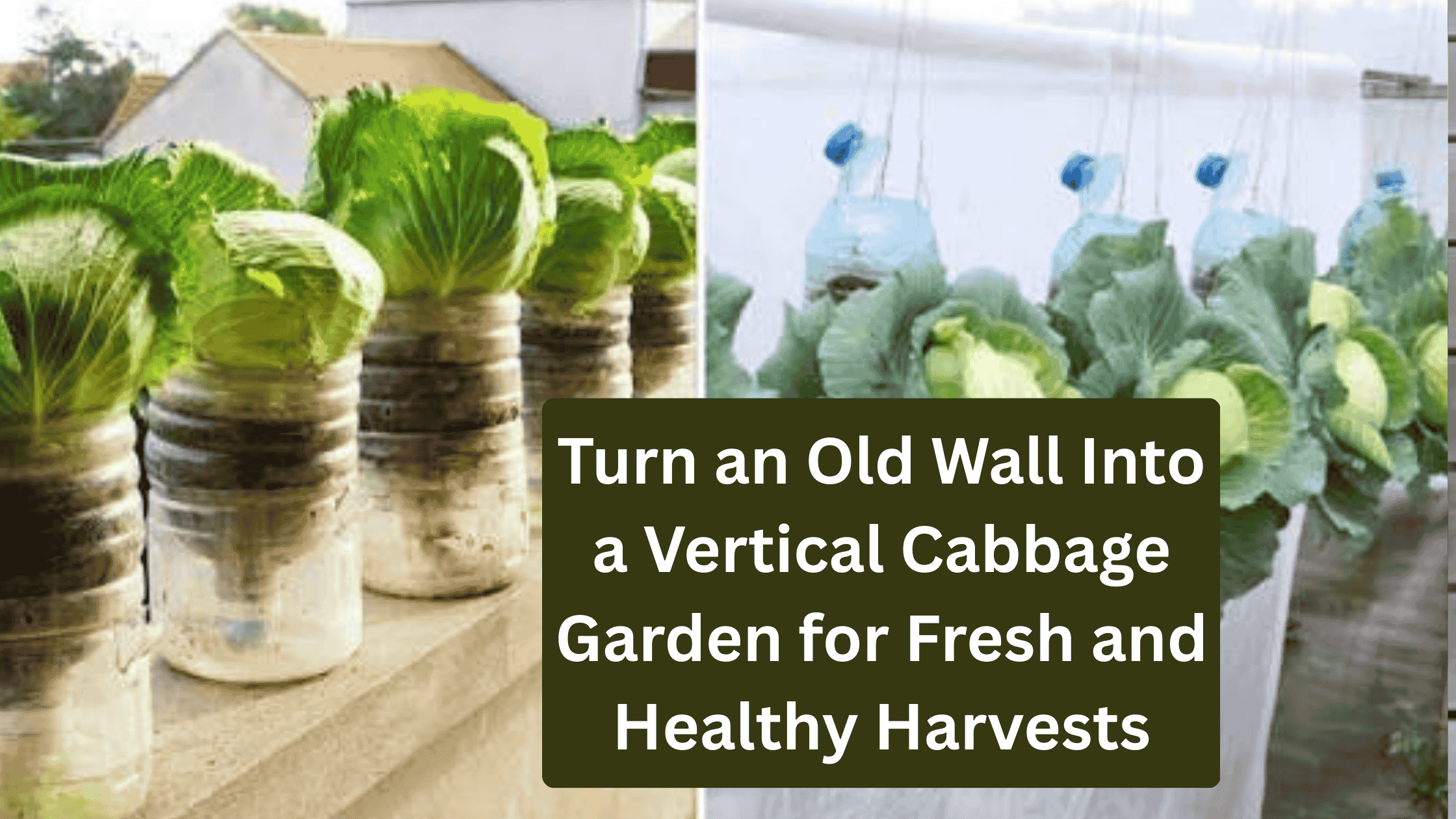
Growing cabbages usually brings to mind wide garden beds and large open spaces, but with the right approach, an unused wall can be transformed into a highly productive vertical cabbage garden. This method is ideal for urban homes, small backyards, terraces, and balconies where horizontal space is limited but vertical space is available.
Vertical cabbage gardening allows you to grow fresh, compact heads while improving airflow, reducing pest pressure, and making harvesting easier.
Why Cabbage Works in Vertical Gardening
Cabbage plants have a relatively compact root system and grow upright, making them suitable for vertical setups when properly supported.

Advantages include: Efficient use of wall space
Improved air circulation
Cleaner heads with less soil contact
Better pest and disease control
With controlled nutrition and spacing, vertical systems can produce yields comparable to ground planting.
Understanding Cabbage Growth Requirements
Cabbage is a cool-season crop that forms a tight leafy head from a central growing point.

Key needs: Cool to moderate temperatures
Consistent moisture
Rich soil
Good sunlight
Meeting these needs vertically requires thoughtful design rather than extra effort.
Choosing the Right Wall Location
Not every wall is suitable.

Ideal wall characteristics: Receives 5 to 7 hours of sunlight
Protected from strong winds
Easy access for watering and care
South- or east-facing walls are usually best.
Types of Vertical Systems for Cabbage
Several vertical structures work well for cabbages.

Common options: Wall-mounted grow bags
Vertical planter boxes
Stacked container frames
Pocket planters with support
Choose systems that can hold sufficient soil depth and weight.
Minimum Soil Depth for Vertical Cabbage
Cabbages need more root space than leafy greens.

Recommended depth: 10 to 12 inches minimum
Shallow systems restrict head size and reduce yield.
Weight Considerations for Wall Gardening
Soil-filled containers become heavy.

Important checks: Wall strength
Secure mounting brackets
Even weight distribution
Avoid weak or damaged walls.
Selecting the Right Cabbage Variety
Compact and medium-sized varieties perform best vertically.

Recommended types: Early-maturing cabbages
Compact hybrid varieties
Baby or mini cabbage cultivars
Large, late-maturing varieties require more root space and are less suitable.
Preparing the Ideal Soil Mix
Cabbage is a heavy feeder and demands nutrient-rich soil.

Ideal mix: Garden soil or coco peat
Well-rotted compost or vermicompost
Sand or perlite for drainage
Soil should be loose but moisture-retentive.
Importance of Soil Fertility
Poor soil leads to: Loose heads
Stunted growth
Bitter taste
Rich soil supports firm, sweet heads.
Seed vs Seedling for Vertical Gardens
Transplanting seedlings is more reliable than direct seeding.
Benefits of seedlings: Better spacing control
Stronger early growth
Reduced germination failure
Start seeds separately and transplant at 4 to 5 true leaves stage.
Planting Cabbage in Vertical Containers
Planting method: Place seedling at the center of container
Firm soil gently around roots
Water immediately
Ensure plants sit upright and stable.
Spacing Guidelines for Vertical Growth
Crowding reduces head formation.
Spacing rules: One cabbage per pocket or container
10 to 12 inches between plants
Adequate spacing improves airflow and head size.
Sunlight Management on Walls
Walls can reflect heat and light.
Tips: Monitor heat buildup
Use light-colored containers
Provide shade during extreme heat
Balanced light prevents bolting.
Watering Strategy for Vertical Cabbage Gardens
Vertical systems dry out faster.
Watering tips: Water deeply and regularly
Check moisture daily
Avoid letting soil dry completely
Inconsistent watering causes head splitting.
Why Consistent Moisture Is Critical
Cabbage heads expand rapidly.
Water stress leads to: Cracked heads
Poor texture
Reduced shelf life
Steady moisture ensures uniform growth.
Mulching in Vertical Containers
Mulching is often overlooked in vertical gardens.
Benefits: Reduces evaporation
Maintains soil temperature
Suppresses weeds
Use straw, dry leaves, or coco husk.
Fertilizing for Strong Head Formation
Cabbage needs continuous nutrition.
Feeding schedule: Compost or vermicompost every 15 days
Liquid organic fertilizer every 10 to 14 days
Avoid overfeeding with nitrogen late in growth.
Role of Nitrogen in Cabbage Growth
Nitrogen supports leafy growth.
Balanced nitrogen: Produces large leaves early
Supports head formation
Excess nitrogen late in growth delays head tightening.
Importance of Potassium and Phosphorus
Potassium and phosphorus support: Firm head development
Root strength
Disease resistance
Balanced nutrition produces dense, market-quality heads.
Supporting Heavy Heads Vertically
As heads mature, plants become top-heavy.
Support methods: Firm soil packing
Sturdy containers
Optional soft ties for stability
Proper support prevents stem bending.
Managing Temperature Stress
Cabbage prefers cool conditions.
Temperature management tips: Grow during cooler seasons
Provide shade cloth during heat
Water early in the day
Heat stress causes bolting and loose heads.
Pest Management in Vertical Cabbage Gardens
Common pests include: Cabbage worms
Aphids
Flea beetles
Vertical growing reduces pest access but does not eliminate it.
Organic Pest Control Methods
Effective controls: Neem oil spray weekly
Hand removal of caterpillars
Encouraging beneficial insects
Early detection prevents crop loss.
Disease Prevention on Walls
Good airflow reduces disease risk.
Prevention strategies: Avoid overcrowding
Water at soil level
Remove infected leaves promptly
Vertical systems naturally improve airflow.
Signs of Healthy Head Formation
Indicators include: Leaves folding inward
Firm central growth
Uniform leaf color
These signs confirm proper nutrition and moisture.
When to Reduce Nitrogen Feeding
As heads tighten: Reduce nitrogen input
Focus on balanced feeding
This helps heads become dense and compact.
Harvesting Cabbage from Vertical Gardens
Harvest timing affects taste and texture.
Harvest when: Heads feel firm when pressed
Outer leaves are healthy
Heads reach expected size
Delaying harvest leads to splitting.
Harvesting Technique
Steps: Use a sharp knife
Cut at the base
Leave outer leaves intact
Gentle handling preserves quality.
Expected Yield From Vertical Cabbage Gardening
With proper care: Each plant produces one full head
Yield per wall depends on planter count
Vertical systems maximize production per square foot.
After-Harvest Soil Reuse
Soil can be reused with preparation.
Steps: Remove roots
Refresh with compost
Rest soil for a short period
Healthy soil ensures continued productivity.
Growing Successive Crops on the Same Wall
Cabbage can be rotated with: Leafy greens
Herbs
Shallow-rooted vegetables
Crop rotation prevents nutrient imbalance.
Common Mistakes to Avoid
Insufficient soil depth
Overcrowding plants
Irregular watering
Ignoring nutrition
Avoiding these errors ensures success.
Why Vertical Cabbage Gardens Produce Cleaner Heads
Wall-grown cabbages experience: Less soil splash
Better airflow
Reduced fungal issues
This results in cleaner, healthier harvests.
Suitability for Urban Homes
Vertical cabbage gardening is ideal for: Apartments
Townhouses
Small homes
Unused walls become productive food spaces.
Nutritional Benefits of Home-Grown Cabbage
Fresh cabbage offers: High vitamin C
Dietary fiber
Antioxidants
Harvesting fresh preserves maximum nutrition.








Leave a Comment