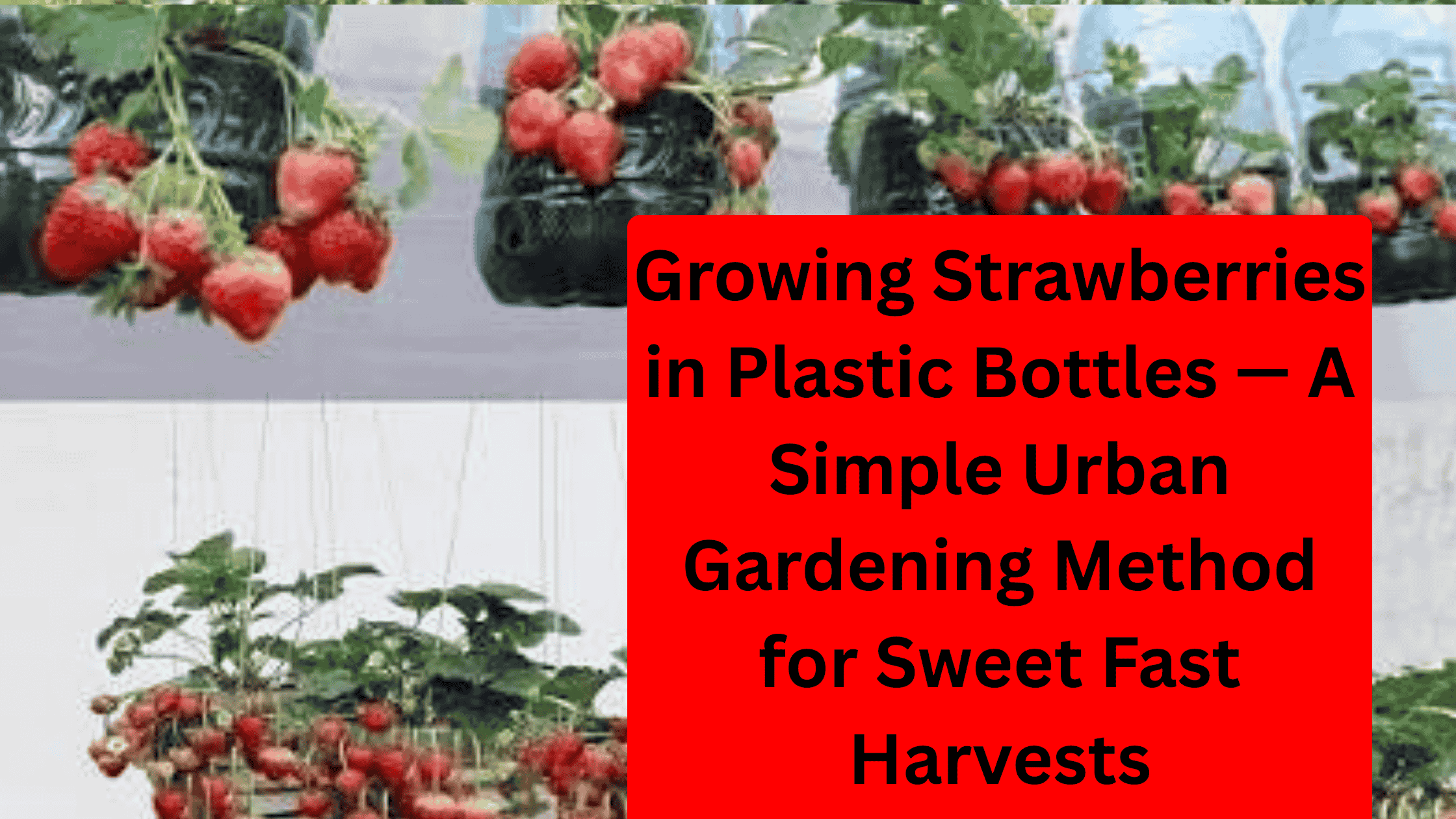
Strawberries are among the most loved fruits worldwide, yet many people believe they need large gardens to grow them successfully. In reality, strawberries adapt exceptionally well to vertical and container systems, and plastic bottles offer one of the simplest, cheapest, and most space-efficient ways to grow them. This method is perfect for balconies, rooftops, windows, railings, and even small indoor spaces with good light. With proper setup and care, plastic bottle–grown strawberries can produce surprisingly sweet, clean, and fast harvests.

Why Plastic Bottles Are Ideal for Growing Strawberries
Plastic bottles are lightweight, readily available, and easy to modify. They allow vertical gardening, which maximizes yield per square foot, making them ideal for urban environments. Bottles also warm up quickly, encouraging faster root activity and earlier fruiting. Because strawberries have shallow root systems, they do not require deep containers, making bottles a perfect match.
Understanding Strawberry Growth Habits
Strawberries are low-growing perennial plants with fibrous, shallow roots. They produce leaves, flowers, and fruits from a central crown. Many varieties also produce runners, which can be used for propagation. Because roots stay near the surface, strawberries thrive in shallow containers with excellent drainage and consistent moisture.

Best Strawberry Varieties for Bottle Gardening
Not all strawberry varieties perform equally well in containers. Day-neutral and everbearing varieties are the best choices for plastic bottles because they fruit continuously rather than once per year. Varieties such as Albion, Seascape, Tristar, and Quinault are excellent for vertical systems. Alpine strawberries also perform well and are highly aromatic, though smaller in size.
Choosing the Right Plastic Bottles
Use bottles that are at least 1.5 to 2 liters in size. Clear bottles work but should be covered or painted to prevent root exposure to light, which stresses plants. Food-grade bottles are safest. Avoid bottles that previously held chemicals. Each bottle should comfortably support one strawberry plant.
Preparing Plastic Bottles for Planting
Cut a rectangular or oval opening on the side of the bottle large enough to insert the plant. Punch several drainage holes at the bottom. If growing vertically, make small holes near the top and bottom to pass wire or rope for hanging. Proper drainage is critical to prevent root rot.

Vertical vs Horizontal Bottle Arrangements
Plastic bottles can be used horizontally, vertically, or stacked. Vertical hanging systems maximize space and airflow, while horizontal bottles placed on shelves or railings are easier to water and maintain. Choose the arrangement based on available space, sunlight, and ease of access.
Best Soil Mix for Bottle-Grown Strawberries
Strawberries require light, fertile, and well-draining soil. A mix of garden soil, compost or vermicompost, and cocopeat or sand works well. The soil should retain moisture without becoming soggy. Heavy soil leads to poor root health and reduced fruiting.
Planting Strawberries in Plastic Bottles
Use healthy nursery plants or runners with established roots. Place the crown at soil level, never buried or exposed. Press soil gently around the roots to secure the plant. Water thoroughly after planting to settle the soil.

Sunlight Requirements for Sweet Fruits
Strawberries need at least six to eight hours of sunlight daily for good flowering and sweetness. Morning sun is especially beneficial. Insufficient light results in weak plants and sour fruits. Balconies facing south or west are ideal.
Watering Strategy for Container Strawberries
Strawberries are sensitive to both drought and overwatering. Water when the top layer of soil feels dry. Plastic bottles dry out faster than ground soil, so regular monitoring is essential. Avoid wetting leaves excessively, as this encourages fungal disease.
Importance of Mulching in Bottles
Mulching helps retain moisture and keeps fruits clean. Use dry straw, coco husk, or dried leaves around the base of plants. Mulch also prevents soil splash and reduces fruit rot, especially during flowering and fruiting stages.

Feeding Strawberries for Fast Growth
Strawberries are moderate feeders. Apply compost tea or diluted liquid organic fertilizer every 10 to 14 days. During flowering and fruiting, potassium-rich feeding improves sweetness and fruit size. Avoid excess nitrogen, which produces leaves at the expense of fruits.

Managing Flowers and Fruit Set
Strawberry flowers are self-pollinating, but gentle movement from wind or light shaking improves pollination in balconies. Avoid letting plants dry out during flowering, as moisture stress leads to flower drop and poor fruit formation.
Pruning and Runner Management
Remove excess runners regularly to redirect energy toward fruit production. If propagation is desired, allow one or two runners to root separately. Removing old or damaged leaves improves airflow and reduces disease risk.

Pest Control in Bottle-Grown Strawberries
Common pests include aphids, spider mites, and thrips. Regular inspection is essential. Neem oil spray every 10 to 14 days effectively controls most pests. Because fruits are close to harvest, avoid chemical pesticides.
Disease Prevention and Hygiene
Fungal diseases such as powdery mildew and gray mold occur in humid conditions. Good airflow, proper spacing, and avoiding water on leaves reduce disease risk. Remove infected plant parts immediately to protect healthy plants.
Supporting Fruits in Vertical Systems
In vertical bottle setups, fruits may hang freely, reducing rot. If fruits rest against plastic or soil, use small net supports or mulch to prevent damage. Clean fruits develop better color and flavor.

Harvesting Strawberries at Peak Flavor
Harvest strawberries when fully red and glossy. Unlike some fruits, strawberries do not ripen after harvest. Pick gently with the stem attached to avoid damaging the plant. Frequent harvesting encourages continued fruiting.
Expected Yield From Plastic Bottle Systems
Each healthy plant can produce multiple harvests over several months. Vertical systems with multiple bottles can yield dozens of fruits in a very small area. Proper feeding and sunlight dramatically improve productivity.
Growing Strawberries Year Round
In mild climates, strawberries can fruit almost year round. In colder regions, they perform best from spring to early summer. Bottles can be moved indoors or to sheltered areas during extreme weather, extending the growing season.

Replacing Soil and Long-Term Care
After one productive year, refresh soil or replace plants for best results. Old plants produce smaller fruits over time. Rotating plants keeps yields high and disease pressure low.
Common Mistakes to Avoid
Burying the crown, poor drainage, insufficient sunlight, and overwatering are the most common causes of failure. Ignoring runners and feeding irregularly also reduces yield significantly.
Benefits of Growing Strawberries in Plastic Bottles
This method is low-cost, eco-friendly, and ideal for urban living. It reduces waste, saves money, and provides ultra-fresh fruit free from chemical residues. Bottle-grown strawberries are often sweeter than store-bought ones due to better control over growing conditions.

Maximizing Production in Small Spaces
Stagger planting dates, use vertical racks, and rotate bottles for even sunlight. Combining day-neutral varieties with good feeding ensures continuous harvests in minimal space.
Why This Method Works So Well
Plastic bottle gardening aligns perfectly with strawberry biology. Shallow roots, compact growth, and frequent harvesting make strawberries one of the most successful crops for recycled container system.









Leave a Comment