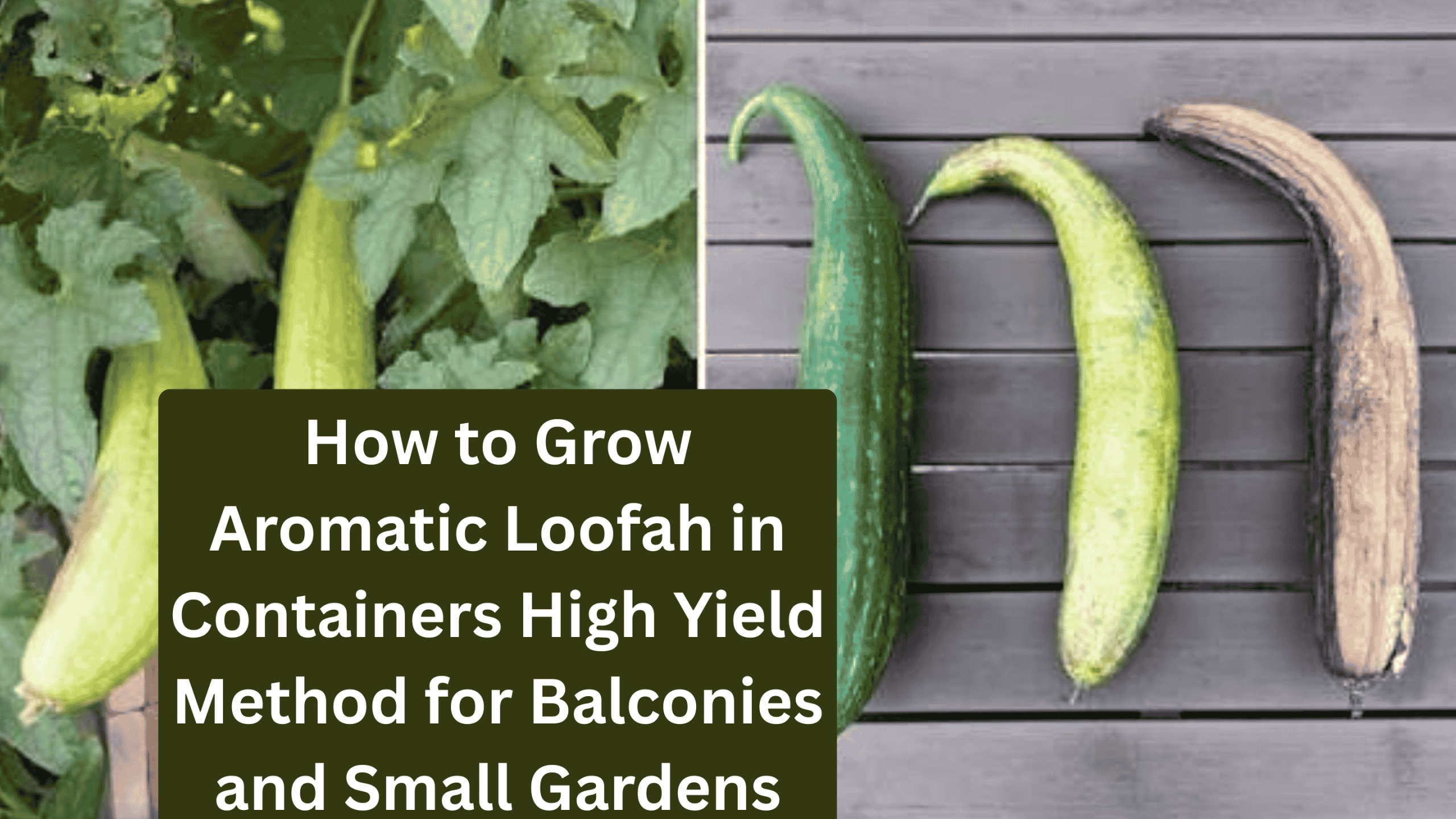
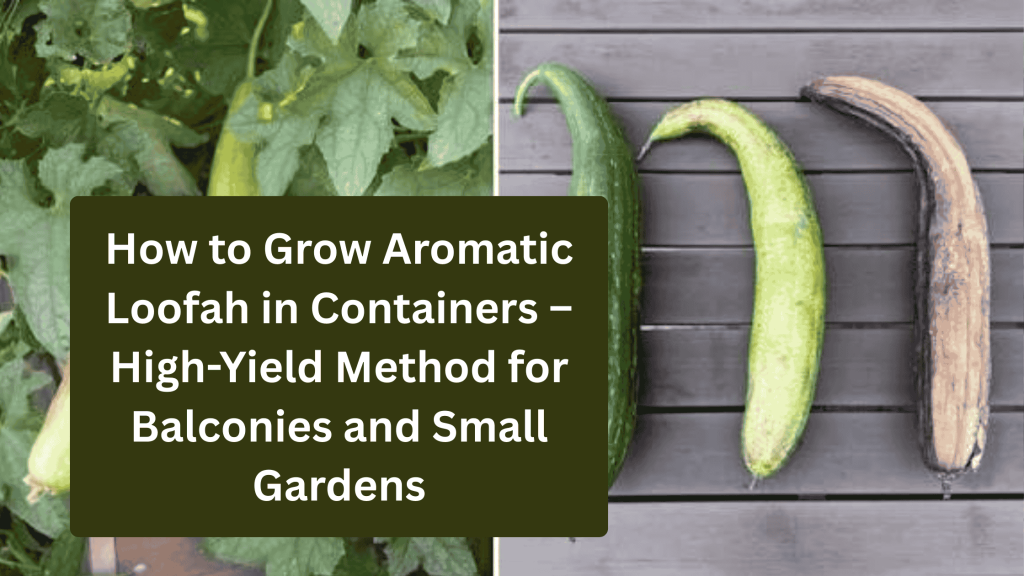
Aromatic loofah is gaining popularity among home gardeners who want something productive, fragrant, and useful without needing a large backyard. Many people believe loofah vines need open farmland, but with the right container setup, even a small balcony can produce a surprisingly high yield. Loofah plants grow fast, climb easily, and reward patience with long green gourds that later turn into natural sponges.
Container growing is ideal for urban homes because it gives full control over soil quality, water, and sunlight. When grown correctly, one healthy loofah plant can produce multiple fruits over a single season, even in limited space.

Understanding Aromatic Loofah Growth
Aromatic loofah is a warm season climbing vine that belongs to the gourd family. It thrives in heat, sunlight, and loose nutrient rich soil. Unlike bottle gourds, loofah vines focus more on vertical growth, making them perfect for trellises on balconies or near railings.

The plant grows aggressively once established. The key is giving it a strong root base early and guiding the vine upward so energy goes into fruit production rather than excessive leaf growth.
Choosing the Right Container Size
Container size directly affects yield. A loofah plant should never be grown in a small pot. For high yield results, use a container that holds at least 40 to 50 litres of soil. A depth of at least 18 inches is recommended so roots can spread freely.
Fabric grow bags, plastic drums with drainage holes, or large ceramic pots all work well. Make sure the container has multiple drainage holes to prevent waterlogging, which can cause root rot.

Best Soil Mix for Container Loofah
Soil quality is one of the most important factors for success. Use a light, airy, and nutrient rich mix. A proven blend includes garden soil, compost or vermicompost, and coco peat or sand for drainage.
The soil should hold moisture but never stay soggy. Adding a handful of neem cake or organic compost at planting time helps protect roots and improves long term fertility.
Planting Loofah Seeds Correctly
Soak loofah seeds in warm water for 12 to 24 hours before planting. This softens the hard seed coat and improves germination. Plant seeds about one inch deep in the container soil.

It is best to sow two seeds per container and remove the weaker seedling after germination. Keep the soil moist but not wet during the first two weeks.
Sunlight Requirements for Maximum Yield
Loofah plants require at least six to eight hours of direct sunlight every day. A south or west facing balcony works best. Insufficient sunlight leads to excessive leaf growth with fewer flowers and fruits.
If your balcony receives partial sun, reflective surfaces or light coloured walls can help increase light exposure.

Supporting the Vine with a Strong Trellis
Vertical support is essential. Without it, vines tangle, airflow reduces, and fruit quality suffers. Install a strong trellis, bamboo frame, or metal grill that can support the weight of mature fruits.
Guide young vines gently toward the support. As the plant grows, tie the vine loosely using soft cloth or garden ties to avoid damage.
Watering Schedule That Boosts Growth
Consistent watering is critical. Water deeply whenever the top inch of soil feels dry. During peak summer, daily watering may be required, especially in containers.

Avoid shallow watering, as it weakens roots. Early morning watering is best to reduce evaporation and fungal issues.
Feeding Schedule for High Yield
Loofah plants are heavy feeders. Start feeding once the vine begins active growth. Every 10 to 14 days, apply liquid compost, vermiwash, or diluted cow dung slurry.
When flowering begins, switch to a feed higher in potassium to support fruit development. Banana peel liquid or wood ash water can be used in moderation.

Encouraging Flowering and Pollination
Loofah plants produce separate male and female flowers. Female flowers have a small fruit behind the bloom. Pollination is usually done by insects, but on high rise balconies, hand pollination improves success.
Use a soft brush or cotton swab to transfer pollen from male to female flowers in the morning. This simple step can dramatically increase fruit set.
Pruning for Better Fruit Production
Pruning helps direct energy toward fruit growth. Remove excessive side shoots and yellowing leaves. Once the main vine reaches the top of the trellis, pinch the tip to encourage lateral branches that produce more female flowers.

Avoid over pruning. The goal is balance, not stress.

Managing Pests Naturally
Common loofah pests include aphids, spider mites, and fruit flies. Neem oil spray every 7 to 10 days helps prevent infestations. Yellow sticky traps can be used to monitor flying pests.
Good airflow and clean surroundings reduce disease risk. Always remove damaged leaves or rotting fruits immediately.

Harvesting Loofah at the Right Time
For edible use, harvest loofah when fruits are young and tender. For sponge use, allow fruits to mature fully until the skin turns yellow or brown and feels light.
After harvesting mature loofah, soak in water, peel off the skin, remove seeds, and wash the fibrous interior thoroughly before drying.
Common Mistakes to Avoid
Using small containers, poor drainage, irregular feeding, and weak trellises are the most common mistakes. Overwatering is equally harmful and often leads to vine decline.
Another mistake is ignoring pollination. Many gardeners grow healthy vines but get few fruits due to lack of pollinators.
Growing Loofah Year After Year
In warm climates, loofah can be grown annually with great success. Saving seeds from mature fruits allows you to grow next season without buying new seeds.
Clean containers and refresh soil before each new planting cycle to avoid disease buildup.
Why Aromatic Loofah Is Perfect for Urban Gardens
Loofah offers food, natural sponges, shade, and greenery in one plant. It grows vertically, thrives in containers, and turns small spaces into productive gardens.
For anyone with a balcony or rooftop, aromatic loofah is one of the most rewarding plants to grow.
Questions and Answers
- Can loofah grow in pots
Yes loofah grows very well in large containers with proper support. - How many loofahs can one plant produce
A healthy plant can produce 6 to 15 fruits depending on care. - Does loofah need full sun
Yes at least six hours of direct sunlight is required. - Can loofah grow indoors
Only if placed near strong sunlight or grow lights. - How long does loofah take to grow
It takes about 90 to 120 days from seed to harvest. - Is hand pollination necessary
It helps greatly in balconies with fewer insects. - What fertilizer is best
Organic liquid feeds work best for steady growth. - Can loofah survive heavy rain
Yes but containers must drain well. - When should pruning be done
After strong vine growth begins. - Is loofah plant perennial
It is usually grown as an annual









Leave a Comment