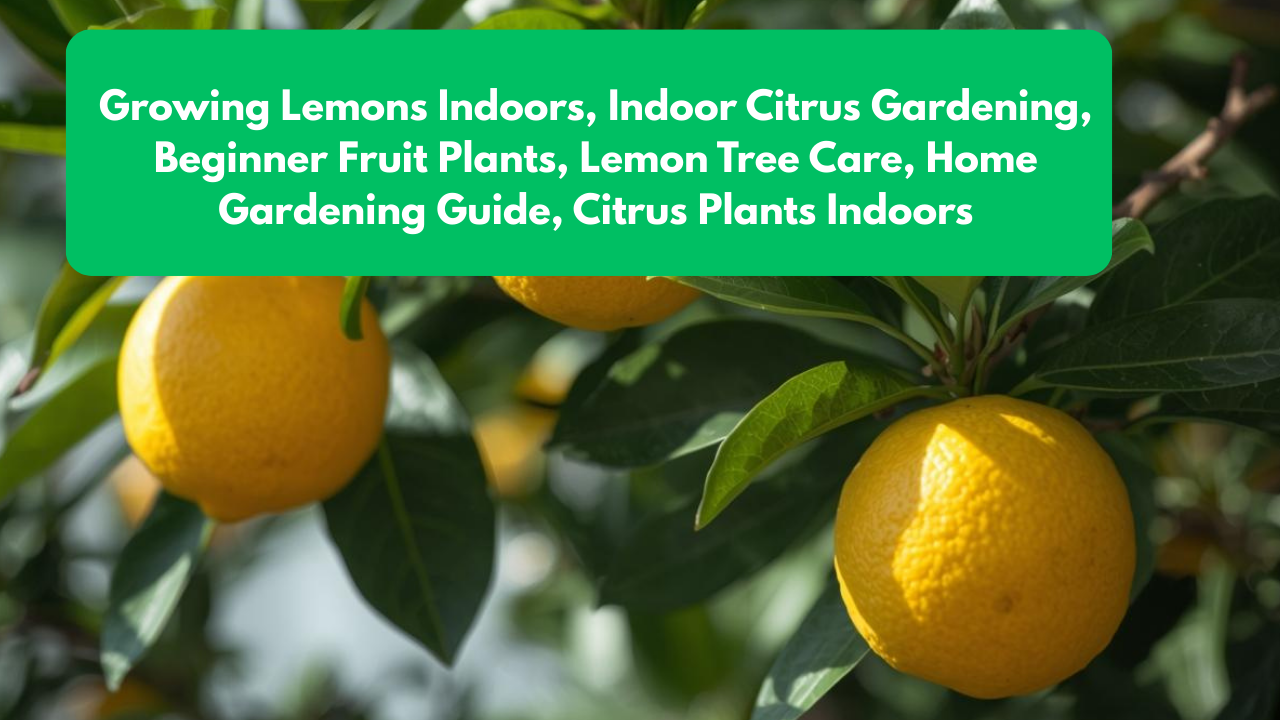
Growing lemons indoors may sound ambitious, but with the right approach, it is completely achievable—even for beginners. An indoor lemon tree brings more than just fruit; it adds glossy green foliage, fragrant blossoms, and a sense of calm greenery to living spaces. For people in colder climates or without garden access, indoor lemon growing opens the door to fresh citrus year round.
Many beginners struggle at first because citrus trees have specific needs that differ from typical houseplants. However, once these needs are understood and met consistently, lemon trees adapt very well to indoor environments. This guide explains simple, practical techniques to grow lemons indoors successfully, focusing on steady plant health, manageable growth, and long-term results.
Understanding How Lemon Trees Behave Indoors
Lemon trees grown indoors experience a different environment than outdoor trees.

Indoors, light levels are lower, air is drier, and temperatures are more stable. These conditions slow growth but also reduce stress from extreme weather.
Indoor lemon trees focus more on leaf and root health than rapid growth. With patience and proper care, they can flower and produce fruit, even in limited space.
Why Growing Lemons Indoors Is Worth the Effort
Indoor lemon trees offer several benefits.

They allow year-round growing regardless of outdoor climate. They also provide fresh fragrance from leaves and blossoms, even before fruit appears.
For beginners, indoor growing makes it easier to control water, soil, and pests. This controlled environment often results in healthier plants over time.
Choosing the Right Lemon Plant for Indoor Growing
Plant selection greatly affects success.

Dwarf or compact lemon varieties are best for indoor conditions. They naturally stay smaller and adapt better to container life.
Choose a healthy nursery-grown plant with glossy leaves, strong stems, and no signs of pests. Avoid plants that look root-bound or stressed, as recovery indoors takes time.
Selecting the Best Container for Indoor Lemon Trees
The right container supports healthy roots.

Choose a pot with drainage holes and enough depth to support root growth. Start with a pot that comfortably fits the root ball rather than an oversized container.
As the tree grows, it can be repotted gradually. Containers that are too large hold excess moisture and increase the risk of root problems.
Preparing the Ideal Soil for Indoor Lemons
Soil quality is critical for citrus health.

Lemon trees prefer loose, well-draining soil that allows roots to breathe. A citrus-specific potting mix works best.
Avoid heavy or compacted soil. Poor drainage leads to root rot, which is one of the most common problems with indoor lemon trees.
Finding the Best Indoor Location
Light is the most important factor indoors.

Place the lemon tree near the brightest window available. South-facing windows usually provide the best light.
If natural light is limited, supplemental lighting may be necessary. Insufficient light leads to weak growth and poor flowering.
Understanding Light Requirements Indoors
Lemon trees need long periods of bright light.

Aim for at least 8 hours of bright light daily. While direct sunlight through glass is beneficial, it may need to be filtered in very hot conditions.
Consistent light exposure supports leaf health, flower formation, and fruit development.
Using Grow Lights Effectively
Grow lights greatly improve indoor lemon success.

Position lights above the plant and keep them on for a consistent daily schedule. Even simple grow lights can make a noticeable difference.
Consistency matters more than intensity. A regular light routine prevents stress and leaf drop.
Watering Lemon Trees Indoors Correctly
Watering is where most beginners struggle.
Water only when the top layer of soil feels dry. Water thoroughly until excess drains out, then allow the soil to dry slightly before watering again.
Never allow the pot to sit in standing water. Overwatering causes yellow leaves, root problems, and leaf drop.
Adjusting Watering by Season
Indoor watering needs change throughout the year.
In winter, growth slows and water needs decrease. In brighter months, watering frequency may increase.
Always adjust watering based on soil moisture rather than calendar schedules.
Managing Indoor Temperature Conditions
Lemon trees prefer stable temperatures.
They grow best in moderate indoor conditions. Avoid placing the plant near heaters, radiators, or cold drafts.
Sudden temperature changes cause leaf drop and stress, even if watering and light are correct.
Maintaining Proper Indoor Humidity
Indoor air is often dry, especially in winter.
While lemon trees tolerate average humidity, extremely dry air may cause leaf curl or drop. Improving humidity slightly helps.
Simple methods include grouping plants together or placing a shallow water tray nearby.
Feeding Indoor Lemon Trees Properly
Lemon trees are moderate feeders.
Use a balanced citrus fertilizer during active growth periods. Feed lightly and consistently rather than heavily and infrequently.
Reduce feeding during winter when growth slows. Excess fertilizer during low-light periods can damage roots.
Encouraging Flowering Indoors
Flowering depends on light and plant maturity.
Young trees may not flower immediately. As the tree matures and receives adequate light, flowers begin to appear.
Maintaining consistent care rather than forcing growth leads to better flowering over time.
Pollinating Indoor Lemon Flowers
Indoor lemon trees often need help with pollination.
When flowers appear, gently transferring pollen between flowers using a soft brush improves fruit set.
This simple step significantly increases the chances of lemons developing indoors.
Managing Fruit Load for Plant Health
Indoor trees have limited energy.
If too many fruits set at once, the plant may struggle. Thinning excess young fruits helps the tree focus on healthy development.
Balanced fruit load leads to better-quality lemons and stronger plants.
Pruning Lemon Trees Indoors
Pruning helps maintain shape and health.
Remove weak, damaged, or crossing branches. Light pruning encourages airflow and balanced growth.
Avoid heavy pruning indoors. Small, regular adjustments work better than drastic cuts.
Repotting Lemon Trees When Needed
Repotting supports long-term growth.
Repot only when roots outgrow the current container. Choose a slightly larger pot and refresh soil.
Spring is the best time for repotting, as the plant recovers more quickly.
Common Problems and Simple Solutions
Yellow leaves often indicate overwatering or poor drainage. Adjust watering and check soil quality.
Leaf drop may occur due to sudden changes in light or temperature. Maintain stable conditions.
Slow growth usually improves with better light and consistent feeding.
Pest Management for Indoor Lemon Trees
Indoor lemon trees can attract pests.
Regularly inspect leaves, especially undersides. Washing leaves with water often prevents infestations.
Healthy plants are naturally more resistant to pests.
Seasonal Care for Indoor Lemons
Indoor lemon trees still follow seasonal rhythms.
Spring and summer bring active growth. Autumn and winter bring slower growth.
Adjust watering, feeding, and light accordingly to match these natural cycles.
Moving Indoor Lemons Outdoors Temporarily
In warm months, indoor lemon trees may benefit from time outdoors.
Gradual exposure to outdoor conditions strengthens growth. Always acclimate slowly to prevent shock.
Return plants indoors before temperatures drop.
Long-Term Expectations for Indoor Lemon Growing
Indoor lemon growing is a long-term project.
Fruiting may take time, but plant health improves steadily with consistent care.
Many indoor lemon trees live for years and become reliable producers over time.
Real Experiences From Home Growers
A home grower shared that adding a grow light changed everything. “Once I gave it more light, it stopped dropping leaves and even flowered,” they said.
Another noted that hand pollination was the key to getting fruit indoors.
Observations From Indoor Citrus Growers
Experienced indoor citrus growers emphasize patience.
They note that consistency matters more than perfection. Stable light, watering, and temperature lead to success.
Many recommend indoor growing as a learning step before outdoor citrus gardening.
Benefits Beyond Fruit Production
Even without fruit, indoor lemon trees are valuable.
They provide fragrance, visual appeal, and year-round greenery. Their presence improves indoor environments.
For many growers, the experience itself is the reward.
What You Should Know Before Growing Lemons Indoors
Indoor lemons require more light than typical houseplants.
Overwatering and low light are the most common mistakes.
With simple techniques and patience, beginners can succeed.
Questions and Answers About Growing Lemons Indoors
Can lemons be grown indoors?
Yes, with proper light and care.
Do indoor lemon trees need sunlight?
Yes, bright light is essential.
Are grow lights necessary?
Often yes, especially in winter.
How often should indoor lemons be watered?
When the topsoil feels dry.
Do indoor lemons produce fruit?
Yes, with maturity and pollination.
Is hand pollination required?
Usually, yes.
Can lemons grow year-round indoors?
Yes, growth continues slowly.
Do they need fertilizer indoors?
Yes, but lightly.
Why are leaves falling off?
Usually due to stress or overwatering.
Can they be pruned indoors?
Yes, lightly.
How big do indoor lemon trees get?
They stay smaller in containers.
Is humidity important?
Moderate humidity helps.
Can indoor lemons be moved outdoors?
Yes, seasonally.
Is indoor lemon growing beginner-friendly?
Yes, with simple care.










Leave a Comment