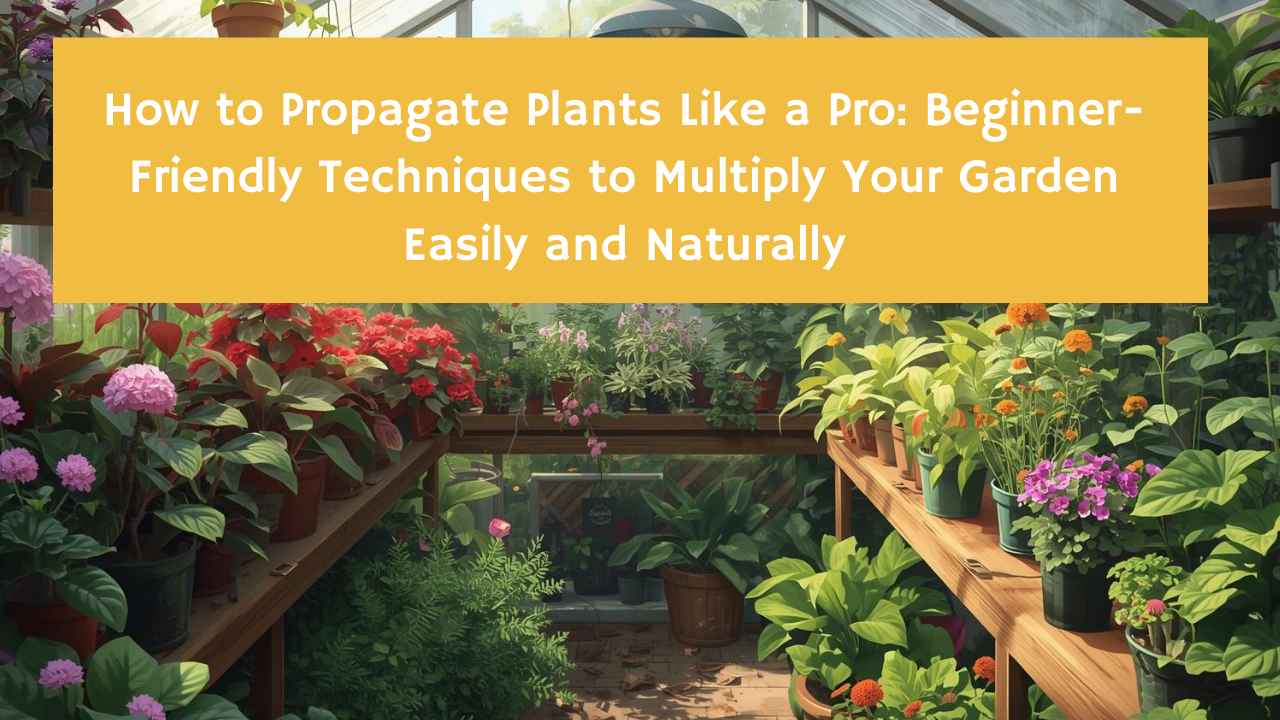
Plant propagation is one of the most satisfying skills a gardener can learn. It turns one healthy plant into many, reduces the need to buy new plants, and builds confidence through hands-on success. While propagation may seem like something only professionals master, the truth is that many techniques are simple, natural, and perfectly suited for beginners.
Propagating plants like a pro does not mean using complex tools or advanced science. It means understanding how plants naturally grow and using that knowledge in the right way. With patience, observation, and a few reliable methods, anyone can multiply their garden easily. This guide explains beginner-friendly propagation techniques that deliver professional-level results using natural, proven approaches.
Understanding What Plant Propagation Really Means
Plant propagation is the process of creating new plants from existing ones.

This can be done through seeds or by using parts of a plant such as stems, leaves, roots, or runners. When propagated vegetatively, the new plant is genetically identical to the parent.
Professional gardeners rely on propagation to maintain quality, preserve favorite plants, and grow efficiently.
Why Learning Propagation Changes the Way You Garden
Propagation gives gardeners independence.

Instead of relying on nurseries, you can grow plants whenever you need them. It also allows you to preserve plants that thrive in your specific environment.
Beyond practicality, propagation deepens understanding. Watching roots form and new growth emerge teaches how plants truly function.
Choosing the Right Plants to Propagate as a Beginner
Some plants propagate more easily than others.

Beginners should start with plants known for fast rooting and strong survival. These plants forgive small mistakes and build confidence quickly.
Healthy, actively growing plants are always better choices than stressed or weak ones.
Understanding the Best Time to Propagate Plants
Timing affects success rates.

Most plants propagate best during active growth periods when energy is focused on new development. During this time, stems and roots respond quickly.
Avoid propagating during extreme heat, cold, or dormancy, as plants are less responsive.
Propagating Plants From Seeds the Natural Way
Seed propagation is the most common method.

Seeds are ideal for vegetables, herbs, and annual flowers. This method allows you to grow many plants at once with minimal effort.
While seed-grown plants may vary from the parent, they are excellent for learning and large-scale planting.
Advantages and Limitations of Seed Propagation
Seeds are easy and inexpensive.

They allow diversity and experimentation. However, seed-grown plants often take longer to mature and may not replicate the parent plant exactly.
Understanding these limitations helps set realistic expectations.
Propagating Plants From Stem Cuttings
Stem cuttings are one of the easiest propagation methods.

A healthy stem is placed in soil or water until roots develop. Once rooted, it becomes a new plant.
This method is widely used for houseplants, shrubs, herbs, and many garden plants.
Why Stem Cuttings Are So Reliable
Stem cuttings already contain mature tissue.

They do not need to develop stems or leaves from scratch, which speeds up growth. Many plants naturally want to root from stems when conditions are right.
Proper moisture and light make this method highly reliable.
Water Propagation vs Soil Propagation
Both methods work well.
Water propagation allows easy observation of roots, making it popular for beginners. Soil propagation produces stronger roots for long-term growth.
Professionals often use soil, while beginners start with water for confidence.
Leaf Cuttings and When to Use Them
Some plants can grow from leaves alone.
Leaf cuttings involve placing a healthy leaf or leaf section into soil. New roots and shoots develop over time.
This method works best for specific plant types and requires patience.
Root Cuttings Explained Simply
Root cuttings grow new plants from root sections.
This method is useful for certain perennials. New shoots emerge from planted root pieces.
Root cuttings are usually done during dormant periods for best results.
Division as a Simple Propagation Method
Division is one of the easiest techniques.
Plants that grow in clumps can be divided into multiple plants. Each section becomes a new plant with its own roots.
This method offers instant results and high success rates.
Understanding Air Layering for Beginners
Air layering allows roots to form while the branch remains attached.
This method is excellent for woody plants that are difficult to propagate from cuttings. The branch continues receiving nutrients during rooting.
Air layering produces strong, mature plants quickly.
Why Professionals Love Air Layering
Air layering reduces failure rates.
Because the plant supports itself during rooting, stress is minimal. This leads to faster and more reliable results.
It is a preferred method for valuable or slow-rooting plants.
Preparing Plants Properly for Propagation
Healthy parent plants are essential.
Well-watered, pest-free plants produce stronger new growth. Avoid propagating from stressed plants.
Preparation includes selecting the right plant part and using clean tools.
Importance of Clean Tools and Hygiene
Clean tools prevent disease.
Sharp, sanitized tools make clean cuts that heal quickly. Dirty tools introduce bacteria and fungi.
Good hygiene greatly improves success rates.
Creating the Right Environment for Rooting
Rooting depends on balance.
Moisture, warmth, light, and airflow must be controlled. Too much water causes rot, while dryness causes failure.
Bright, indirect light supports rooting without stress.
Understanding Humidity and Its Role
Humidity reduces moisture loss.
Cuttings without roots lose water quickly. Maintaining humidity helps them survive until roots form.
Basic humidity support works well for beginners.
How Long Propagation Takes
Propagation requires patience.
Some plants root in days, others take weeks. Growth speed depends on plant type and conditions.
Avoid disturbing plants too often during this stage.
Recognizing Successful Propagation
New growth signals success.
Firm stems, healthy leaves, and resistance when gently tugged indicate root formation.
Once rooted, plants can gradually transition to normal care.
Transplanting Newly Propagated Plants
Transplanting should be gentle.
Young roots are fragile. Use well-draining soil and avoid heavy feeding initially.
Allow time for adjustment before exposing plants to stress.
Hardening Off for Outdoor Growing
New plants need gradual exposure.
Sudden changes in light or temperature cause shock. Slowly adjusting conditions improves survival.
This step is especially important for outdoor planting.
Common Propagation Mistakes to Avoid
Overwatering is the most common mistake.
Other issues include low light, poor airflow, and impatience. Correcting these improves success quickly.
Observation is more effective than constant intervention.
Building Confidence Through Repetition
Propagation improves with practice.
Each attempt teaches something new. Repeating techniques builds consistency and skill.
Confidence grows through hands-on experience.
Using Propagation to Design Your Garden
Propagation allows creative freedom.
You can fill spaces, create patterns, and experiment without extra cost.
This flexibility transforms garden design.
Real Experiences From Home Gardeners
One gardener shared that propagation eliminated the need to buy plants. “Once I learned cuttings, my garden expanded naturally,” they said.
Another noted that air layering was a breakthrough for woody plants.
Observations From Experienced Growers
Experienced growers emphasize patience.
They focus on plant health, timing, and environment rather than shortcuts.
Consistency produces professional-level results.
Long-Term Benefits of Propagating Plants Naturally
Propagation builds sustainability.
It reduces waste, saves money, and strengthens gardening skills.
Over time, gardeners become more confident and independent.
What You Should Know Before Propagating Like a Pro
Not every attempt will succeed.
Failure is part of learning. Using multiple cuttings improves results.
Patience and observation are key.
Questions and Answers About Propagating Plants
Is plant propagation beginner-friendly?
Yes, very beginner-friendly.
Which method is easiest?
Cuttings and division are easiest.
Do all plants propagate easily?
No, some are easier than others.
Is soil better than water for rooting?
Soil is better long-term.
Is rooting hormone required?
No, but it helps.
How long does propagation take?
Days to weeks depending on plant.
Can propagation be done indoors?
Yes, very easily.
Why do cuttings rot?
Usually from excess moisture.
Is air layering hard?
No, it is simple with practice.
Can beginners succeed consistently?
Yes, with basic techniques.
Should cuttings be fertilized early?
No, wait until roots form.
Does light matter during propagation?
Yes, indirect light is best.
Is propagation worth learning?
Absolutely.
Can propagation expand gardens quickly?
Yes, very quickly.






Leave a Comment