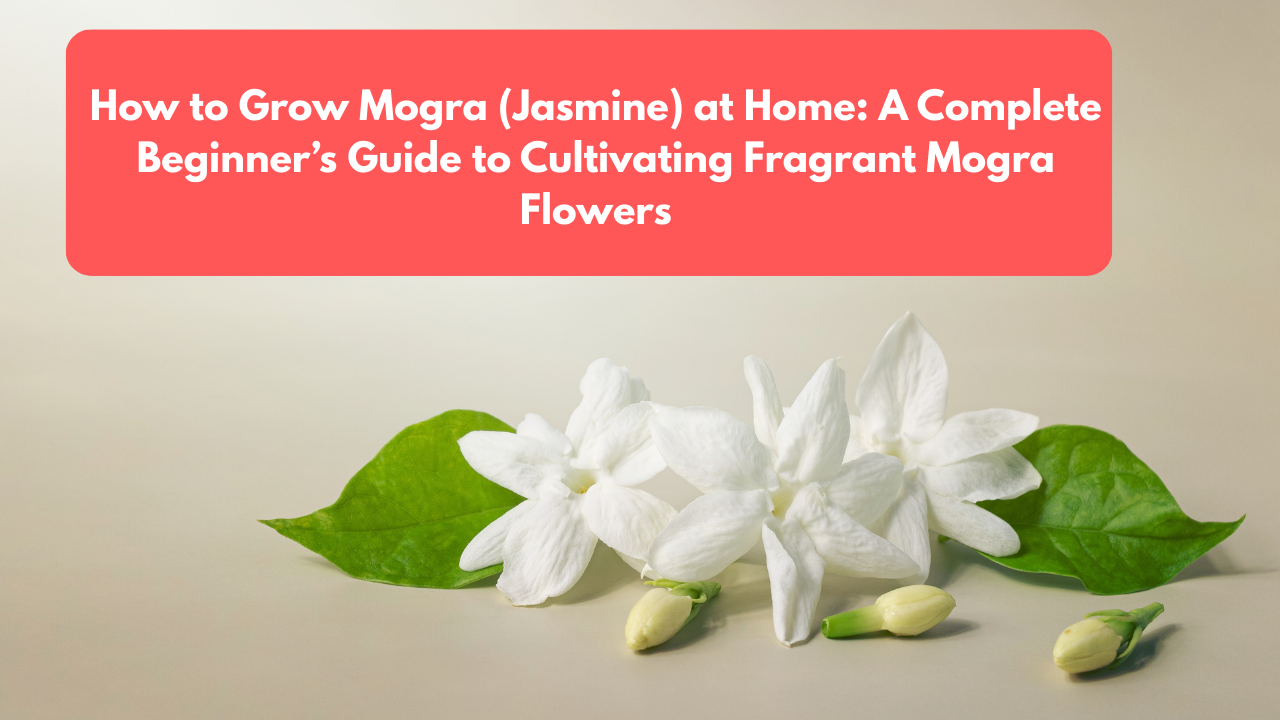
The sweet, calming fragrance of mogra flowers has a way of filling homes with warmth and nostalgia. Known for their small white blooms and powerful scent, mogra plants are widely grown for worship, hair adornment, garlands, and simple everyday enjoyment. Many people assume that growing mogra at home requires expert skills or large garden spaces, but in reality, this plant is well-suited for home gardens, balconies, and even pots near sunny windows.
Mogra, a type of jasmine, is hardy, adaptable, and rewarding when given basic care. With proper sunlight, watering, and pruning, it can bloom repeatedly and remain productive for years. This beginner-friendly guide explains how to grow mogra at home successfully, from planting to long-term care, using simple and practical techniques.
Understanding the Mogra Plant and Its Growth Habit
Mogra is a perennial flowering shrub known for its compact growth and continuous blooming under suitable conditions.

It grows as a bushy plant with glossy green leaves and clusters of small, star-shaped white flowers. The plant responds well to pruning, which helps maintain shape and encourages more blooms.
Once established, mogra becomes stronger each year and flowers more generously with consistent care.
Why Mogra Is Ideal for Home Growing
Mogra is well-suited for home environments.

It adapts easily to pots and garden beds, tolerates pruning, and thrives in warm climates. Even beginners can grow it successfully with minimal tools and effort.
Another advantage is its long flowering period. With proper care, mogra can bloom multiple times a year, especially in warm conditions.
Choosing the Right Mogra Variety
There are several mogra varieties available.

Some grow as compact bushes ideal for pots, while others grow larger and are better suited for garden planting. For beginners, compact or dwarf varieties are easier to manage.
Choose healthy plants from a reliable source. Look for bright green leaves, strong stems, and no signs of pests or disease.
Best Time to Grow Mogra at Home
Mogra grows best in warm conditions.

The ideal time to plant mogra is during spring or early summer when temperatures are mild to warm. This allows the plant to establish roots before heavy flowering begins.
Avoid planting during extreme cold or very hot periods, as young plants are more sensitive to stress.
Selecting the Best Location for Mogra
Sunlight plays a major role in flowering.

Mogra plants need at least 5–6 hours of sunlight daily. A sunny balcony, terrace, or garden spot works well.
If grown indoors, place the plant near a bright window. Insufficient light leads to healthy leaves but few or no flowers.
Growing Mogra in Pots at Home
Mogra grows very well in pots.

Choose a pot that is at least 10–12 inches deep with proper drainage holes. Larger pots support stronger growth and more blooms.
Potted mogra plants are easier to move during extreme weather, making them ideal for home gardeners.
Growing Mogra in Garden Soil
Garden planting allows mogra to grow larger.

Choose a well-draining location with loose soil. Avoid areas where water collects after rain.
Once planted in the ground, mogra becomes more drought-tolerant and requires less frequent attention.
Preparing the Best Soil for Mogra
Soil quality directly affects flowering.

Mogra prefers loose, well-draining soil rich in organic matter. A mix of garden soil, compost, and sand works well.
Avoid heavy clay soil unless amended, as poor drainage leads to root problems and reduced flowering.
Planting Mogra the Right Way
Proper planting helps the plant establish quickly.
Dig a hole slightly larger than the root ball. Place the plant so it sits at the same depth as before.
Fill in soil gently and water thoroughly to remove air pockets. Do not press the soil too tightly.
Watering Mogra Plants Correctly
Watering must be balanced.
Water the plant when the top layer of soil feels dry. During active growth and flowering, watering may be more frequent.
Avoid waterlogging. Overwatering causes yellow leaves, root rot, and poor flowering.
Seasonal Watering Adjustments
Water needs change with seasons.
In summer, mogra may need more frequent watering. In cooler months, reduce watering as growth slows.
Always observe soil moisture rather than following a fixed schedule.
Feeding Mogra for Abundant Flowers
Mogra benefits from regular feeding.
Use compost or a balanced fertilizer during the growing season. Feeding every few weeks supports continuous blooming.
Avoid excessive fertilizer, which leads to leafy growth with fewer flowers.
Importance of Pruning for Flower Production
Pruning is essential for mogra.
Regular pruning encourages branching, which results in more flowering points. Without pruning, the plant becomes leggy and produces fewer blooms.
Prune lightly after flowering cycles to maintain shape and stimulate new growth.
When and How to Prune Mogra
Pruning is best done after a flowering flush.
Remove dead, weak, or crossing branches. Trim back long shoots to encourage bushier growth.
Avoid heavy pruning during cold periods or extreme heat.
Encouraging More Blooms Naturally
Consistent care improves flowering.
Adequate sunlight, proper watering, and regular pruning together encourage repeated blooming.
Stress-free plants flower more reliably than those exposed to sudden changes.
Managing Temperature and Climate Conditions
Mogra prefers warm temperatures.
It grows best in warm to moderately hot conditions. In cooler climates, protect the plant from cold winds and frost.
Indoor growing during winter helps maintain plant health in colder regions.
Protecting Mogra From Cold Stress
Cold temperatures slow growth.
Move potted plants to sheltered areas during cold weather. Cover outdoor plants if frost is expected.
Cold protection prevents leaf drop and encourages quicker recovery.
Common Problems and Simple Solutions
Yellow leaves often indicate overwatering or poor drainage. Adjust watering and improve soil conditions.
Lack of flowers usually results from insufficient sunlight or lack of pruning.
Leaf drop may occur due to sudden temperature changes.
Pest Management for Mogra Plants
Mogra plants may attract common pests.
Regular inspection helps catch issues early. Washing leaves with water controls minor infestations.
Healthy plants grown in proper conditions rarely suffer serious pest problems.
Growing Mogra Indoors Successfully
Indoor growing is possible with enough light.
Place the plant near a bright window and rotate it weekly for even growth. Indoor plants may flower less but remain healthy.
Supplemental lighting helps in low-light homes.
Repotting Mogra Plants When Needed
Repotting supports long-term growth.
When roots outgrow the pot, move the plant to a slightly larger container with fresh soil.
Spring is the best time for repotting, as the plant recovers faster.
Using Mogra as a Decorative and Functional Plant
Mogra adds beauty and fragrance.
It works well as a decorative plant for balconies and entrances. Fresh flowers can be used daily for personal or religious purposes.
Few plants offer both beauty and utility like mogra.
Real Experiences From Home Growers
A home gardener shared that pruning transformed their mogra plant. “Once I started pruning after each bloom, the flowers doubled,” they said.
Another noted that moving the plant to a sunnier spot made a noticeable difference in fragrance.
Observations From Regular Jasmine Growers
Experienced growers emphasize patience.
They note that mogra improves with age and consistent care. Plants often bloom more heavily in their second and third years.
Sunlight and pruning are repeatedly highlighted as key factors.
Long-Term Care for a Healthy Mogra Plant
Mogra is a long-lived plant.
With basic care, it can thrive for many years. Regular feeding, pruning, and proper watering keep it productive.
Over time, the plant becomes more resilient and easier to maintain.
What You Should Know Before Growing Mogra at Home
Mogra is not a fast-growing plant.
It needs warmth, sunlight, and regular pruning to bloom well. Overwatering is the most common mistake.
With simple techniques, even beginners can grow fragrant mogra flowers successfully.
Questions and Answers About Growing Mogra at Home
Is mogra easy to grow at home?
Yes, it is beginner-friendly.
Can mogra be grown in pots?
Yes, pots work very well.
How much sunlight does mogra need?
At least 5–6 hours daily.
How often should mogra be watered?
When the topsoil feels dry.
Does mogra need fertilizer?
Yes, moderate feeding helps flowering.
Why is my mogra not flowering?
Likely due to low sunlight or lack of pruning.
Can mogra grow indoors?
Yes, with sufficient light.
Is pruning necessary?
Yes, for bushy growth and more blooms.
Does mogra tolerate cold?
It needs protection from frost.
How long does mogra live?
Many years with proper care.
Can mogra be repotted?
Yes, when roots outgrow the pot.
Are pests a big problem?
Usually minor and manageable.
Is mogra fragrant all day?
Fragrance is strongest in the evening.
Is growing mogra worth it?
Yes, for its beauty and fragrance.








Leave a Comment