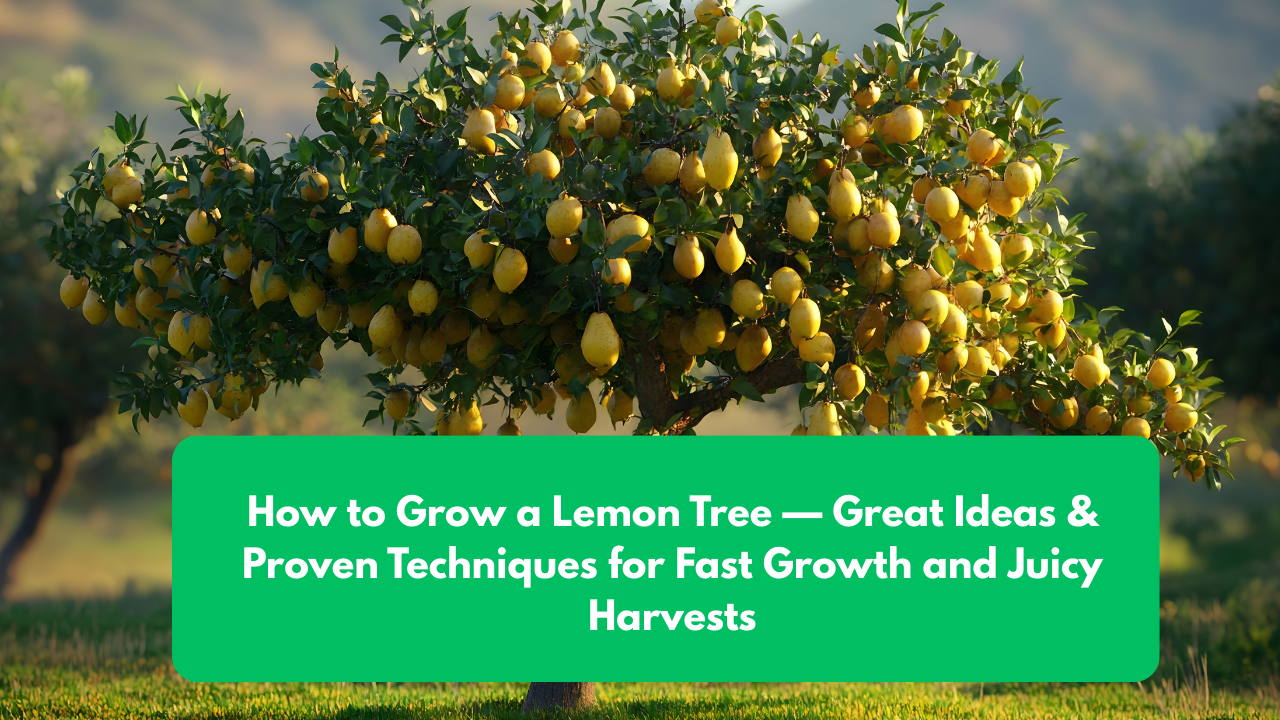
Lemon trees are one of the most rewarding fruit trees you can grow at home — but only when they’re grown the right way. Many gardeners end up with tall, leafy lemon trees that look healthy yet produce very little fruit. Others struggle with slow growth, yellowing leaves, or weak branches.
The truth is simple: lemon trees respond incredibly well to correct early care, balanced feeding, and smart pruning. When those pieces come together, growth speeds up and fruit quality improves dramatically.
Here are proven, practical techniques to grow a lemon tree faster, stronger, and more productive — whether it’s in the ground or in a pot.

Why Lemon Trees Struggle in Home Gardens
Most problems come from good intentions.
Common issues include:
- Overwatering
- Poor drainage
- Too much nitrogen
- Lack of sunlight
- Skipping pruning
Fixing these basics often transforms a struggling tree.

What’s Changing / What’s New
Gardeners are moving away from “feed more” thinking.
New best practices focus on:
- Root health over leaf size
- Balanced nutrients instead of heavy fertilising
- Seasonal care rather than constant input
Lemon trees thrive with consistency, not excess.

Choose the Right Location First
Sunlight is non-negotiable.
Lemon trees need:
- 6–8 hours of full sun daily
- Protection from strong winds
- Good airflow to reduce disease
Poor light equals poor fruit.

Soil Quality Makes or Breaks Growth
Fast-growing lemon trees need:
- Loose, well-draining soil
- Organic matter mixed in
- Slightly acidic conditions
Heavy clay soil should always be improved before planting.
Watering the Right Way (This Matters Most)
Overwatering is the #1 killer.

Instead:
- Water deeply, then let soil dry slightly
- Never keep roots constantly wet
- Reduce watering in cooler months
Roots need oxygen as much as water.
Feeding for Growth AND Fruit
Lemons are heavy feeders — but timing matters.

Best approach:
- Light feeding during early growth
- Balanced citrus fertiliser during active seasons
- Avoid high nitrogen once flowering begins
Too much nitrogen = leaves, not lemons.
The Power of Mulching (Done Correctly)
Mulch improves growth when applied properly.

Use:
- Compost or organic mulch
- A wide ring around the tree
- Space around the trunk (never touching it)
Mulch stabilises moisture and feeds soil life.
Pruning for Faster Growth and More Fruit
Pruning isn’t optional.

Smart pruning:
- Encourages branching
- Strengthens structure
- Improves airflow and sunlight
Remove weak, crossing, or inward-growing branches early.
Growing Lemon Trees in Pots
Lemon trees thrive in containers.
Pot tips:
- Use large pots with drainage holes
- Free-draining citrus soil
- Repot gradually as the tree grows
Potted lemons often fruit earlier than ground-grown trees.
Why Lemon Trees Drop Flowers or Fruit
This is common — and fixable.
Causes include:
- Water stress
- Temperature swings
- Excess nitrogen
- Weak root systems
Consistency reduces drop dramatically.
Natural Boosters That Actually Work
Gentle organic boosters include:
- Compost
- Worm castings
- Banana peel tea (potassium)
- Occasional Epsom salt (if magnesium is low)
Avoid chemical overload.
Real Results From Home Gardeners
One gardener shared, “Once I reduced watering and pruned properly, fruit doubled.”
Another said, “My lemon tree was leafy for years — now it’s covered in flowers.”
Technique beats effort.
Signs Your Lemon Tree Is Thriving
Look for:
- Deep green leaves
- Short internodes
- Strong new shoots
- Consistent flowering
Healthy growth leads to juicy harvests.
How Long Until You See Fruit?
Depends on the tree type:
- Grafted trees: sooner
- Seed-grown trees: longer
- Containers: often faster
Good care shortens the wait.
Common Lemon Tree Mistakes
Avoid:
- Constant watering
- Shady planting
- Ignoring pruning
- Overfeeding
Most problems come from overcare.
Why Lemon Trees Are Worth the Effort
They offer:
- Year-round greenery
- Fragrant flowers
- Fresh fruit at home
- Long-term productivity
Few fruit trees give as much back.
What You Should Know Before Starting
Lemon trees need:
- Sun
- Drainage
- Patience
- Balanced care
They don’t need perfection — just consistency.
Q&A: Growing Lemon Trees Successfully
1. Do lemon trees need full sun?
Yes.
2. Can they grow in pots?
Very well.
3. Is pruning necessary?
Yes.
4. Why are leaves yellowing?
Usually water or nutrient imbalance.
5. Does overwatering cause fruit drop?
Yes.
6. Are lemons heavy feeders?
Yes, but timing matters.
7. Can I grow lemons indoors?
Only temporarily.
8. How often should I fertilise?
Seasonally.
9. Is mulch helpful?
Yes.
10. Do lemon trees fruit year-round?
In cycles.
11. Are grafted trees better?
Usually.
12. Can cold damage lemons?
Yes.
13. Should I remove early fruit?
Sometimes, to strengthen the tree.
14. How big do lemon trees grow?
Manageable with pruning.
15. Biggest mistake?
Overwatering.








Leave a Comment