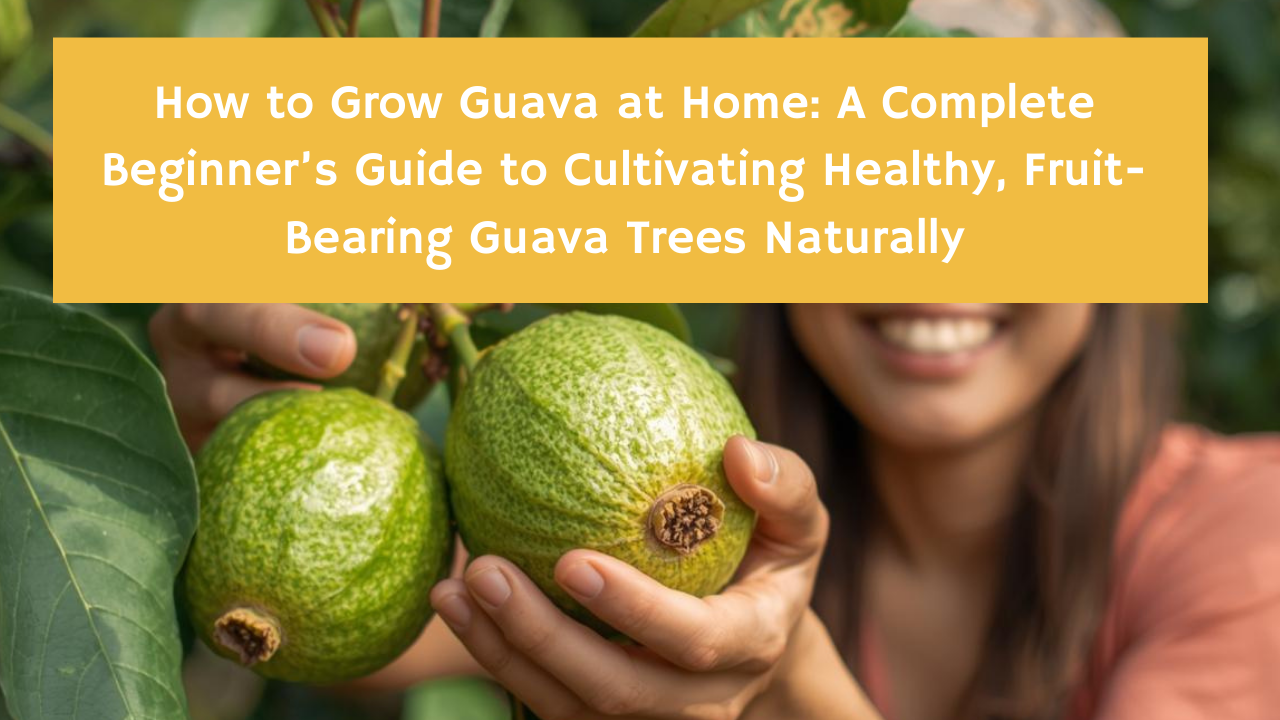
Guava is one of the most rewarding fruit trees for home gardeners. It grows quickly, adapts to a wide range of conditions, and produces fragrant flowers followed by nutrient-rich fruit. Many people assume guava trees need tropical farms or professional care, but the truth is that guava can thrive in home gardens, pots, and even small backyards when grown using simple, natural techniques.
For beginners, guava offers an ideal balance of resilience and productivity. With proper planting, sunlight, and basic maintenance, a guava tree can begin fruiting within a few years and continue producing for decades. This complete beginner-friendly guide explains how to grow guava at home naturally, from choosing the right plant to harvesting healthy, flavorful fruit.
Understanding the Guava Tree and Its Growth Habit
Guava is a fast-growing, evergreen or semi-evergreen fruit tree.

It develops a shallow but wide-spreading root system and responds well to pruning. Guava trees can be kept compact for pots or allowed to grow larger in garden soil.
Because guava fruits on new growth, proper care and pruning directly influence fruit production.
Why Guava Is Ideal for Home Gardening
Guava is highly adaptable.

It tolerates heat, brief dry periods, and a range of soil types. This makes it easier to grow than many other fruit trees.
Guava also rewards good care quickly, often flowering and fruiting sooner than slower-growing fruit trees.
Choosing the Right Guava Variety for Home Growing
Choosing the right variety improves success.

Some guava varieties are better suited for pots, while others thrive in open ground. Beginners often do well with varieties known for compact growth and reliable fruiting.
Select plants from healthy, disease-free sources with strong stems and fresh leaves.
Growing Guava From Seeds vs Plants
Guava can be grown from seeds or nursery plants.

Seed-grown guava trees are vigorous but may take longer to fruit and may not match the parent fruit exactly. Nursery plants provide predictable fruit quality and faster results.
For beginners, starting with a young plant is usually the easiest option.
Best Time to Plant Guava at Home
Planting timing affects establishment.

Guava grows best when planted during warm, stable weather. This allows roots to settle before facing stress.
Avoid planting during extreme heat or cold, especially for young plants.
Selecting the Best Location for Guava Trees
Sunlight is essential for guava.

Choose a location that receives at least 6–8 hours of direct sunlight daily. More sunlight improves flowering, fruit size, and sweetness.
Good airflow also reduces disease risk and supports healthy growth.
Growing Guava in Pots at Home
Guava grows well in large containers.

Choose a deep pot with proper drainage. Containers allow better control over soil and make it easier to protect plants from harsh weather.
Potted guava trees are ideal for patios, balconies, and small gardens.
Growing Guava in Garden Soil
Planting in the ground allows larger growth.

Guava trees planted in garden soil develop stronger root systems and may produce more fruit over time.
Ensure the planting area drains well and does not collect standing water.
Preparing the Best Soil for Guava Trees
Soil quality affects fruiting.
Guava prefers loose, well-draining soil rich in organic matter. Heavy or compacted soil should be improved with compost.
Good soil structure supports healthy roots and steady growth.
Planting Guava the Right Way
Proper planting reduces stress.
Dig a hole wider than the root ball and place the plant at the same depth it was growing previously. Fill gently and water thoroughly.
Avoid pressing soil too tightly, as roots need air.
Watering Guava Trees Correctly
Balanced watering is key.
Young guava trees need regular watering during establishment. Once established, guava tolerates short dry periods.
Overwatering causes root problems and reduces fruit quality.
Seasonal Watering Adjustments
Water needs change with seasons.
During active growth and fruit development, water more frequently. Reduce watering during cooler months.
Always check soil moisture before watering.
Feeding Guava Trees Naturally
Guava responds well to organic feeding.
Compost and organic matter support steady growth and fruit production. Avoid excessive fertilizer, which leads to leafy growth with fewer fruits.
Natural feeding improves soil health over time.
Importance of Pruning for Fruit Production
Pruning is essential for guava.
Guava fruits on new growth, so pruning encourages more flowering branches. It also keeps the tree manageable.
Regular pruning improves air circulation and sunlight penetration.
When and How to Prune Guava Trees
Pruning is best done after harvest.
Remove dead, weak, or overcrowded branches. Lightly shape the tree to encourage new shoots.
Avoid heavy pruning during extreme weather.
Encouraging Flowering and Fruit Set
Flowering depends on plant health.
Adequate sunlight, balanced watering, and proper pruning all support flowering. Stress-free trees produce better fruit.
Avoid overfeeding, which delays flowering.
Pollination and Fruit Development
Guava flowers are usually self-pollinating.
Natural pollinators improve fruit set, but hand pollination is rarely necessary.
Healthy trees typically set fruit reliably.
Common Problems and How to Fix Them
Yellow leaves often indicate overwatering or nutrient imbalance.
Poor fruiting usually results from insufficient sunlight or lack of pruning.
Leaf drop may occur due to sudden temperature changes or water stress.
Managing Pests Naturally
Guava may attract insects.
Regular inspection helps catch problems early. Healthy plants grown in good conditions rarely suffer serious pest issues.
Clean growing areas and proper airflow reduce pest pressure.
Growing Guava Indoors or in Cold Regions
Indoor growing is possible with enough light.
In colder regions, potted guava trees can be moved indoors during winter. Bright light and stable temperatures help maintain health.
Cold protection prevents growth setbacks.
Repotting Guava Trees When Needed
Repotting supports long-term growth.
Move the tree to a slightly larger container when roots outgrow the pot. Use fresh, well-draining soil.
Spring is the best time for repotting.
How Long Guava Trees Take to Fruit
Guava fruits relatively quickly.
Nursery-grown plants may fruit within a few years. Seed-grown trees take longer.
Consistent care speeds up fruiting.
Harvesting Guava at the Right Time
Harvest timing affects flavor.
Guavas are ready when they change color slightly and release a sweet fragrance. Pick gently to avoid bruising.
Freshly harvested guava has the best taste and nutrition.
Using and Storing Homegrown Guava
Guava can be eaten fresh or processed.
Use ripe guavas quickly or store briefly in cool conditions. Homegrown guava is ideal for fresh eating and simple recipes.
Handle gently to preserve quality.
Long-Term Care for Healthy Guava Trees
Guava trees are long-lived.
With proper pruning, feeding, and watering, they can remain productive for decades.
Regular observation keeps problems small and manageable.
Real Experiences From Home Guava Growers
One home gardener shared that pruning doubled fruit production. “Once I understood that guava fruits on new growth, everything changed,” they said.
Another noted that container growing made cold protection easy.
Observations From Experienced Fruit Growers
Experienced growers emphasize sunlight.
They note that guava grown in full sun consistently produces sweeter, larger fruit.
Proper pruning is also repeatedly highlighted.
Long-Term Benefits of Growing Guava at Home
Guava trees provide ongoing rewards.
They offer fresh fruit, shade, and visual beauty. Guava also adds nutritional value to home gardens.
Growing your own fruit builds self-reliance and satisfaction.
What You Should Know Before Growing Guava at Home
Guava is forgiving but not neglect-proof.
Sunlight, drainage, and pruning are essential. Overwatering is the most common mistake.
With simple care, beginners can succeed easily.
Questions and Answers About Growing Guava at Home
Is guava easy to grow for beginners?
Yes, very beginner-friendly.
Can guava grow in pots?
Yes, it grows well in large containers.
How much sunlight does guava need?
At least 6–8 hours daily.
How often should guava be watered?
When the topsoil dries slightly.
Does guava need pruning?
Yes, for better fruiting.
Can guava grow indoors?
Yes, with sufficient light.
How long before guava fruits?
A few years for nursery plants.
Is fertilizer required?
Moderate, balanced feeding is best.
Why is my guava not fruiting?
Likely low sunlight or lack of pruning.
Does guava tolerate cold?
It needs protection from frost.
Can guava be grown year-round?
Yes, in warm conditions.
Are pests a big problem?
Usually minor if plants are healthy.
Is guava worth growing at home?
Yes, highly rewarding.
Can beginners succeed with guava?
Absolutely.








Leave a Comment