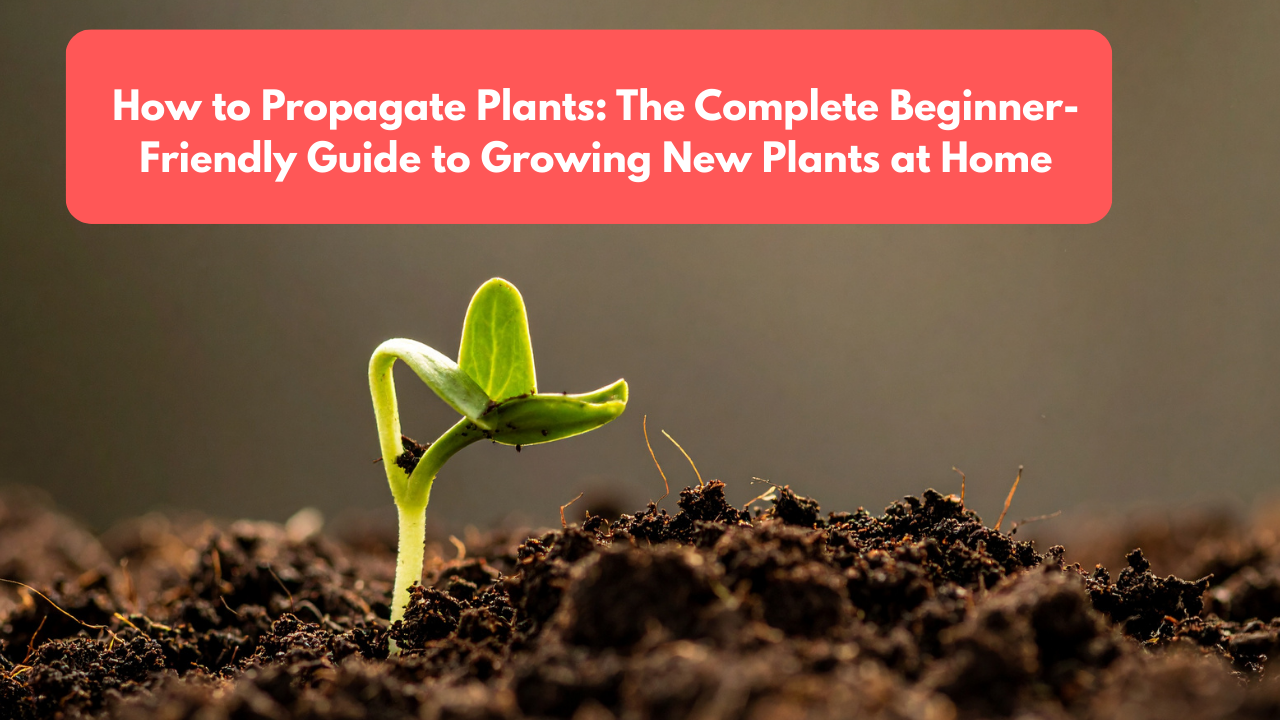
Plant propagation is one of the most empowering skills a home gardener can learn. It allows you to turn one healthy plant into many, save money, preserve favorite varieties, and gain a deeper understanding of how plants grow. What often feels like a complex gardening technique is, in reality, a natural process that many plants are eager to perform when given the right conditions.
For beginners, propagation removes the fear of failure. Even if one attempt does not succeed, others usually will. With simple tools, patience, and observation, anyone can grow new plants at home. This complete beginner-friendly guide explains the most reliable plant propagation methods, how to use them, and how to care for newly propagated plants so they thrive long-term.
Understanding What Plant Propagation Really Is
Plant propagation is the process of creating new plants from existing ones.

This can be done through seeds or by using parts of a plant such as stems, leaves, roots, or runners. When propagated vegetatively, the new plant is genetically identical to the parent.
Propagation happens naturally in the wild, but home gardeners guide the process to improve success and control outcomes.
Why Learning Plant Propagation Is So Valuable
Propagation offers practical and emotional rewards.

It reduces the cost of gardening by eliminating the need to buy new plants. It also allows you to preserve plants with sentimental value.
Beyond savings, propagation builds confidence. Once you succeed with one plant, the same principles apply to many others.
Propagation by Seeds: The Most Common Method
Growing plants from seeds is the most familiar form of propagation.

Seeds contain all the genetic information needed to create a new plant. This method is ideal for vegetables, annual flowers, herbs, and many houseplants.
Seed propagation offers variety but does not always produce identical plants to the parent.
When Seed Propagation Works Best
Seed propagation works best for fast-growing plants.

Vegetables, herbs, and annual flowers respond well to seed starting. Seeds are also ideal when large numbers of plants are desired.
However, seed-grown plants often take longer to mature compared to cuttings.
Propagation by Cuttings: Fast and Reliable
Propagation by cuttings is one of the most popular methods for beginners.

A cutting is a section of a plant stem, leaf, or root that develops new roots. This method produces a clone of the parent plant.
Many houseplants, shrubs, and flowering plants root easily from cuttings with basic care.
Understanding Stem Cuttings
Stem cuttings are the most widely used technique.

A healthy stem section is placed in soil or water until roots form. Once rooted, it becomes a new plant.
This method works well for herbs, houseplants, roses, and many garden shrubs.
Leaf Cuttings and Their Uses
Some plants can grow from leaves alone.

Leaf cuttings involve placing a healthy leaf or leaf section into soil where it develops roots and shoots.
This method works well for certain houseplants and succulents.
Root Cuttings Explained Simply
Root cuttings involve growing new plants from root sections.

This method is less common but effective for some perennials. New shoots emerge from root pieces planted in soil.
Root cuttings are usually done during dormant periods.
Propagation in Water vs Soil
Many plants can be rooted in water or soil.
Water propagation allows easy observation of root growth but may produce weaker roots initially. Soil propagation supports stronger root systems long-term.
Beginners often start with water and transition to soil later.
Choosing the Right Propagation Method
Choosing the correct method depends on the plant.
Some plants root easily from cuttings, while others perform better from seeds. Researching the specific plant improves success.
Trying multiple methods increases learning and success rates.
Tools Needed for Plant Propagation
Propagation does not require expensive tools.
Basic needs include clean scissors or pruners, containers, soil or water, and patience. Clean tools prevent disease and improve success.
Simple household items often work just as well as specialized equipment.
Preparing Plants for Propagation
Healthy parent plants produce healthy new plants.
Choose plants that are actively growing, pest-free, and well-watered. Avoid stressed or diseased plants.
Preparation includes selecting the right plant part and timing.
Timing Propagation for Best Results
Timing affects success.
Most propagation works best during active growth periods. Warm temperatures and longer days encourage root formation.
Avoid propagating during extreme heat or cold.
Creating the Right Environment for Rooting
Rooting requires balance.
Moisture, warmth, and airflow must be controlled. Too much water causes rot, while too little dries out cuttings.
Indirect light is ideal during rooting.
Importance of Humidity During Propagation
Humidity prevents moisture loss.
Young cuttings lack roots and lose water quickly. Maintaining humidity supports survival until roots form.
Simple humidity covers help, but airflow must still be provided.
Light Requirements During Propagation
Light fuels growth but should be gentle.
Bright, indirect light supports rooting without stress. Direct sunlight causes dehydration and overheating.
Light quality often matters more than intensity.
Temperature and Root Development
Warmth encourages root growth.
Stable temperatures support faster rooting. Cold slows the process, while extreme heat damages tissues.
Consistent conditions produce better results.
Using Rooting Hormone Effectively
Rooting hormone is optional but helpful.
It speeds root formation and improves consistency. Many plants root without it, but beginners may find it useful.
Use only a small amount to avoid damaging the cutting.
Common Mistakes Beginners Make
Overwatering is the most common mistake.
Poor drainage, low light, and using unhealthy parent plants also cause failure.
Understanding these mistakes prevents repeated issues.
How Long Propagation Takes
Propagation is not instant.
Rooting may take days or weeks depending on the plant and method. Patience is essential.
Avoid checking roots too frequently, as disturbance slows growth.
Recognizing Successful Rooting
Signs of success include new growth.
Resistance when gently tugging indicates root development. Healthy color and firmness also suggest success.
Once rooted, plants require gradual transition to normal care.
Transplanting Newly Propagated Plants
Transplanting should be gentle.
Young roots are fragile and need careful handling. Use nutrient-rich soil and water lightly after transplanting.
Allow time for adjustment before exposing plants to stress.
Hardening Off New Plants
New plants need gradual exposure.
Sudden changes in light, temperature, or humidity cause shock. Slowly adjusting conditions improves survival.
This step is especially important for outdoor planting.
Long-Term Care After Propagation
Propagation is only the beginning.
Young plants need consistent care, proper light, and balanced watering. Avoid heavy feeding early.
Healthy early care leads to strong mature plants.
Propagating Houseplants at Home
Many houseplants propagate easily.
This makes indoor propagation a popular starting point. Controlled environments improve success.
Houseplant propagation builds confidence quickly.
Propagating Outdoor Plants and Shrubs
Outdoor plants may require seasonal timing.
Protection from extreme weather is important during rooting. Some plants prefer outdoor propagation directly in soil.
Understanding seasonal cycles improves results.
Learning Through Trial and Observation
Propagation improves with experience.
Each attempt teaches something new. Observing plant responses guides better care.
Mistakes are part of the learning process.
Real Experiences From Home Gardeners
A home gardener shared that propagation changed their approach to gardening. “Once I realized how easy it was, I stopped buying plants,” they said.
Another noted that starting with houseplants built confidence for outdoor propagation.
Observations From Regular Plant Growers
Experienced gardeners emphasize simplicity.
They focus on plant health, timing, and environment rather than complicated techniques.
Consistency produces better results than experimentation without understanding.
Benefits Beyond Growing More Plants
Propagation fosters connection.
It encourages patience, observation, and responsibility. Sharing propagated plants strengthens community.
Many gardeners find it deeply satisfying.
What You Should Know Before Starting Plant Propagation
Not every attempt will succeed.
Failure is normal and valuable. Using multiple cuttings improves success.
Propagation becomes easier with practice.
Questions and Answers About Plant Propagation
Is plant propagation beginner-friendly?
Yes, very beginner-friendly.
Do all plants propagate easily?
No, some are easier than others.
Is soil or water better for propagation?
Both work depending on the plant.
Do I need special tools?
No, basic household tools are enough.
How long does rooting take?
Anywhere from days to weeks.
Can propagation be done indoors?
Yes, indoor conditions work well.
Do cuttings need sunlight?
Bright, indirect light is best.
Is rooting hormone necessary?
No, but it can help.
Why do cuttings rot?
Usually from excess moisture.
Can propagation fail even if done correctly?
Yes, plants vary naturally.
When should new plants be transplanted?
After roots are well-developed.
Can propagated plants grow normally?
Yes, they grow like regular plants.
Is propagation cost-effective?
Yes, it saves money.
Is propagation worth learning?
Yes, it is highly rewarding.








Leave a Comment