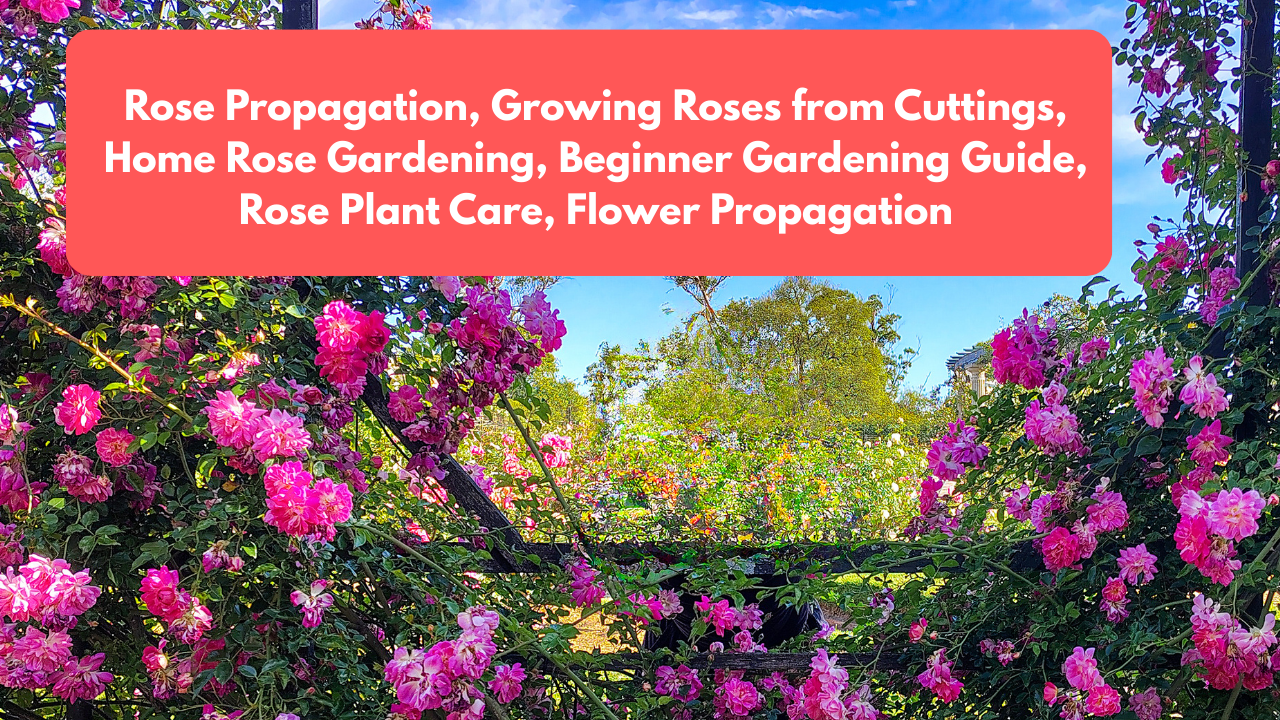
Roses have long been symbols of beauty, love, and elegance, and for many gardeners, growing them feels deeply personal. Buying new rose plants every season can be expensive, but there is a far more rewarding option—propagating roses by cuttings at home. With patience and the right technique, a single healthy rose plant can produce many new bushes, all genetically identical to the original.
Rose propagation by cuttings is one of the most reliable and beginner-friendly methods of growing new rose plants. It does not require advanced tools, special equipment, or professional experience. This guide explains, in clear and practical steps, how to propagate roses successfully using cuttings and grow strong, beautiful rose bushes at home.
Understanding Rose Propagation by Cuttings
Propagation by cuttings means growing a new rose plant from a piece of an existing stem.

The cutting develops its own roots and becomes an independent plant. This method preserves the exact characteristics of the parent rose, including flower color, fragrance, and growth habit.
Unlike growing roses from seeds, which can produce unpredictable results, cuttings ensure consistency and reliability.
Why Propagating Roses by Cuttings Works So Well
Rose cuttings root easily under the right conditions.

Roses naturally contain growth hormones that support root development. When provided with moisture, warmth, and airflow, cuttings respond by forming new roots.
Another advantage is cost. Propagating roses at home allows gardeners to expand their collection without purchasing new plants.
Best Time to Propagate Roses by Cuttings
Timing plays a major role in success.

The best time to take rose cuttings is during active growth when stems are healthy but not overly soft. This is often late spring through early autumn.
Avoid taking cuttings during extreme heat or cold, as stressed plants root more slowly.
Choosing the Right Rose Plant for Cuttings
Healthy parent plants produce healthy cuttings.

Choose a rose plant that is disease-free, well-watered, and actively growing. Avoid stems with flowers or buds, as flowering diverts energy away from root formation.
Select stems that are firm, green, and about the thickness of a pencil.
Selecting and Cutting the Right Stem
Proper cutting technique improves rooting success.

Cut a section of stem about 6–8 inches long. Make the bottom cut just below a leaf node, as this is where roots are most likely to form.
Use clean, sharp tools to avoid crushing the stem or introducing disease.
Preparing Rose Cuttings for Rooting
Preparation increases the chances of success.

Remove flowers, buds, and most leaves, leaving only one or two sets of leaves at the top. This reduces moisture loss while still allowing photosynthesis.
If desired, the bottom of the cutting can be lightly scraped to expose more tissue, which encourages root growth.
Using Rooting Hormone: Is It Necessary?
Rooting hormone is helpful but not essential.

It increases the speed and success rate of root formation, especially for beginners. Powder, gel, or liquid forms all work when used correctly.
While roses can root without hormone, using it improves consistency and reduces failure.
Choosing the Best Growing Medium
The rooting medium should be light and well-draining.

A mix of sand and compost, perlite and peat, or a quality potting mix works well. The medium must retain moisture without becoming soggy.
Avoid heavy garden soil, which compacts easily and promotes rot.
Containers and Planting Setup
Containers should have drainage holes.
Small pots, seed trays, or reused containers work well as long as excess water can escape. Fill containers with the prepared rooting medium.
Insert cuttings so at least one node is below the surface. Firm the medium gently around the stem.
Watering Rose Cuttings Correctly
Moisture is critical but must be balanced.
Water the medium thoroughly after planting, then keep it evenly moist. Do not allow it to dry out completely, but avoid waterlogging.
Overwatering is one of the most common reasons rose cuttings fail.
Creating a Humid Environment
Humidity helps prevent moisture loss.
Covering cuttings with a clear plastic bag or dome helps maintain humidity around the leaves. Ensure there is some airflow to prevent mold.
Remove covers briefly each day to allow fresh air circulation.
Light Requirements During Rooting
Light supports root development indirectly.
Place cuttings in bright, indirect light. Avoid direct sunlight, which causes overheating and excessive moisture loss.
Too little light slows rooting, while too much light causes stress.
Temperature Conditions for Root Formation
Warmth encourages rooting.
Rose cuttings root best in mild temperatures. Avoid placing them in cold or drafty locations.
Stable temperature conditions support steady root growth.
How Long Rose Cuttings Take to Root
Rooting takes time and patience.
Most rose cuttings take several weeks to form roots. Some may take longer depending on conditions and variety.
Avoid disturbing cuttings during this period. Tugging or checking roots too early damages new growth.
Signs That Rooting Has Occurred
New growth is a positive sign.
When new leaves appear, it often means roots have formed. Gentle resistance when lightly tugged also indicates rooting.
Once roots are established, humidity covers can be gradually removed.
Transplanting Rooted Rose Cuttings
Transplanting should be done carefully.
Once roots are well-developed, move cuttings into individual pots with nutrient-rich soil. Handle gently to avoid damaging roots.
Water thoroughly after transplanting to help the plant settle.
Hardening Off Young Rose Plants
Young plants need gradual adjustment.
If roses will be grown outdoors, harden them off by exposing them to outdoor conditions gradually over several days.
This reduces shock and improves long-term survival.
Growing Propagated Roses in Pots or Ground
Both options work well.
Potted roses offer flexibility and control, while ground planting allows for faster growth and larger plants.
Choose based on available space and climate conditions.
Feeding Newly Propagated Roses
Feeding should be gentle at first.
Use diluted fertilizer once the plant shows steady growth. Avoid heavy feeding early, as roots are still developing.
Balanced nutrition supports healthy leaf and stem development.
Common Problems and How to Avoid Them
Cuttings turning black usually indicates rot from excess moisture. Improve drainage and reduce watering.
Wilting often results from low humidity or excessive heat. Adjust covers and placement.
Failure to root may be due to poor stem selection or unsuitable conditions.
Propagating Roses in Water: Does It Work?
Some gardeners root roses in water.
While possible, water rooting often produces weaker roots. Transferring water-rooted cuttings to soil requires care.
Soil-based methods are generally more reliable for long-term growth.
Propagating Roses Using Different Methods
Besides cuttings, roses can be propagated by layering or division.
Cuttings remain the simplest and most accessible method for home gardeners.
Each method has benefits, but cuttings offer the best balance of success and simplicity.
Seasonal Care for Newly Propagated Roses
New plants need protection.
Avoid exposing them to extreme heat, cold, or strong winds. Stable conditions support strong establishment.
Once established, roses become more resilient.
Real Experiences From Home Gardeners
A home gardener shared that rose cuttings became their favorite project. “I turned one rose bush into six plants, and every one survived,” they said.
Another noted that patience and avoiding overwatering made all the difference.
Observations From Regular Rose Growers
Experienced growers often say that rose propagation improves understanding of plant care.
They emphasize cleanliness, timing, and consistency over complicated techniques.
Many consider propagation one of the most satisfying gardening skills.
Long-Term Benefits of Propagating Roses at Home
Propagation allows gardeners to preserve favorite roses.
It saves money and encourages self-sufficiency. Over time, a small collection can expand into a full rose garden.
Propagated roses often adapt well to local conditions.
What You Should Know Before Propagating Roses by Cuttings
Not every cutting will succeed.
Failures are part of the learning process. Using multiple cuttings increases success rates.
With practice, propagation becomes reliable and rewarding.
Questions and Answers About Rose Propagation by Cuttings
Is rose propagation by cuttings easy?
Yes, it is beginner-friendly.
Do I need rooting hormone?
It helps but is not mandatory.
How long do cuttings take to root?
Several weeks on average.
Can roses be propagated indoors?
Yes, with proper light and care.
What is the best stem to choose?
Healthy, non-flowering stems.
Can I propagate roses year-round?
Best during active growth seasons.
Do cuttings need sunlight?
Bright, indirect light works best.
Why are my cuttings rotting?
Likely due to excess moisture.
Can I propagate roses in water?
Yes, but soil is more reliable.
When should I transplant rooted cuttings?
After strong roots develop.
Can propagated roses flower in the first year?
Sometimes, but not always.
Is outdoor planting better than pots?
Both work depending on conditions.
How many cuttings should I take?
More than needed to improve success.
Is rose propagation worth trying?
Yes, it is very rewarding.










Leave a Comment