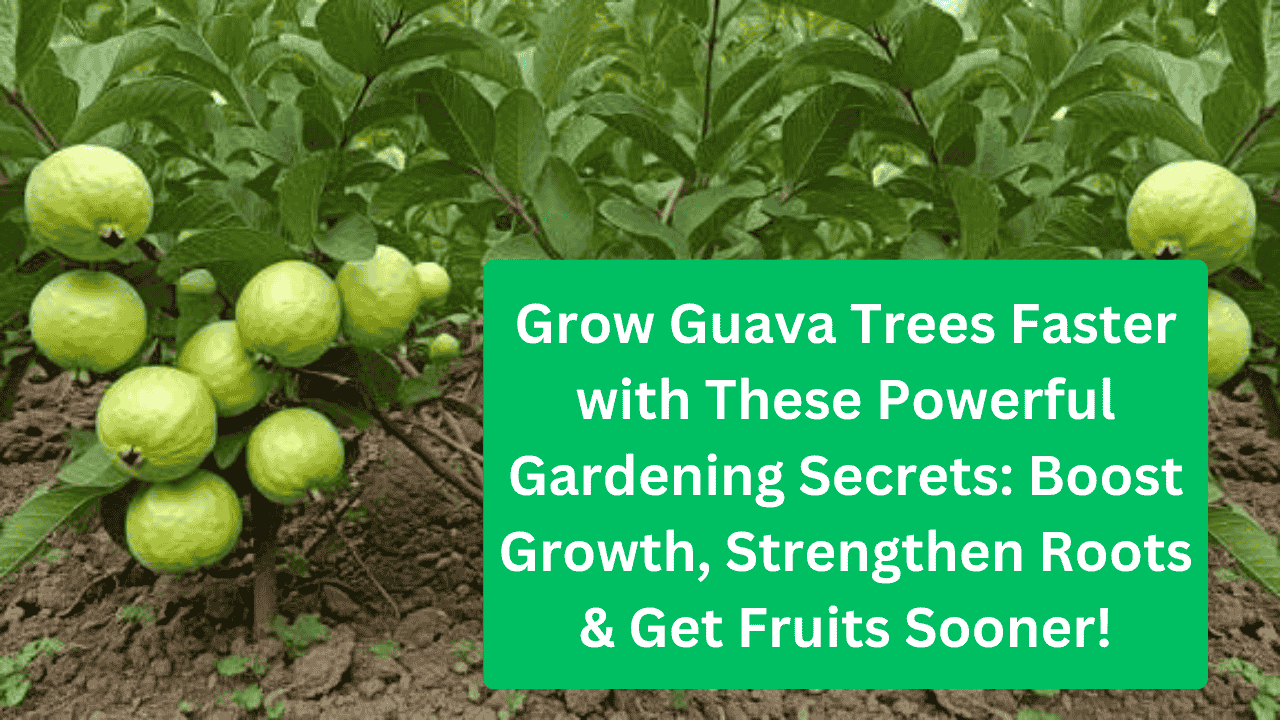
Guava is one of the most rewarding fruit trees for home gardeners. It grows in a wide range of climates, adapts well to pots and open ground, and produces nutritious fruits within a short time when managed properly. Yet many guava trees remain stunted, weak, or slow to fruit due to basic care mistakes. With the right techniques, guava trees can grow faster, develop stronger roots, and start fruiting much earlier than expected.
This guide reveals practical, proven secrets that significantly improve guava tree growth and productivity, even for beginners.
Why Guava Trees Often Grow Slowly
Guava trees are hardy, but early growth depends heavily on root health and soil conditions. Poor drainage, compact soil, nutrient imbalance, and irregular watering are the most common reasons for slow development.

Another overlooked factor is incorrect planting depth and lack of early pruning. When these issues are corrected early, guava trees respond rapidly with vigorous growth.
Choosing the Right Guava Variety
Not all guava varieties grow at the same pace. Improved varieties such as Allahabad Safeda, Sardar, and Thai guava are known for fast growth and early fruiting.
Always choose healthy nursery plants or propagate from high-yielding mother trees. A strong genetic base plays a major role in how quickly a guava tree establishes and bears fruit.

Best Time to Plant Guava Trees
Warm temperatures encourage rapid root expansion and shoot growth. The ideal planting time is during late spring or the onset of monsoon.
Avoid planting during peak winter or extreme summer heat. Stress during early establishment can permanently slow down growth.Guava is one of the most rewarding fruit trees for home gardeners. It grows in a wide range of climates, adapts well to pots and open ground, and produces nutritious fruits within a short time when managed properly. Yet many guava trees remain stunted, weak, or slow to fruit due to basic care mistakes. With the right techniques, guava trees can grow faster, develop stronger roots, and start fruiting much earlier than expected.
Soil Preparation for Faster Growth
Guava thrives in well-draining soil rich in organic matter. Heavy clay soils restrict root development and should be improved with sand and compost.

A loose soil structure allows roots to spread freely and absorb nutrients efficiently. Mixing compost and aged manure into the planting pit creates a strong foundation for fast growth.
Planting the Guava Tree Correctly
Planting depth matters. The root collar should remain at soil level. Planting too deep can suffocate roots and cause rot.
Firm the soil gently around the plant to remove air pockets and water thoroughly after planting. Mulching helps retain moisture and regulate soil temperature.

Boosting Root Strength Naturally
Strong roots are the key to faster growth and early fruiting. Organic inputs such as vermicompost, compost tea, and cow dung manure improve microbial activity and nutrient availability.
Avoid excessive chemical fertilizers during early growth. Gentle, organic feeding supports steady and healthy root development.
Watering Practices That Promote Fast Growth
Guava trees prefer consistent moisture but dislike waterlogging. Irregular watering leads to stress, leaf drop, and poor growth.

Deep watering once or twice a week is better than frequent shallow watering. Good drainage ensures oxygen reaches the roots.
Pruning Techniques for Vigorous Growth
Early pruning encourages branching and a compact structure. Pinch the growing tip when the plant reaches about two to three feet in height.
Remove weak, crossing, or inward-growing branches. Proper pruning improves sunlight penetration and air circulation, which enhances overall growth.

Sunlight Requirements for Guava Trees
Guava trees thrive in full sunlight. At least six to eight hours of direct sun daily is ideal for fast growth and flowering.
Avoid planting during peak winter or extreme summer heat. Stress during early establishment can permanently slow down growth.Guava is one of the most rewarding fruit trees for home gardeners. It grows in a wide range of climates, adapts well to pots and open ground, and produces nutritious fruits within a short time when managed properly. Yet many guava trees remain stunted, weak, or slow to fruit due to basic care mistakes. With the right techniques, guava trees can grow faster, develop stronger roots, and start fruiting much earlier than expected
Plants grown in partial shade may survive but often grow slowly and produce fewer fruits.

Nutrient Management for Early Fruiting
Balanced nutrition is essential. Nitrogen promotes leafy growth, while phosphorus supports root development and potassium improves flowering and fruit quality.
Organic fertilizers release nutrients slowly and reduce the risk of root burn. Regular but moderate feeding produces the best results.
Pest and Disease Control for Healthy Growth
Healthy plants resist pests better. Maintaining cleanliness around the base of the tree and proper spacing reduces disease risk.

Neem oil and soap solutions help control common pests without harming beneficial insects. Early intervention prevents growth setbacks.
How Soon Will Guava Trees Start Fruiting
Under good care, propagated guava trees can begin fruiting within two to three years. Seed-grown plants usually take longer and may vary in fruit quality.
Early pruning, proper nutrition, and stress-free growth significantly influence fruiting time.
Common Mistakes That Slow Guava Growth
Overwatering and poor drainage are the most damaging mistakes. Excess nitrogen leads to leafy growth with delayed fruiting.
Ignoring pruning results in tall, weak trees that produce fewer fruits. Correcting these errors early leads to rapid improvement.
Why These Secrets Work for Home Gardeners
These techniques focus on strengthening the foundation of the plant rather than forcing quick results. Healthy roots, balanced nutrition, and proper structure naturally lead to faster growth and higher yields.
Guava trees respond quickly to good care, making them ideal for beginners and experienced gardeners alike.
Avoid planting during peak winter or extreme summer heat. Stress during early establishment can permanently slow down growth.Guava is one of the most rewarding fruit trees for home gardeners. It grows in a wide range of climates, adapts well to pots and open ground, and produces nutritious fruits within a short time when managed properly. Yet many guava trees remain stunted, weak, or slow to fruit due to basic care mistakes. With the right techniques, guava trees can grow faster, develop stronger roots, and start fruiting much earlier than expected





Leave a Comment